
Health
Five Strength Training Goals to Enhance Your Fitness Journey

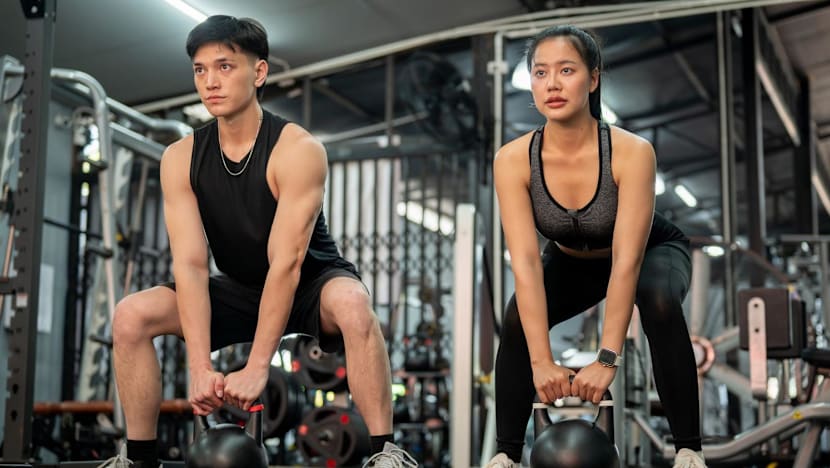
Strength training is a powerful resolution that can significantly enhance overall health and well-being. Engaging in regular resistance exercises improves longevity, elevates mood, boosts cognitive function, and strengthens bones. Moreover, developing new skills in the gym can foster a sense of self-efficacy, motivating individuals to achieve their fitness goals. As personal trainer Marlie Cohen from Toronto states, “We’re lifting weights so we can live well outside the gym.” For those looking to enhance their fitness, here are five strength training goals recommended by fitness experts that cater to both beginners and seasoned lifters.
1. Focus on Real-World Movements
Everyday activities, such as standing up from a chair, require the coordinated effort of multiple joints and muscles. Training for these movements can alleviate pain and improve functionality. According to Disa Hatfield, a professor of kinesiology at the University of Rhode Island, “You want to remain a competitor as long as possible.” The six fundamental movements to incorporate into your training include hinge, squat, lunge, push, pull, and rotate. Aiming for a full-body workout that incorporates these movements twice a week, with at least 48 hours of rest between sessions, can lead to significant improvements.
2. Master the Deadlift
The deadlift is not only effective for building strength but also essential for everyday tasks like lifting heavy objects. As Marlie Cohen describes, it is “one of the most practical ways to train for strength and longevity.” Beginners should start practicing the deadlift using only body weight to avoid injuries. Once comfortable, individuals can progress to kettlebell or Romanian deadlifts, focusing on engaging lower-body muscles. Incorporating deadlifts into full-body or lower-body workouts with a starting weight, aiming for three sets of six to eight repetitions, is recommended with 90 seconds to two minutes of rest in between.
3. Develop a Training Plan and Track Progress
An effective workout program serves as a roadmap to achieving fitness goals. Justin Ross, a clinical psychologist and coach, emphasizes the importance of tracking workouts to recognize progress. Many individuals tend to push themselves too hard without a structured plan, leading to burnout. To counter this, Ross advises keeping a simple log of the weight lifted, repetitions, and how one felt during workouts. This approach helps build confidence and awareness, encouraging small, consistent improvements over time.
4. Train Close to Failure
To enhance strength, pushing muscles beyond their current limits is essential. This involves approaching the point of muscle failure, where proper form may begin to deteriorate. Initially, lifters may experience rapid gains, but plateauing can occur if the same weights and repetitions are maintained. As Miho Tanaka, director of the Women’s Sports Medicine Program at Mass General Brigham, notes, strength increases are most noticeable in the first eight to ten weeks of training. After this period, it becomes necessary to increase weights or repetitions to continue making progress.
5. Prioritize Recovery
Recovery is a crucial element of any exercise regimen, especially for those new to strength training. Dr. Tanaka warns that many injuries stem from individuals pushing themselves too hard too quickly. The body needs time to adapt and repair itself for optimal gains. Incorporating a dynamic warm-up prior to workouts, such as arm circles or hip rotations, can prepare the body for exercise. For adequate recovery, allowing approximately 48 hours between sessions is recommended. Engaging in light activities like walking or swimming during recovery periods can also promote healing.
By setting clear strength training goals and following expert advice, individuals can cultivate a robust fitness journey that enhances their quality of life. As you embark on this path, remember that consistency, tracking progress, and allowing time for recovery are key to achieving lasting strength and health improvements.

India Unveils Long-Range Hypersonic Missile Amid Regional Tensions

SK bioscience Launches Global Trial for Universal Sarbecovirus Vaccine

Senegal Coach Pape Thiaw Suspended and Fined After Final Disruption

PAS Denies Abolishing Chairman Post, Contradicts Muhyiddin’s Claim

Mbappé Critiques Real Madrid’s Effort After Benfica Defeat

Thailand’s December Factory Output Surges 2.52% Year-on-Year

Ishita Dutta Reveals Her Parenting Secret: Strong Coffee

Older GPs Express Concerns Over New Digital Health Record Mandate

Urban Jurgensen: A 252-Year Legacy Enters a New Era

South Korea’s Foreign Minister Cho Hyun to Visit China This Week

Starling Bank Plans Secondary Share Sale, Targeting $5.4 Billion Valuation

Munsang College Celebrates 100 Years with Grand Ceremony

PAS Aims to Expand Parliamentary Influence in Upcoming Election

Kenvue Dismisses CEO Thibaut Mongon as Strategic Review Advances

Humanism Camp Engages 250 Youths in Summer Fest 2025

De Minaur Triumphs at Washington Open After Thrilling Comeback

Tupou and Daugunu Join First Nations Squad for Lions Clash

Colombian Senator Miguel Uribe Shows Signs of Recovery After Attack
-
 World5 months ago
South Korea’s Foreign Minister Cho Hyun to Visit China This Week
-
 Business5 months ago
Starling Bank Plans Secondary Share Sale, Targeting $5.4 Billion Valuation
-
 Top Stories5 months ago
Munsang College Celebrates 100 Years with Grand Ceremony
-
 World5 months ago
PAS Aims to Expand Parliamentary Influence in Upcoming Election
-
 Business7 months ago
Kenvue Dismisses CEO Thibaut Mongon as Strategic Review Advances
-
 Lifestyle6 months ago
Humanism Camp Engages 250 Youths in Summer Fest 2025
-
 Sports6 months ago
De Minaur Triumphs at Washington Open After Thrilling Comeback
-
 Sports7 months ago
Tupou and Daugunu Join First Nations Squad for Lions Clash
-
 Top Stories7 months ago
Colombian Senator Miguel Uribe Shows Signs of Recovery After Attack
-

 World7 months ago
ASEAN Gears Up for Historic Joint Meeting of Foreign and Economic Ministers
-

 Health6 months ago
New Study Challenges Assumptions About Aging and Inflammation
-

 Business7 months ago
Oil Prices Surge Following New EU Sanctions on Russia