
Health
Brunei Launches National AI Initiative to Combat Cardiovascular Disease

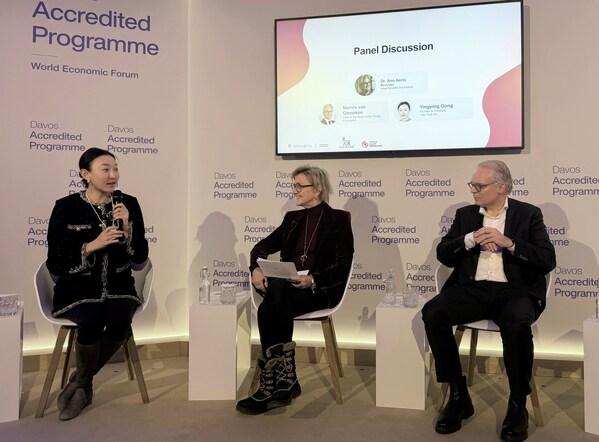
During the 2026 World Economic Forum Annual Meeting in Davos, a significant partnership was announced to tackle cardiovascular disease in Brunei. The Novartis Foundation, the Ministry of Health of Brunei Darussalam, and EVYD Technology will jointly implement an AI- and data-enabled national initiative known as CARDIO4Cities. This program aims to leverage population-scale data and artificial intelligence to identify high-risk individuals and provide targeted interventions, ultimately aiming to reduce the burden of cardiovascular disease in the country.
The initiative was showcased in a session titled “Innovating for Social Impact at Scale Through Partnerships and Artificial Intelligence,” co-hosted by the Novartis Foundation, Novo Nordisk, and the World Heart Federation. The discussion featured insights from leaders in digital health innovation, including Mrs. Gong Yingying, Founder and Chairlady of Yidu Tech, and Mr. Marnix van Ginneken, Chairman of the Philips Foundation, moderated by Dr. Ann Aerts, Head of the Novartis Foundation.
Transforming Public Health Systems
Mrs. Gong emphasized that enhancing public health is a systems-level challenge, dependent on the effective integration of technology and cross-sector collaboration. She noted that the launch of CARDIO4Cities in Brunei is a pivotal national deployment, aiming to shift the public health approach from reactive responses to proactive predictions. This initiative seeks to integrate services and move towards precision management based on real-world data.
Cardiovascular disease and other non-communicable diseases account for over 70% of global mortality and are the leading cause of death in Brunei. The healthcare system in the country faces significant pressure, and many nations encounter similar structural barriers that complicate effective prevention. The partnership between the Novartis Foundation, the Ministry of Health, and EVYD Technology aims to establish AI-driven cardiovascular risk stratification across the population, facilitating differentiated intervention pathways.
“A truly resilient system must act before risks fully emerge. This is the national value of data- and intelligence-driven health governance,” said Mrs. Gong.
Leveraging Technology for Health Improvement
The CARDIO4Cities program is built on the technological foundation provided by EVYD, which aims to deliver population-scale health intelligence and create value for pharmaceutical partners. With its proprietary AI engine and extensive real-world evidence infrastructure, EVYD supports drug developers across the research and development lifecycle.
The evolution of BruHealth, Brunei’s national digital health platform, illustrates the potential of technology in public health. Initially created to aid in infectious disease tracking during the pandemic, BruHealth has transformed into a comprehensive health infrastructure. It now enables residents to access their health records, receive personalized AI-generated health guidance, schedule appointments, and monitor wellness indicators, covering over 85% of Brunei’s population.
EVYD will play a crucial role in integrating data and providing analytics to ensure CARDIO4Cities operates effectively at a national scale.
Brunei becomes the first nation to implement CARDIO4Cities across four major cardiovascular risk factors: hypertension, diabetes, obesity, and hyperlipidemia. The program has already been deployed in over 40 cities worldwide, including São Paulo, Dakar, and Ulaanbaatar, with promising results. Data indicates that blood pressure control rates can improve by 3 to 6 times within 15 to 21 months, with reductions in stroke incidence by up to 13% and heart attack rates by as much as 12%.
This collaboration marks a significant advancement in cardiovascular disease prevention in Brunei and sets a new benchmark for non-communicable disease management globally. As the initiative progresses, it is anticipated to enhance Brunei’s public health capabilities, reduce long-term disease burdens, and contribute to the global shift towards intelligent, prevention-oriented healthcare systems.

India Unveils Long-Range Hypersonic Missile Amid Regional Tensions

SK bioscience Launches Global Trial for Universal Sarbecovirus Vaccine

Senegal Coach Pape Thiaw Suspended and Fined After Final Disruption

PAS Denies Abolishing Chairman Post, Contradicts Muhyiddin’s Claim

Mbappé Critiques Real Madrid’s Effort After Benfica Defeat

Thailand’s December Factory Output Surges 2.52% Year-on-Year

Ishita Dutta Reveals Her Parenting Secret: Strong Coffee

Older GPs Express Concerns Over New Digital Health Record Mandate

Urban Jurgensen: A 252-Year Legacy Enters a New Era

Regina Martinez Breaks New Ground for Mexico in Cross-Country Skiing

South Korea’s Foreign Minister Cho Hyun to Visit China This Week

Starling Bank Plans Secondary Share Sale, Targeting $5.4 Billion Valuation

Munsang College Celebrates 100 Years with Grand Ceremony

PAS Aims to Expand Parliamentary Influence in Upcoming Election

De Minaur Triumphs at Washington Open After Thrilling Comeback

Kenvue Dismisses CEO Thibaut Mongon as Strategic Review Advances

Humanism Camp Engages 250 Youths in Summer Fest 2025

Colombian Senator Miguel Uribe Shows Signs of Recovery After Attack
-
 Sports2 months ago
Regina Martinez Breaks New Ground for Mexico in Cross-Country Skiing
-
 World6 months ago
South Korea’s Foreign Minister Cho Hyun to Visit China This Week
-
 Business6 months ago
Starling Bank Plans Secondary Share Sale, Targeting $5.4 Billion Valuation
-
 Top Stories6 months ago
Munsang College Celebrates 100 Years with Grand Ceremony
-
 World6 months ago
PAS Aims to Expand Parliamentary Influence in Upcoming Election
-
 Sports8 months ago
De Minaur Triumphs at Washington Open After Thrilling Comeback
-
 Business8 months ago
Kenvue Dismisses CEO Thibaut Mongon as Strategic Review Advances
-
 Lifestyle8 months ago
Humanism Camp Engages 250 Youths in Summer Fest 2025
-
 Top Stories8 months ago
Colombian Senator Miguel Uribe Shows Signs of Recovery After Attack
-

 Sports8 months ago
Tupou and Daugunu Join First Nations Squad for Lions Clash
-
 World8 months ago
ASEAN Gears Up for Historic Joint Meeting of Foreign and Economic Ministers
-

 Health8 months ago
New Study Challenges Assumptions About Aging and Inflammation