
Business
Tangs and Takashimaya Thrive as Rivals Struggle in Singapore Retail

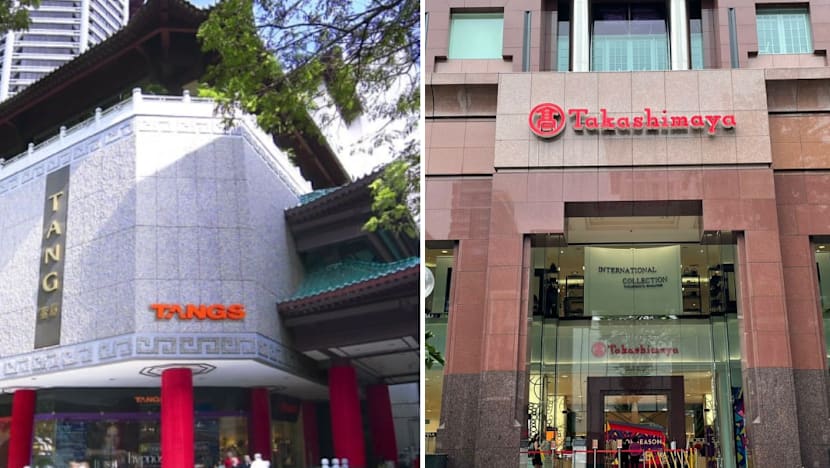
SINGAPORE: As several department stores in Singapore face closures, both Tangs and Takashimaya continue to demonstrate profitability. While competitors struggle with rising costs and shifting consumer preferences, these two retailers have carved out a niche in the market, largely due to their strategic locations and control over their retail spaces.
Retiree Laura Chan enjoys visiting Takashimaya’s food basement, where she savours traditional treats amidst the holiday bustle. “I still like to see things in person,” she remarked, underscoring the value of experiential shopping that remains difficult to replicate online. This sentiment reflects a broader trend where in-person experiences draw customers, even as e-commerce changes the retail landscape.
The challenges for department stores are evident. On December 8, 2024, Isetan announced the closure of its outlet in Nex, following a similar closure in Tampines Mall. As a result, Isetan now operates only two stores along Orchard Road: its flagship in Shaw House and a smaller lease-out operation in Wisma Atria. The company’s spokesperson stated that Isetan Scotts is still the core of its operations, with ongoing investments aimed at enhancing the shopping experience.
In a broader context, Singapore’s retail environment is shifting. Although overall retail sales rose by 1.4 percent in 2024, department store sales fell by 4.5 percent, according to the Department of Statistics Singapore’s retail sales index. This decline highlights the difficulties faced by traditional retailers.
Financial Insights Reveal a Stark Divide
A review of financial statements from five major retailers—Takashimaya Singapore, C K Tang (which operates Tangs), Isetan Singapore, BHG Singapore, and Metro Holdings—reveals a significant disparity in profitability. Takashimaya reported a net profit of S$43.18 million (approximately US$33 million) for the year ending December 2024, slightly down from the previous year but still leading its rivals. C K Tang also remained profitable, posting a net profit of S$1.25 million for FY2024, down from S$4.61 million in FY2023.
According to Evelyn Chua, Tangs’ group director of leasing and operations, the retail environment has always posed challenges. “Customers today have endless options both online and offline, and expectations are understandably high,” she stated. Tangs has undertaken significant renovations, including a revamp of its VivoCity outlet in 2022 and the reopening of Tang Plaza’s basement on August 18, 2024.
In contrast, Isetan’s losses increased to S$6.05 million in FY2024 from S$1.16 million the previous year, while BHG Singapore’s losses expanded to over S$6 million from S$3.46 million. Metro Holdings, although profitable in FY2024, reported a substantial loss of S$224.7 million by March 2025, primarily due to challenges in its China real estate segment.
Strategic Advantages Fuel Continued Success
Industry analysts point to key structural advantages for Takashimaya and Tangs, notably their prime locations and ownership of retail spaces. Takashimaya operates in Ngee Ann City, a major shopping hub, while Tangs is located at the intersection of Scotts Road and Orchard Road. These locations ensure a steady flow of affluent customers and tourists, which is crucial for maintaining sales.
According to Lee Kwan Ok, a professor of real estate at the National University of Singapore, “The first model gives more resilience and control over how every square metre of gross floor area is used.” Both Takashimaya and Tangs benefit from being master tenants, allowing for strategic long-term investments and a curated mix of tenants and merchandise.
These advantages extend beyond merchandise sales. Takashimaya generates additional revenue from consignment sales and leasing retail premises, while Tangs earns from various income streams, including rentals and service fees. Traditional department stores like Isetan, BHG, and Metro typically operate as rent-paying tenants, relying heavily on sales commissions from concessionaires, which can create vulnerabilities during periods of declining sales.
While having a prime location is beneficial, it does not guarantee success. For instance, Isetan and Metro both maintain stores on Orchard Road but have vastly different results. Isetan’s locations at Shaw House and Wisma Atria, both with direct MRT access, contrast with Metro’s positioning in Paragon, a luxury mall where it faces stiff competition.
The dynamics of location are further complicated by market conditions. Isetan’s suburban stores, such as those in Nex and Causeway Point, attract loyal neighborhood shoppers; however, these consumers tend to be more price-sensitive, creating challenges in a competitive environment. As noted by Prof. Lee, “Competition from supermarkets, discount chains, specialty shops, and e-commerce is intense.”
Adapting to the Evolving Retail Landscape
Department stores must also adapt their offerings to remain relevant in an era dominated by e-commerce. According to Prof. Lee, a successful department store must clearly answer the question, “Why come here rather than go online?” Takashimaya has focused on high-touch experiences, anchoring its offerings with luxury and lifestyle brands that encourage physical interaction. The thematic events hosted in its basement have proven effective in attracting traffic.
Tangs has similarly shifted its focus, curating a lifestyle-oriented mix that appeals to urban consumers. The basement at Tang Plaza features over 50 brands, with a significant emphasis on food and dining, while the VivoCity store targets younger families with an inviting, colourful assortment.
In contrast, other retailers such as OG have adopted a more niche strategy. Operating as an exempt private company, OG is not required to disclose financial statements, but its withdrawal from high-rent areas reflects a shift towards lower-cost operations. With only two remaining stores, OG’s focus appears to be on maintaining stable turnover without the heavy investments typical of modern department retailing.
As the retail landscape continues to evolve, Tangs and Takashimaya’s ability to leverage their structural advantages and adapt to consumer preferences will be critical in navigating both challenges and opportunities within Singapore’s competitive market.

India Unveils Long-Range Hypersonic Missile Amid Regional Tensions

SK bioscience Launches Global Trial for Universal Sarbecovirus Vaccine

Senegal Coach Pape Thiaw Suspended and Fined After Final Disruption

PAS Denies Abolishing Chairman Post, Contradicts Muhyiddin’s Claim

Mbappé Critiques Real Madrid’s Effort After Benfica Defeat

Thailand’s December Factory Output Surges 2.52% Year-on-Year

Ishita Dutta Reveals Her Parenting Secret: Strong Coffee

Older GPs Express Concerns Over New Digital Health Record Mandate

Urban Jurgensen: A 252-Year Legacy Enters a New Era

South Korea’s Foreign Minister Cho Hyun to Visit China This Week

Starling Bank Plans Secondary Share Sale, Targeting $5.4 Billion Valuation

Munsang College Celebrates 100 Years with Grand Ceremony

PAS Aims to Expand Parliamentary Influence in Upcoming Election

Kenvue Dismisses CEO Thibaut Mongon as Strategic Review Advances

Humanism Camp Engages 250 Youths in Summer Fest 2025

De Minaur Triumphs at Washington Open After Thrilling Comeback

Tupou and Daugunu Join First Nations Squad for Lions Clash

Colombian Senator Miguel Uribe Shows Signs of Recovery After Attack
-
 World5 months ago
South Korea’s Foreign Minister Cho Hyun to Visit China This Week
-
 Business5 months ago
Starling Bank Plans Secondary Share Sale, Targeting $5.4 Billion Valuation
-
 Top Stories5 months ago
Munsang College Celebrates 100 Years with Grand Ceremony
-
 World5 months ago
PAS Aims to Expand Parliamentary Influence in Upcoming Election
-
 Business7 months ago
Kenvue Dismisses CEO Thibaut Mongon as Strategic Review Advances
-
 Lifestyle6 months ago
Humanism Camp Engages 250 Youths in Summer Fest 2025
-
 Sports6 months ago
De Minaur Triumphs at Washington Open After Thrilling Comeback
-
 Sports7 months ago
Tupou and Daugunu Join First Nations Squad for Lions Clash
-
 Top Stories7 months ago
Colombian Senator Miguel Uribe Shows Signs of Recovery After Attack
-

 World7 months ago
ASEAN Gears Up for Historic Joint Meeting of Foreign and Economic Ministers
-

 Health6 months ago
New Study Challenges Assumptions About Aging and Inflammation
-

 Business7 months ago
Oil Prices Surge Following New EU Sanctions on Russia