
Business
Taiwan’s National Stabilization Fund Closes After Record Support

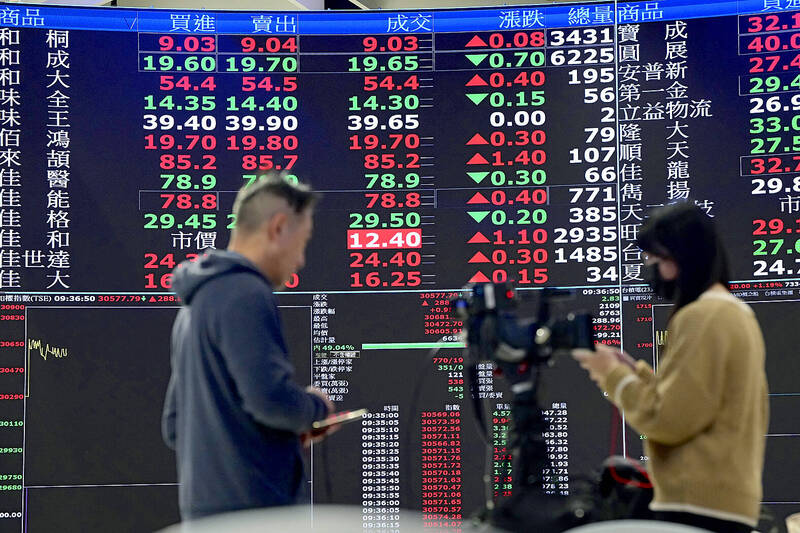
The National Stabilization Fund (NSF) in Taiwan has officially concluded its market-support operations after nearly 280 days of intervention, marking the longest period of such support in the fund’s history. This decision comes as investor confidence has rebounded and trading conditions have stabilized, allowing for the termination of its crisis response measures.
The fund, which was active since April 9, 2022, has yielded an impressive 52.56 percent return rate on a cumulative investment of NT$12.25 billion (approximately US$387.29 million). As of last month, the NSF reported an unrealized profit of NT$6.44 billion. The intervention was initiated in response to significant market volatility caused by global economic uncertainties and fluctuating cross-border capital flows.
Market Recovery Highlights
During the NSF’s intervention, the benchmark TAIEX index experienced a remarkable recovery, surging over 70 percent. It closed at a record NT$30,567.29 yesterday, up 0.92 percent from the previous trading session. This stands in stark contrast to its value of 17,391.76 at the onset of the fund’s support, a period marked by fears surrounding US President Donald Trump‘s tariffs and their impact on global markets.
Officials from the NSF emphasized that the fund’s efforts successfully stabilized local equity markets and restored investor confidence, fostering what they described as “active and orderly” trading conditions. For the entirety of last year, the TAIEX increased by 25.73 percent, with daily trading volumes surpassing NT$600 billion in 2023. This robust trading environment is expected to benefit the state treasury through securities transaction taxes.
Future Monitoring and Potential Reinstatement
With market mechanisms now functioning effectively, the NSF stated that there is no longer a need for its stabilization mission. However, the committee has committed to ongoing monitoring of both domestic and international economic and political developments. They indicated a willingness to reconvene should new risks emerge that threaten market stability.
The NSF, established in 2000 with a capital of NT$500 billion, was designed to buffer the local equity market against unexpected disruptions. The closure of its operations reflects policymakers’ growing assurance in Taiwan’s market resilience without external support.
Market analysts suggest that the NSF’s intervention played a crucial role in maintaining stability during turbulent times. As major technology companies prepare to announce strong earnings this year, driven by a surge in global demand for artificial intelligence hardware, the focus may now shift toward fostering broader market-driven growth in Taiwan’s economy.

India Unveils Long-Range Hypersonic Missile Amid Regional Tensions

SK bioscience Launches Global Trial for Universal Sarbecovirus Vaccine

Senegal Coach Pape Thiaw Suspended and Fined After Final Disruption

PAS Denies Abolishing Chairman Post, Contradicts Muhyiddin’s Claim

Mbappé Critiques Real Madrid’s Effort After Benfica Defeat

Thailand’s December Factory Output Surges 2.52% Year-on-Year

Ishita Dutta Reveals Her Parenting Secret: Strong Coffee

Older GPs Express Concerns Over New Digital Health Record Mandate

Urban Jurgensen: A 252-Year Legacy Enters a New Era

South Korea’s Foreign Minister Cho Hyun to Visit China This Week

Starling Bank Plans Secondary Share Sale, Targeting $5.4 Billion Valuation

Munsang College Celebrates 100 Years with Grand Ceremony

PAS Aims to Expand Parliamentary Influence in Upcoming Election

Kenvue Dismisses CEO Thibaut Mongon as Strategic Review Advances

Humanism Camp Engages 250 Youths in Summer Fest 2025

De Minaur Triumphs at Washington Open After Thrilling Comeback

Tupou and Daugunu Join First Nations Squad for Lions Clash

Colombian Senator Miguel Uribe Shows Signs of Recovery After Attack
-
 World5 months ago
South Korea’s Foreign Minister Cho Hyun to Visit China This Week
-
 Business5 months ago
Starling Bank Plans Secondary Share Sale, Targeting $5.4 Billion Valuation
-
 Top Stories5 months ago
Munsang College Celebrates 100 Years with Grand Ceremony
-
 World5 months ago
PAS Aims to Expand Parliamentary Influence in Upcoming Election
-
 Business7 months ago
Kenvue Dismisses CEO Thibaut Mongon as Strategic Review Advances
-
 Lifestyle6 months ago
Humanism Camp Engages 250 Youths in Summer Fest 2025
-
 Sports6 months ago
De Minaur Triumphs at Washington Open After Thrilling Comeback
-
 Sports7 months ago
Tupou and Daugunu Join First Nations Squad for Lions Clash
-
 Top Stories7 months ago
Colombian Senator Miguel Uribe Shows Signs of Recovery After Attack
-
 World7 months ago
ASEAN Gears Up for Historic Joint Meeting of Foreign and Economic Ministers
-

 Health6 months ago
New Study Challenges Assumptions About Aging and Inflammation
-

 Business7 months ago
Oil Prices Surge Following New EU Sanctions on Russia