
Business
Taiwan’s Export Orders Climb 39.5% to Reach US$72.92 Billion

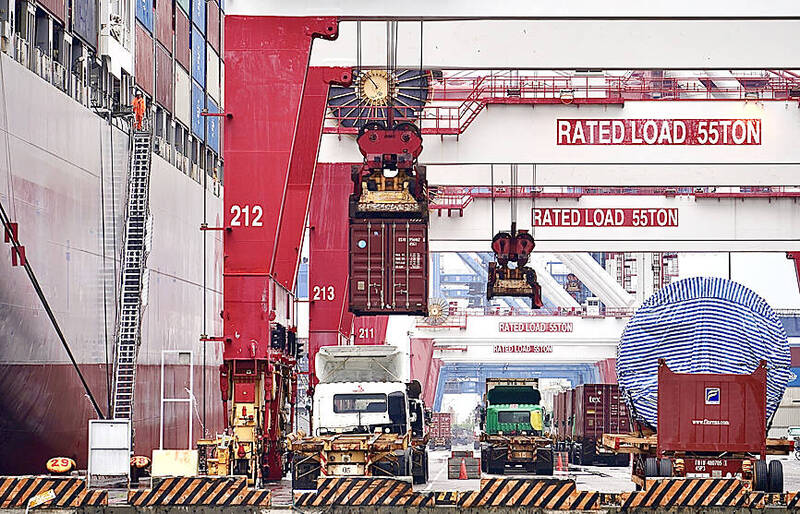
Taiwan’s export orders surged by an impressive 39.5 percent year-on-year, reaching US$72.92 billion in November 2023, according to the Ministry of Economic Affairs. This marks the tenth consecutive month of double-digit growth and represents the highest monthly figure recorded. The increase also reflects a 5.1 percent rise from the previous month, significantly surpassing the ministry’s earlier projection of between US$66.7 billion and US$68.7 billion.
The growth in export orders was primarily driven by a stronger-than-expected demand for server and chip orders, as highlighted by Huang Wei-jie, Director-General of the Department of Statistics. For the first 11 months of this year, total export orders rose 24.2 percent annually, amounting to US$666.65 billion, a record for this period.
Strong Demand Forecast for December
Looking ahead, the Ministry anticipates continued robust order momentum in December, projecting export orders could reach between US$72 billion and US$74 billion. This forecast corresponds to an annual increase of between 36.1 percent and 39.8 percent. Further projections estimate fourth-quarter orders will rise between 33.4 percent and 34.6 percent year-on-year, totaling between US$214.3 billion and US$216.3 billion.
Full-year export orders are expected to achieve a new high, with an estimated increase of between 25.3 percent and 25.6 percent, reaching between US$738.7 billion and US$740.7 billion. Should the momentum for server orders continue, the annual total could even exceed US$750 billion if December orders approach US$83.35 billion.
Impact of New Tariffs and Market Trends
The announcement of new tariffs by Mexico on goods from countries without a free-trade agreement, including Taiwan, has raised some concerns. However, Huang noted that the impact would likely be limited, as only about 3 to 4 percent of Taiwan’s total exports go to Mexico, and approximately 70 percent of these goods consist of information and communications technology (ICT) products, which are exempt from the tariffs.
In addition, the Executive Yuan’s Office of Trade Negotiations has confirmed unchanged or reduced tariffs for 82 items, further alleviating potential impacts on trade.
In November, export orders for electronic components soared by 47.9 percent year-on-year, largely fueled by demand for integrated circuits (ICs) and memory chips used in artificial intelligence (AI) and high-performance computing applications. The surge in memory prices also contributed to this growth. Orders for ICT products rose dramatically by 69.4 percent, propelled by advancements in AI and cloud services that bolstered demand for servers and networking equipment.
Conversely, the optoelectronics sector experienced a decline, with orders falling by 2.4 percent, ending a streak of growth that lasted 13 months. This downturn was attributed to weakened demand for flat panels and backlight modules.
Traditional industries faced challenges as well. Export orders for plastic and rubber products decreased by 15.8 percent, while base metals saw a slight drop of 0.5 percent and chemical product orders fell by 12.5 percent. These declines are partly due to ongoing pressures from US tariffs and competition from lower-priced imports from China.
As Taiwan navigates these dynamic markets, the government’s proactive strategies and robust demand for emerging technologies like AI may help sustain its export growth trajectory into the coming months.

India Unveils Long-Range Hypersonic Missile Amid Regional Tensions

SK bioscience Launches Global Trial for Universal Sarbecovirus Vaccine

Senegal Coach Pape Thiaw Suspended and Fined After Final Disruption

PAS Denies Abolishing Chairman Post, Contradicts Muhyiddin’s Claim

Mbappé Critiques Real Madrid’s Effort After Benfica Defeat

Thailand’s December Factory Output Surges 2.52% Year-on-Year

Ishita Dutta Reveals Her Parenting Secret: Strong Coffee

Older GPs Express Concerns Over New Digital Health Record Mandate

Urban Jurgensen: A 252-Year Legacy Enters a New Era

Regina Martinez Breaks New Ground for Mexico in Cross-Country Skiing

South Korea’s Foreign Minister Cho Hyun to Visit China This Week

Starling Bank Plans Secondary Share Sale, Targeting $5.4 Billion Valuation

Munsang College Celebrates 100 Years with Grand Ceremony

PAS Aims to Expand Parliamentary Influence in Upcoming Election

De Minaur Triumphs at Washington Open After Thrilling Comeback

Kenvue Dismisses CEO Thibaut Mongon as Strategic Review Advances

Humanism Camp Engages 250 Youths in Summer Fest 2025

Colombian Senator Miguel Uribe Shows Signs of Recovery After Attack
-
 Sports3 months ago
Regina Martinez Breaks New Ground for Mexico in Cross-Country Skiing
-
 World8 months ago
South Korea’s Foreign Minister Cho Hyun to Visit China This Week
-
 Business8 months ago
Starling Bank Plans Secondary Share Sale, Targeting $5.4 Billion Valuation
-
 Top Stories8 months ago
Munsang College Celebrates 100 Years with Grand Ceremony
-
 World8 months ago
PAS Aims to Expand Parliamentary Influence in Upcoming Election
-
 Sports9 months ago
De Minaur Triumphs at Washington Open After Thrilling Comeback
-
 Business10 months ago
Kenvue Dismisses CEO Thibaut Mongon as Strategic Review Advances
-
 Lifestyle9 months ago
Humanism Camp Engages 250 Youths in Summer Fest 2025
-
 Top Stories10 months ago
Colombian Senator Miguel Uribe Shows Signs of Recovery After Attack
-

 Sports10 months ago
Tupou and Daugunu Join First Nations Squad for Lions Clash
-

 World10 months ago
ASEAN Gears Up for Historic Joint Meeting of Foreign and Economic Ministers
-

 Health9 months ago
New Study Challenges Assumptions About Aging and Inflammation