
Business
Shell and Mitsubishi Explore Sale of Stakes in LNG Canada Project

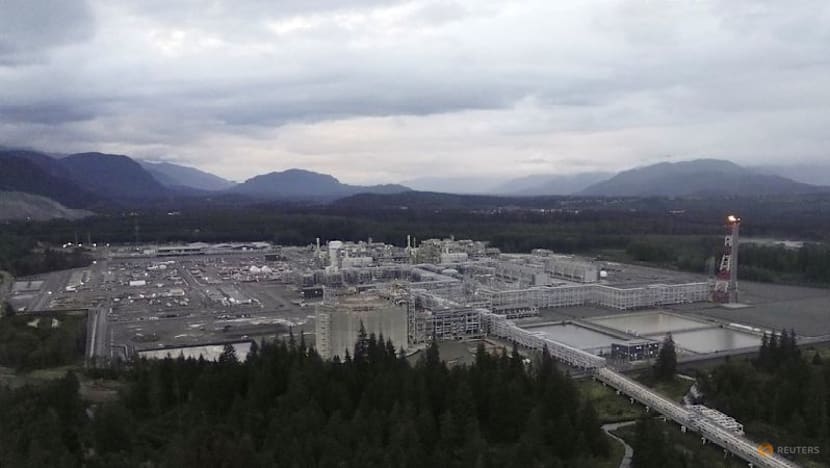
Shell and Mitsubishi Corporation are actively exploring options to sell their stakes in the C$40 billion (approximately $28.8 billion) LNG Canada project, according to three sources familiar with the discussions. This strategic consideration arises as the owners of the liquefied natural gas facility evaluate a potential expansion, following a recent successful sale by another stakeholder, Petronas.
Stakeholder Dynamics in LNG Canada
Shell, which holds a 40 percent stake, has engaged Rothschild & Co to identify potential buyers in recent weeks. Reports indicate that Shell is open to selling up to 30 percent of its holding. The company is weighing various options regarding its exposure to both Phase 1, which is operational, and the proposed Phase 2, each associated with different levels of risk.
One source estimated that any buyer for Shell’s stake could be looking at a commitment of around $15 billion, factoring in equity, debt, and capital requirements for the expansion of Phase 2.
Mitsubishi, which owns a 15 percent stake in the project, has also started assessing its options. The company has hired RBC Capital Markets for guidance, although discussions are still in the early stages, and any sale initiatives may not commence until later this year. Specific details regarding the extent of Mitsubishi’s stake to be marketed have not been disclosed.
Market Conditions and Future Prospects
The ongoing sales discussions come in the context of a competitive global LNG market. LNG Canada, located in Kitimat, British Columbia, is the first major LNG facility in North America with direct access to the Pacific Coast. It enjoys a supply cost advantage as Canadian natural gas prices typically trade at a discount to the U.S. Henry Hub benchmark.
Nonetheless, the potential owners are mindful of industry concerns surrounding a global oversupply of LNG as new production comes online. In December, Energy Transfer announced it would halt development of its Lake Charles LNG export facility in Louisiana, reflecting caution in the sector.
LNG Canada commenced production in June 2023, but it has encountered operational challenges. Its second processing unit, known as Train 2, faced issues shortly after its startup, raising questions about the project’s reliability.
When fully operational, Phase 1 of LNG Canada is expected to have a capacity to export 14 million metric tons of LNG annually. In terms of contractual agreements, Shell has indicated it will maintain a gas contract with the terminal for the next 30 years.
Developers of large infrastructure projects like LNG Canada often seek to reduce their stakes once operations commence, enabling them to realize profits and reinvest in new ventures. Such stakes are attractive to large investment firms and infrastructure funds that favor projects with steady revenue streams.
As the world’s largest LNG trader, Shell has set ambitious targets, aiming for a 4 percent to 5 percent annual increase in LNG sales over the next five years, alongside a 1 percent annual production growth. The company and its partners are preparing for a final investment decision for Phase 2, which could double the facility’s capacity as early as this year.
While the future of these stakes remains uncertain, the discussions reflect a significant moment for Shell, Mitsubishi, and the broader LNG market.

India Unveils Long-Range Hypersonic Missile Amid Regional Tensions

SK bioscience Launches Global Trial for Universal Sarbecovirus Vaccine

Senegal Coach Pape Thiaw Suspended and Fined After Final Disruption

PAS Denies Abolishing Chairman Post, Contradicts Muhyiddin’s Claim

Mbappé Critiques Real Madrid’s Effort After Benfica Defeat

Thailand’s December Factory Output Surges 2.52% Year-on-Year

Ishita Dutta Reveals Her Parenting Secret: Strong Coffee

Older GPs Express Concerns Over New Digital Health Record Mandate

Urban Jurgensen: A 252-Year Legacy Enters a New Era

Regina Martinez Breaks New Ground for Mexico in Cross-Country Skiing

South Korea’s Foreign Minister Cho Hyun to Visit China This Week

Starling Bank Plans Secondary Share Sale, Targeting $5.4 Billion Valuation

Munsang College Celebrates 100 Years with Grand Ceremony

PAS Aims to Expand Parliamentary Influence in Upcoming Election

De Minaur Triumphs at Washington Open After Thrilling Comeback

Kenvue Dismisses CEO Thibaut Mongon as Strategic Review Advances

Humanism Camp Engages 250 Youths in Summer Fest 2025

Colombian Senator Miguel Uribe Shows Signs of Recovery After Attack
-
 Sports2 months ago
Regina Martinez Breaks New Ground for Mexico in Cross-Country Skiing
-
 World6 months ago
South Korea’s Foreign Minister Cho Hyun to Visit China This Week
-
 Business6 months ago
Starling Bank Plans Secondary Share Sale, Targeting $5.4 Billion Valuation
-
 Top Stories6 months ago
Munsang College Celebrates 100 Years with Grand Ceremony
-
 World6 months ago
PAS Aims to Expand Parliamentary Influence in Upcoming Election
-
 Sports8 months ago
De Minaur Triumphs at Washington Open After Thrilling Comeback
-
 Business8 months ago
Kenvue Dismisses CEO Thibaut Mongon as Strategic Review Advances
-
 Lifestyle8 months ago
Humanism Camp Engages 250 Youths in Summer Fest 2025
-
 Top Stories8 months ago
Colombian Senator Miguel Uribe Shows Signs of Recovery After Attack
-

 Sports8 months ago
Tupou and Daugunu Join First Nations Squad for Lions Clash
-
 World8 months ago
ASEAN Gears Up for Historic Joint Meeting of Foreign and Economic Ministers
-

 Health8 months ago
New Study Challenges Assumptions About Aging and Inflammation