
Business
Prithviraj Chavan Critiques BCCI’s Decision on Bangladeshi Player

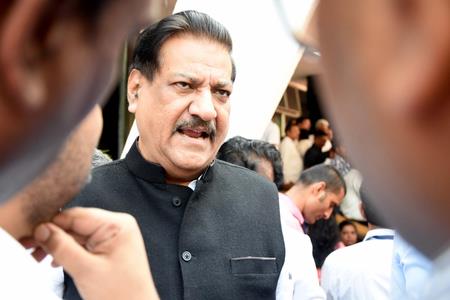
Former Maharashtra Chief Minister and senior Congress leader Prithviraj Chavan has criticized the Board of Control for Cricket in India’s (BCCI) directive to the Kolkata Knight Riders (KKR) to exclude Bangladeshi cricketer Mustafizur Rahman from their squad. This decision follows a surge of public outcry in India and reflects a broader tension in diplomatic relations between India and Bangladesh.
Chavan expressed concerns about the implications of such a move, stating that India should seek to maintain amicable relations with its neighboring countries. He cautioned against using sports organizations like the BCCI for political ends, arguing that it could exacerbate existing tensions. “I don’t understand why we are trying to make enemies of our neighbouring countries,” he remarked in an interview.
The criticism comes in the context of rising concerns about the safety of Hindu minorities in Bangladesh, particularly after the recent killings of four Hindu men. India has vocally condemned these acts of violence, urging the Bangladeshi government to ensure the protection of minority communities. Concurrently, there have been indications that Bangladesh is strengthening its ties with China, leading to a series of diplomatic tensions, including remarks about the strategically significant Northeastern corridor referred to as the “chicken’s neck.”
Chavan noted that India’s foreign policy has faltered in recent times, causing a deterioration in relations with its neighbors. He pointed out that the BCCI’s decision to drop Rahman could lead to a sports landscape similar to that of India’s relationship with Pakistan. “Our relations with neighbouring nations have deteriorated due to our foreign policies,” he stated, emphasizing the need for a more constructive approach.
In his remarks, Chavan described the exclusion of Mustafizur Rahman as a form of “economic sanction.” He highlighted the significant financial implications of such decisions, noting that a player in the Indian Premier League (IPL) can earn approximately ₹8-10 crore (around $1-1.2 million) in fees or allowances, which subsequently benefits their home nation. “If a player worth ₹8-9 crore is dropped, it clearly signals that we are taking action against Bangladesh,” he warned.
Chavan’s comments underline a broader concern regarding the potential long-term diplomatic consequences of using sports as a political tool. He argued that such actions could strain relationships further, potentially mirroring the complexities seen in India’s relations with Pakistan. “What kind of foreign policy are we following?” he questioned, calling for a reevaluation of how India engages with its neighbors.
As the situation unfolds, the implications of the BCCI’s decision and the reactions from political leaders like Chavan will likely continue to shape the discourse around India’s foreign relations and its approach to neighboring countries.

India Unveils Long-Range Hypersonic Missile Amid Regional Tensions

SK bioscience Launches Global Trial for Universal Sarbecovirus Vaccine

Senegal Coach Pape Thiaw Suspended and Fined After Final Disruption

PAS Denies Abolishing Chairman Post, Contradicts Muhyiddin’s Claim

Mbappé Critiques Real Madrid’s Effort After Benfica Defeat

Thailand’s December Factory Output Surges 2.52% Year-on-Year

Ishita Dutta Reveals Her Parenting Secret: Strong Coffee

Older GPs Express Concerns Over New Digital Health Record Mandate

Urban Jurgensen: A 252-Year Legacy Enters a New Era

Regina Martinez Breaks New Ground for Mexico in Cross-Country Skiing

South Korea’s Foreign Minister Cho Hyun to Visit China This Week

Starling Bank Plans Secondary Share Sale, Targeting $5.4 Billion Valuation

Munsang College Celebrates 100 Years with Grand Ceremony

PAS Aims to Expand Parliamentary Influence in Upcoming Election

De Minaur Triumphs at Washington Open After Thrilling Comeback

Kenvue Dismisses CEO Thibaut Mongon as Strategic Review Advances

Humanism Camp Engages 250 Youths in Summer Fest 2025

Colombian Senator Miguel Uribe Shows Signs of Recovery After Attack
-
 Sports3 months ago
Regina Martinez Breaks New Ground for Mexico in Cross-Country Skiing
-
 World7 months ago
South Korea’s Foreign Minister Cho Hyun to Visit China This Week
-
 Business7 months ago
Starling Bank Plans Secondary Share Sale, Targeting $5.4 Billion Valuation
-
 Top Stories7 months ago
Munsang College Celebrates 100 Years with Grand Ceremony
-
 World7 months ago
PAS Aims to Expand Parliamentary Influence in Upcoming Election
-
 Sports8 months ago
De Minaur Triumphs at Washington Open After Thrilling Comeback
-
 Business9 months ago
Kenvue Dismisses CEO Thibaut Mongon as Strategic Review Advances
-
 Lifestyle8 months ago
Humanism Camp Engages 250 Youths in Summer Fest 2025
-
 Top Stories9 months ago
Colombian Senator Miguel Uribe Shows Signs of Recovery After Attack
-

 Sports9 months ago
Tupou and Daugunu Join First Nations Squad for Lions Clash
-
 World9 months ago
ASEAN Gears Up for Historic Joint Meeting of Foreign and Economic Ministers
-

 Health8 months ago
New Study Challenges Assumptions About Aging and Inflammation