
Business
Judge Allows Elon Musk’s Lawsuit Against OpenAI to Proceed to Trial

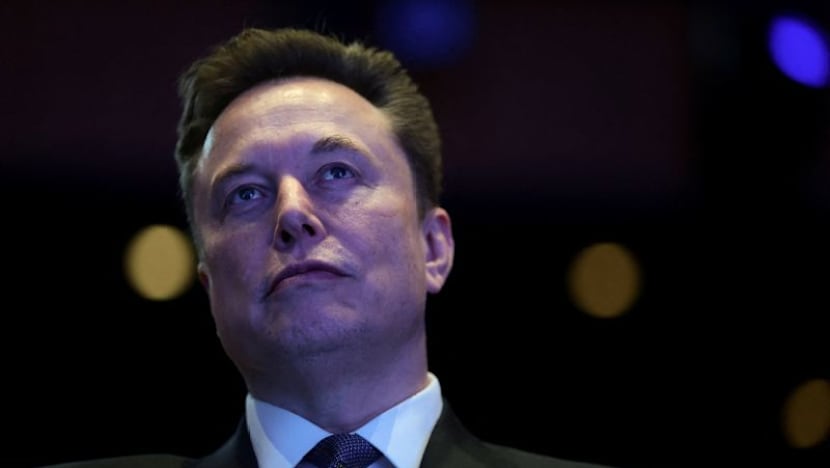
Billionaire entrepreneur Elon Musk has successfully secured a jury trial for his lawsuit against OpenAI, the company he co-founded in 2015. A U.S. District Judge in Oakland, California, ruled on January 7, 2024, that there is sufficient evidence to move forward with Musk’s claims that OpenAI violated its foundational mission during its transition to a for-profit entity.
During a court hearing, Judge Yvonne Gonzalez Rogers noted the presence of “plenty of evidence” suggesting that OpenAI’s leadership had provided assurances that the organization would maintain its original nonprofit structure. The judge stated that the numerous disputed facts warranted the consideration of these claims by a jury, rather than resolving the issues herself. A trial is scheduled for March 2024.
Musk’s lawsuit emerges amidst intense competition in the generative artificial intelligence sector, where his startup, xAI, is vying against OpenAI and other technology firms. Musk is seeking unspecified monetary damages, which he characterizes as “ill-gotten gains” resulting from OpenAI’s shift away from its nonprofit roots.
Musk has stated that he contributed approximately $38 million, or about 60 percent of OpenAI’s initial funding, alongside providing strategic guidance and credibility based on the organization’s commitment to public benefit. The lawsuit alleges that OpenAI co-founders Sam Altman and Greg Brockman conspired to convert the organization into a for-profit model to enrich themselves, culminating in lucrative agreements with Microsoft and a recent restructuring.
OpenAI, along with Altman and Brockman, has denied the allegations. They describe Musk as a “frustrated commercial competitor seeking to slow down a mission-driven market leader.” Microsoft, also named as a defendant in the case, has urged Judge Gonzalez Rogers to dismiss Musk’s claims against the company. A representative for Microsoft contended that there is no evidence supporting the claim that the company “aided and abetted” OpenAI.
At the hearing, lawyers representing OpenAI requested that the judge dismiss Musk’s lawsuit, arguing that he has not provided enough factual basis to support his allegations of fraud and breach of contract. They also asserted that Musk’s claims had not been filed in a timely manner. Judge Gonzalez Rogers indicated that the jury would need to determine whether Musk’s lawsuit was initiated beyond the statute of limitations.
The ongoing legal battle underscores the growing tensions within the rapidly evolving artificial intelligence landscape, where competition and questions of ethical responsibility continue to dominate discussions. As the trial approaches, the implications of this case could significantly impact the future of AI development and the operational structures of organizations involved in this burgeoning field.

India Unveils Long-Range Hypersonic Missile Amid Regional Tensions

SK bioscience Launches Global Trial for Universal Sarbecovirus Vaccine

Senegal Coach Pape Thiaw Suspended and Fined After Final Disruption

PAS Denies Abolishing Chairman Post, Contradicts Muhyiddin’s Claim

Mbappé Critiques Real Madrid’s Effort After Benfica Defeat

Thailand’s December Factory Output Surges 2.52% Year-on-Year

Ishita Dutta Reveals Her Parenting Secret: Strong Coffee

Older GPs Express Concerns Over New Digital Health Record Mandate

Urban Jurgensen: A 252-Year Legacy Enters a New Era

Regina Martinez Breaks New Ground for Mexico in Cross-Country Skiing

South Korea’s Foreign Minister Cho Hyun to Visit China This Week

Starling Bank Plans Secondary Share Sale, Targeting $5.4 Billion Valuation

Munsang College Celebrates 100 Years with Grand Ceremony

PAS Aims to Expand Parliamentary Influence in Upcoming Election

De Minaur Triumphs at Washington Open After Thrilling Comeback

Kenvue Dismisses CEO Thibaut Mongon as Strategic Review Advances

Humanism Camp Engages 250 Youths in Summer Fest 2025

Colombian Senator Miguel Uribe Shows Signs of Recovery After Attack
-
 Sports2 months ago
Regina Martinez Breaks New Ground for Mexico in Cross-Country Skiing
-
 World6 months ago
South Korea’s Foreign Minister Cho Hyun to Visit China This Week
-
 Business6 months ago
Starling Bank Plans Secondary Share Sale, Targeting $5.4 Billion Valuation
-
 Top Stories6 months ago
Munsang College Celebrates 100 Years with Grand Ceremony
-
 World6 months ago
PAS Aims to Expand Parliamentary Influence in Upcoming Election
-
 Sports8 months ago
De Minaur Triumphs at Washington Open After Thrilling Comeback
-
 Business8 months ago
Kenvue Dismisses CEO Thibaut Mongon as Strategic Review Advances
-
 Lifestyle8 months ago
Humanism Camp Engages 250 Youths in Summer Fest 2025
-
 Top Stories8 months ago
Colombian Senator Miguel Uribe Shows Signs of Recovery After Attack
-

 Sports8 months ago
Tupou and Daugunu Join First Nations Squad for Lions Clash
-

 World8 months ago
ASEAN Gears Up for Historic Joint Meeting of Foreign and Economic Ministers
-

 Health8 months ago
New Study Challenges Assumptions About Aging and Inflammation