
Business
Japan Faces Economic Crossroads as Takaichi Unveils Stimulus Plan

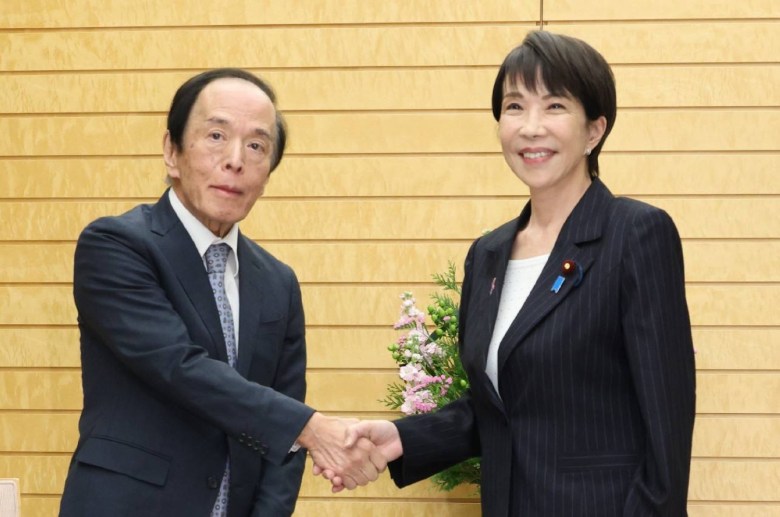
Japan is at a critical juncture as Prime Minister Sanae Takaichi introduces a substantial ¥17.7 trillion ($114 billion) stimulus package aimed at bolstering the economy. This initiative comes on the heels of a troubling economic contraction of 2.3% year-on-year in the third quarter of 2025. The dual narrative playing out in Japan’s financial markets highlights this precarious situation: while the Nikkei 225 Stock Average is reaching all-time highs, bond traders are expressing concern, pushing 10-year yields to their highest levels since 2007.
Takaichi’s stimulus plan has raised significant alarm among bond traders. The proposed measures are not merely a short-term fix; they signal the potential for further economic interventions, which Takaichi has dubbed “Takaichinomics.” On the campaign trail, she hinted at possible tax reductions, particularly in consumption levies. However, with Japan’s debt-to-GDP ratio already at a staggering 260%, there are fears that this spending could attract unwelcome scrutiny from credit rating agencies.
In August, prior to Takaichi’s tenure, Japan’s finance ministry requested a record $220 billion for debt servicing in the upcoming fiscal year. This growing financial burden raises questions about the sustainability of short-term fiscal stimulus measures in light of Japan’s debt levels. The term “Liz Truss moment” has been circulating among market observers, drawing parallels to the UK’s former Prime Minister who faced a debt crisis after attempting unfunded tax cuts in late 2022.
Japanese economist Shigeru Ishiba previously remarked that Tokyo’s financial situation is “worse than Greece,” a comment that underscores the severity of Japan’s fiscal challenges. Ishiba’s intent was to caution lawmakers against hasty tax cuts aimed at stimulating growth, fearing that such actions would only exacerbate the scrutiny of Japan’s fragile financial foundation.
The Institute of International Finance has pointed out that many countries, including Japan, continue to add to their debt burdens even as budget deficits remain elevated. This trend may lead to increased investor wariness regarding government bond auctions and borrowing plans, making it crucial for Takaichi to navigate these waters carefully.
Japan’s demographic challenges further complicate the economic landscape. The nation is grappling with an aging and declining population, which recorded a 0.75% decrease in 2024—the largest drop since records began in 1968. This demographic shift strains economic growth and productivity, making it difficult for the government to stimulate demand effectively.
Recent bond sales have illustrated this growing concern. A routine bond auction on May 20, 2025, saw the weakest demand since 2012, with the “tail,” or the spread between the average and lowest accepted price, reaching its highest level since 1987. Additionally, US economic policies, including Donald Trump‘s tariffs, have affected global markets and compounded challenges for Japan’s financial stability.
As the Bank of Japan (BOJ) prepares to resume its rate hike cycle, expected to raise the benchmark rate by 25 basis points to 0.75% on December 19, 2025, it faces increasing pressure from market forces. The BOJ’s decision to tighten monetary policy has been influenced by bond traders, who are reacting to rising yields that have surged close to 2%—the highest in 18 years.
The delicate balance Takaichi must maintain is evident, particularly as her economic strategy relies heavily on a weaker yen to boost exports. Any significant tightening by the BOJ could jeopardize this approach, particularly since inflation in Japan is currently outpacing both GDP and wage growth.
Concerns about inflation have prompted Shigeto Nagai, head of Japan research at Oxford Economics, to warn of a potential “mild stagflation threat.” If inflation does not ease to the targeted 2%, consumer spending could remain depressed, particularly if real incomes stagnate. Labor shortages and supply constraints may exacerbate inflationary pressures, creating a challenging economic environment for Takaichi.
Japan’s productivity levels remain a persistent issue, with worker efficiency ranking in the bottom third of Organization for Economic Cooperation and Development members. As inflation persists, any wage increases initiated by Japanese companies could further fuel price growth rather than stimulate economic recovery.
Public sentiment is shifting, with opinion polls indicating that consumers are growing weary of rising prices and are consequently curtailing household spending. Takaichi’s focus on geopolitical tensions, particularly her rhetoric regarding China and Taiwan, raises questions about her commitment to revamping Japan’s economy during her tenure.
Japanese prime ministers historically face significant challenges, with many serving less than a year. Takaichi’s approval ratings may initially benefit from her historic position as Japan’s first female prime minister and her promises to advance Abenomics. However, the legacy of previous administrations, which prioritized a weak yen over substantial competitiveness reforms, serves as a cautionary tale.
While Takaichi’s approach may garner temporary support, the necessity for deeper structural reforms to enhance Japan’s economic competitiveness is evident. Only through comprehensive policy changes can Takaichi hope to extend her time in office and foster a more resilient economy capable of weathering future challenges.

India Unveils Long-Range Hypersonic Missile Amid Regional Tensions

SK bioscience Launches Global Trial for Universal Sarbecovirus Vaccine

Senegal Coach Pape Thiaw Suspended and Fined After Final Disruption

PAS Denies Abolishing Chairman Post, Contradicts Muhyiddin’s Claim

Mbappé Critiques Real Madrid’s Effort After Benfica Defeat

Thailand’s December Factory Output Surges 2.52% Year-on-Year

Ishita Dutta Reveals Her Parenting Secret: Strong Coffee

Older GPs Express Concerns Over New Digital Health Record Mandate

Urban Jurgensen: A 252-Year Legacy Enters a New Era

South Korea’s Foreign Minister Cho Hyun to Visit China This Week

Starling Bank Plans Secondary Share Sale, Targeting $5.4 Billion Valuation

Munsang College Celebrates 100 Years with Grand Ceremony

PAS Aims to Expand Parliamentary Influence in Upcoming Election

Kenvue Dismisses CEO Thibaut Mongon as Strategic Review Advances

Humanism Camp Engages 250 Youths in Summer Fest 2025

De Minaur Triumphs at Washington Open After Thrilling Comeback

Tupou and Daugunu Join First Nations Squad for Lions Clash

Colombian Senator Miguel Uribe Shows Signs of Recovery After Attack
-
 World5 months ago
South Korea’s Foreign Minister Cho Hyun to Visit China This Week
-
 Business5 months ago
Starling Bank Plans Secondary Share Sale, Targeting $5.4 Billion Valuation
-
 Top Stories5 months ago
Munsang College Celebrates 100 Years with Grand Ceremony
-
 World5 months ago
PAS Aims to Expand Parliamentary Influence in Upcoming Election
-
 Business7 months ago
Kenvue Dismisses CEO Thibaut Mongon as Strategic Review Advances
-
 Lifestyle6 months ago
Humanism Camp Engages 250 Youths in Summer Fest 2025
-
 Sports6 months ago
De Minaur Triumphs at Washington Open After Thrilling Comeback
-
 Sports7 months ago
Tupou and Daugunu Join First Nations Squad for Lions Clash
-
 Top Stories7 months ago
Colombian Senator Miguel Uribe Shows Signs of Recovery After Attack
-

 World7 months ago
ASEAN Gears Up for Historic Joint Meeting of Foreign and Economic Ministers
-

 Health6 months ago
New Study Challenges Assumptions About Aging and Inflammation
-

 Business7 months ago
Oil Prices Surge Following New EU Sanctions on Russia