
Business
Core Inflation Holds Steady at 1.2% in Singapore for November

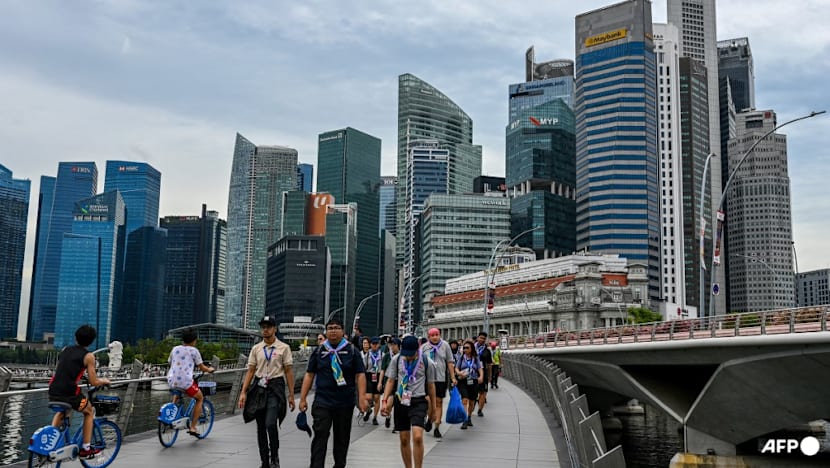
Singapore’s core inflation remained stable at 1.2% year-on-year in November 2023, as reported by the Ministry of Trade and Industry (MTI) and the Monetary Authority of Singapore (MAS). This figure, unchanged from October, reflects a balance between rising service costs and a decline in retail prices along with a notable drop in electricity and gas costs.
Despite the stability, the November core inflation rate was lower than the median forecast of 1.3%, according to a Reuters poll of economists. On a month-to-month basis, core prices, which exclude accommodation and private transport, decreased by 0.1%.
Overall inflation, measured by the Consumer Price Index-All Items (CPI-All Items), also remained at 1.2% in November. This was primarily due to unchanged accommodation and core inflation rates. However, on a monthly basis, overall inflation, which excludes non-consumption expenditures such as housing and financial assets, increased by 0.2%.
Sector Breakdown of Inflation Rates
According to the latest data, services inflation edged up to 1.9% in November from 1.8% in October. This increase was driven by higher costs in point-to-point transport services and health insurance. In contrast, prices for electricity and gas saw a sharper decline in November, largely due to reduced electricity costs.
Food inflation remained steady at 1.2%, with prices in food services and non-cooked foods increasing at a consistent rate. Retail and other goods inflation saw a slight dip, falling to 0.3% in November from 0.4% the previous month, as prices for clothing, footwear, and personal care appliances declined. Additionally, private transport inflation eased to 3.5% from 3.8% due to a smaller increase in car prices, while accommodation inflation held steady at 0.3%.
Future Inflation Projections
Looking ahead, MAS and MTI have maintained their previous outlook, indicating that Singapore’s imported costs are expected to decline, albeit at a slower pace. They anticipate that global crude oil prices will experience a gradual decrease in 2026 compared to 2025. Regional inflation is also projected to rise modestly following this year’s weaker performance.
“On the domestic front, administrative factors that are currently suppressing inflation are likely to continue diminishing over the coming quarters,” stated MAS and MTI officials. They further noted that growth in unit labour costs should increase as productivity normalizes, while private consumption demand is expected to remain steady.
Reflecting these expectations, core inflation is forecasted to be around 0.5% in 2025, with projections ranging between 0.5% and 1.5% in 2026. Overall inflation is anticipated to average 0.5% to 1% in 2025 and 0.5% to 1.5% in 2026.
MAS and MTI cautioned that the inflation outlook remains uncertain, as supply shocks, particularly those resulting from geopolitical issues, could abruptly increase imported costs. Conversely, a significant decline in global oil prices could also temporarily slow the pace of inflation.

India Unveils Long-Range Hypersonic Missile Amid Regional Tensions

SK bioscience Launches Global Trial for Universal Sarbecovirus Vaccine

Senegal Coach Pape Thiaw Suspended and Fined After Final Disruption

PAS Denies Abolishing Chairman Post, Contradicts Muhyiddin’s Claim

Mbappé Critiques Real Madrid’s Effort After Benfica Defeat

Thailand’s December Factory Output Surges 2.52% Year-on-Year

Ishita Dutta Reveals Her Parenting Secret: Strong Coffee

Older GPs Express Concerns Over New Digital Health Record Mandate

Urban Jurgensen: A 252-Year Legacy Enters a New Era

Regina Martinez Breaks New Ground for Mexico in Cross-Country Skiing

South Korea’s Foreign Minister Cho Hyun to Visit China This Week

Starling Bank Plans Secondary Share Sale, Targeting $5.4 Billion Valuation

Munsang College Celebrates 100 Years with Grand Ceremony

PAS Aims to Expand Parliamentary Influence in Upcoming Election

De Minaur Triumphs at Washington Open After Thrilling Comeback

Kenvue Dismisses CEO Thibaut Mongon as Strategic Review Advances

Humanism Camp Engages 250 Youths in Summer Fest 2025

Colombian Senator Miguel Uribe Shows Signs of Recovery After Attack
-
 Sports1 month ago
Regina Martinez Breaks New Ground for Mexico in Cross-Country Skiing
-
 World6 months ago
South Korea’s Foreign Minister Cho Hyun to Visit China This Week
-
 Business6 months ago
Starling Bank Plans Secondary Share Sale, Targeting $5.4 Billion Valuation
-
 Top Stories6 months ago
Munsang College Celebrates 100 Years with Grand Ceremony
-
 World6 months ago
PAS Aims to Expand Parliamentary Influence in Upcoming Election
-
 Sports7 months ago
De Minaur Triumphs at Washington Open After Thrilling Comeback
-
 Business8 months ago
Kenvue Dismisses CEO Thibaut Mongon as Strategic Review Advances
-
 Lifestyle7 months ago
Humanism Camp Engages 250 Youths in Summer Fest 2025
-
 Top Stories8 months ago
Colombian Senator Miguel Uribe Shows Signs of Recovery After Attack
-

 Sports8 months ago
Tupou and Daugunu Join First Nations Squad for Lions Clash
-
 World8 months ago
ASEAN Gears Up for Historic Joint Meeting of Foreign and Economic Ministers
-

 Health7 months ago
New Study Challenges Assumptions About Aging and Inflammation