
Business
Coffee Shop Operators Embrace Budget Meal Changes, Face New Challenges

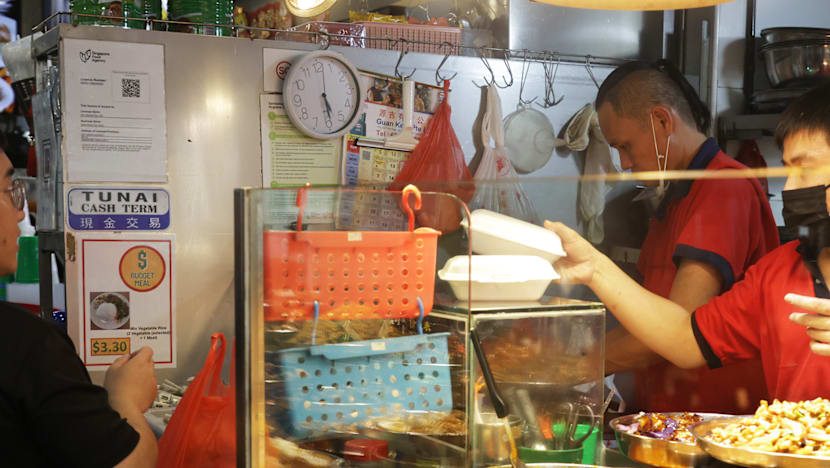
Operators of coffee shops in Singapore have responded positively to recent changes in the budget meal initiative, which will now allow greater flexibility for participation. Effective January 10, 2024, existing rental coffee shops are no longer mandated to offer budget meals during tenancy renewals, and privately owned coffee shops can opt out immediately. These adjustments are part of the Housing and Development Board’s (HDB) efforts to enhance the sustainability of the scheme.
New Structure of Budget Meal Initiative
The revised budget meal initiative enables coffee shop operators to choose whether to participate, offering them more flexibility in exchange for increased discounts on rent or Temporary Occupation Licence (TOL) fees. The HDB has also streamlined the requirements for budget meals, reducing the options from a range of two to six to three fixed meal choices. These include an economy rice option consisting of rice, one meat dish, and two vegetable dishes, a halal meal option, and a breakfast item. The pricing structure remains consistent, with budget meals typically costing around S$3.50 (approximately US$2.70) and budget drinks priced at S$1.20.
Mr. Hong Poh Hin, chairman of the Foochow Coffee Restaurant and Bar Merchants Association, emphasized that the standardization of meal options will help operators define what constitutes a budget meal. He noted that previously, the lack of clear definitions led to confusion among operators regarding pricing. “Because last time when they never clarify clearly, people will say, for example, noodle soup – how to define whether it’s budget or not budget?” he stated. Furthermore, he highlighted that some stalls provided limited sets of budget meals due to low profit margins.
Impact of Extended Rental Discounts
The extended 5 percent rental discount for those participating in the budget meal initiative has been well received among operators. While the previous discount was only available for one year upon participation, the HDB has now made it applicable for the entire three-year tenancy term. Mr. Hong explained that this change significantly reduces operational costs, which are heavily influenced by rental expenses. “Now they added another two years (of discounts)… So this is an additional benefit to the operator,” he said.
Mr. Glenn Koh, managing director of the coffee shop chain De Tian, echoed these sentiments, suggesting that the enhanced discounts will motivate more operators to join the initiative. However, he cautioned that while the discounts help, they may not fully cover all costs: “Every outlet, every store is different.” Currently, 15 out of 20 De Tian coffee shops participate in the budget meal initiative, and Mr. Koh indicated that most will likely continue to do so, although they will reassess their participation based on financial viability.
Operators face challenges in pricing their drinks to remain competitive while adhering to the budget meal price points. Mr. Koh pointed out that pricing two drinks—typically tea and coffee—at S$1.20 leaves slim profit margins. “And that is also challenging for operators, because that’s our bread and butter,” he remarked. Additionally, ensuring that each coffee shop can provide halal options may prove difficult, although he suggested that collaborating with a halal-certified vendor could be a solution.
Operators are also contending with a decrease in foot traffic and increased competition from new entrants in the market, particularly Chinese cuisine stalls. Mr. Koh noted, “So all these added competition, that’s our challenges.”
Mixed Reactions from Stallholders
Despite the changes, many stallholders reported that the adjustments to the scheme would not significantly affect their operations. Several indicated that the take-up rate for budget meals has been low. For instance, one worker at an economic rice stall estimated that only two to three budget meal plates were sold daily. Others, like Mr. Chua Sai Heng, who sells minced meat noodles and fishball noodles at S$3 a bowl, noted that his meals naturally fit within the budget meal price range, and he plans to continue providing them even without a mandate.
Mr. Chua stated, “If I raise my prices, there won’t be anybody… I don’t dare to raise,” indicating that his current pricing allows him to cover daily expenses. Similarly, Mr. Siew Ken Win, who operates a chicken rice stall in an HDB rental coffee shop, confirmed that they would likely continue offering their budget meal of smaller portion chicken rice priced at S$3.50 as customers have come to expect it. “If we suddenly stop selling it, it might have an impact on business,” he said.
Mdm. Siti Aishah, who sells Malay food at a coffee shop in Bukit Batok, expressed uncertainty about her participation in the scheme, given that her nasi lemak is already priced at S$3.50. She hopes to benefit from the 5 percent rental discount, which could help alleviate the high rental costs she faces.
As coffee shop operators navigate these changes, the overall sentiment remains cautiously optimistic, with many acknowledging the potential benefits while also recognizing the challenges that lie ahead.

India Unveils Long-Range Hypersonic Missile Amid Regional Tensions

SK bioscience Launches Global Trial for Universal Sarbecovirus Vaccine

Senegal Coach Pape Thiaw Suspended and Fined After Final Disruption

PAS Denies Abolishing Chairman Post, Contradicts Muhyiddin’s Claim

Mbappé Critiques Real Madrid’s Effort After Benfica Defeat

Thailand’s December Factory Output Surges 2.52% Year-on-Year

Ishita Dutta Reveals Her Parenting Secret: Strong Coffee

Older GPs Express Concerns Over New Digital Health Record Mandate

Urban Jurgensen: A 252-Year Legacy Enters a New Era

Regina Martinez Breaks New Ground for Mexico in Cross-Country Skiing

South Korea’s Foreign Minister Cho Hyun to Visit China This Week

Starling Bank Plans Secondary Share Sale, Targeting $5.4 Billion Valuation

Munsang College Celebrates 100 Years with Grand Ceremony

PAS Aims to Expand Parliamentary Influence in Upcoming Election

De Minaur Triumphs at Washington Open After Thrilling Comeback

Kenvue Dismisses CEO Thibaut Mongon as Strategic Review Advances

Humanism Camp Engages 250 Youths in Summer Fest 2025

Colombian Senator Miguel Uribe Shows Signs of Recovery After Attack
-
 Sports2 months ago
Regina Martinez Breaks New Ground for Mexico in Cross-Country Skiing
-
 World6 months ago
South Korea’s Foreign Minister Cho Hyun to Visit China This Week
-
 Business6 months ago
Starling Bank Plans Secondary Share Sale, Targeting $5.4 Billion Valuation
-
 Top Stories6 months ago
Munsang College Celebrates 100 Years with Grand Ceremony
-
 World6 months ago
PAS Aims to Expand Parliamentary Influence in Upcoming Election
-
 Sports8 months ago
De Minaur Triumphs at Washington Open After Thrilling Comeback
-
 Business8 months ago
Kenvue Dismisses CEO Thibaut Mongon as Strategic Review Advances
-
 Lifestyle8 months ago
Humanism Camp Engages 250 Youths in Summer Fest 2025
-
 Top Stories8 months ago
Colombian Senator Miguel Uribe Shows Signs of Recovery After Attack
-

 Sports8 months ago
Tupou and Daugunu Join First Nations Squad for Lions Clash
-
 World8 months ago
ASEAN Gears Up for Historic Joint Meeting of Foreign and Economic Ministers
-

 Health8 months ago
New Study Challenges Assumptions About Aging and Inflammation