
Business
Bank of Japan Holds Rates Steady Amid Political Uncertainty

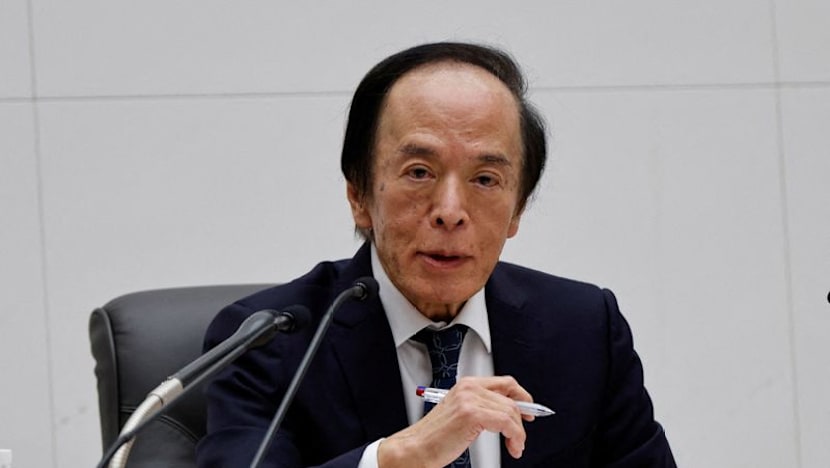
The Bank of Japan (BOJ) is expected to maintain its interest rates at 0.75 percent during its upcoming meeting on January 26, 2024, amid growing political uncertainty and a recent spike in bond yields. Governor Kazuo Ueda is likely to express cautious optimism regarding Japan’s economic recovery but will offer limited guidance on future rate increases, complicating the central bank’s strategy.
The backdrop for this decision includes Prime Minister Sanae Takaichi announcing a snap election next month, creating volatility in the financial markets. The BOJ finds itself needing to balance hawkish communication to support the yen while avoiding further increases in bond yields, which are influenced by expectations surrounding government spending.
During the two-day meeting, the BOJ will release its quarterly outlook report, which is anticipated to include an upward revision of its growth forecast for the fiscal year beginning in April. According to sources cited by Reuters, the central bank is likely to maintain its stance on raising rates if economic and price metrics align with expectations.
The results of the meeting will be announced between 12:30 p.m. and 2 p.m. (0330-0500 GMT), with a press conference scheduled for 3:30 p.m. (0630 GMT). Market participants are particularly focused on Ueda’s comments regarding the yen’s depreciation, which has increased import costs and contributed to rising inflation.
Kei Fujimoto, a senior economist at SuMi Trust, noted that despite the recent rate hike in December, the yen continues to weaken, raising concerns about the potential for higher import prices to affect domestic consumers. Fujimoto predicts the BOJ may need to accelerate its rate hikes, forecasting two increases within the year.
The political landscape complicates the BOJ’s approach. Takaichi’s commitment to a robust fiscal policy, including a proposed suspension of the 8 percent sales tax on food, has heightened fears of increased debt issuance. This uncertainty has contributed to rising bond yields, prompting discussions about the central bank’s quantitative tightening strategy, which is aimed at reducing its extensive balance sheet.
Analysts suggest that the BOJ might be compelled to reconsider its current trajectory, possibly pausing the tapering of bond purchases or even initiating emergency bond-buying operations. However, such actions are unlikely in the immediate future, as they would contradict the BOJ’s aim to reduce reliance on the stimulus measures previously implemented to combat persistent deflation.
The BOJ has shifted its policy direction since 2024, implementing several rate hikes as it aims for a sustainable inflation target of 2 percent. As the situation develops, all eyes will be on the BOJ’s next steps and the potential implications for Japan’s economy and financial markets.

India Unveils Long-Range Hypersonic Missile Amid Regional Tensions

SK bioscience Launches Global Trial for Universal Sarbecovirus Vaccine

Senegal Coach Pape Thiaw Suspended and Fined After Final Disruption

PAS Denies Abolishing Chairman Post, Contradicts Muhyiddin’s Claim

Mbappé Critiques Real Madrid’s Effort After Benfica Defeat

Thailand’s December Factory Output Surges 2.52% Year-on-Year

Ishita Dutta Reveals Her Parenting Secret: Strong Coffee

Older GPs Express Concerns Over New Digital Health Record Mandate

Urban Jurgensen: A 252-Year Legacy Enters a New Era

Regina Martinez Breaks New Ground for Mexico in Cross-Country Skiing

South Korea’s Foreign Minister Cho Hyun to Visit China This Week

Starling Bank Plans Secondary Share Sale, Targeting $5.4 Billion Valuation

Munsang College Celebrates 100 Years with Grand Ceremony

PAS Aims to Expand Parliamentary Influence in Upcoming Election

De Minaur Triumphs at Washington Open After Thrilling Comeback

Kenvue Dismisses CEO Thibaut Mongon as Strategic Review Advances

Humanism Camp Engages 250 Youths in Summer Fest 2025

Colombian Senator Miguel Uribe Shows Signs of Recovery After Attack
-
 Sports2 months ago
Regina Martinez Breaks New Ground for Mexico in Cross-Country Skiing
-
 World7 months ago
South Korea’s Foreign Minister Cho Hyun to Visit China This Week
-
 Business7 months ago
Starling Bank Plans Secondary Share Sale, Targeting $5.4 Billion Valuation
-
 Top Stories7 months ago
Munsang College Celebrates 100 Years with Grand Ceremony
-
 World7 months ago
PAS Aims to Expand Parliamentary Influence in Upcoming Election
-
 Sports8 months ago
De Minaur Triumphs at Washington Open After Thrilling Comeback
-
 Business9 months ago
Kenvue Dismisses CEO Thibaut Mongon as Strategic Review Advances
-
 Lifestyle8 months ago
Humanism Camp Engages 250 Youths in Summer Fest 2025
-
 Top Stories9 months ago
Colombian Senator Miguel Uribe Shows Signs of Recovery After Attack
-

 Sports9 months ago
Tupou and Daugunu Join First Nations Squad for Lions Clash
-

 World9 months ago
ASEAN Gears Up for Historic Joint Meeting of Foreign and Economic Ministers
-

 Health8 months ago
New Study Challenges Assumptions About Aging and Inflammation