
Politics
China and Japan Tensions Rise Amid Taiwan Dispute and Nuclear Talks

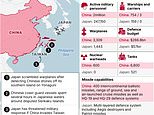
Tensions between China and Japan have escalated significantly as both nations navigate a complex geopolitical landscape involving Taiwan and territorial disputes. Recent statements from Chinese President Xi Jinping indicate a firm stance on military readiness, raising concerns that these two regional powers could become embroiled in conflict by 2027.
President Xi has reportedly ordered the Chinese military to prepare for potential action concerning Taiwan, which China considers a breakaway province. In a stark warning, he stated that Japan would “bear all consequences” if it intervenes in the situation. This declaration comes amidst growing fears that the Taiwan issue could ignite a broader conflict in the Asia-Pacific region.
Rising Military Preparedness and Nuclear Considerations
As the situation intensifies, Japan is weighing its options, including the potential development of nuclear capabilities. This discussion marks a significant shift in Japan’s post-World War II defense policy, which has traditionally emphasized pacifism. The Japanese government is facing mounting pressure from within to enhance its military capabilities in light of China’s assertive actions.
Japan’s Defense Minister has confirmed that the country is considering all available options to protect its interests, particularly concerning the disputed islands in the East China Sea. These islands, known as the Senkaku in Japan and the Diaoyu in China, have long been a source of contention between the two nations. The potential for conflict over these territories adds another layer of complexity to the already fraught relationship.
Japan’s government is also assessing the implications of its defense posture on its alliances, particularly with the United States. The U.S. maintains a military presence in Japan and has pledged support in the event of a conflict. This dynamic complicates the scenario, as any aggressive moves by China towards Taiwan or disputed islands could provoke a response not only from Japan but also from its allies.
Global Implications and Diplomatic Responses
The escalating tensions between China and Japan have global implications, raising concerns among other nations about stability in the Asia-Pacific region. Analysts emphasize that any military confrontation could disrupt international trade routes and economic stability. Japan’s strategic location and its role as a key U.S. ally further amplify these concerns.
In response to these developments, diplomatic efforts are underway to diffuse the situation. Regional dialogues involving multiple stakeholders, including the Association of Southeast Asian Nations (ASEAN), have been proposed to address the rising tensions. These discussions aim to foster cooperation and prevent miscalculations that could lead to conflict.
The international community is closely monitoring these developments, as the potential for conflict between two of the world’s largest economies poses a significant risk to global peace. As both nations navigate this precarious landscape, the focus remains on diplomacy to avert a confrontation that could have far-reaching consequences.

India Unveils Long-Range Hypersonic Missile Amid Regional Tensions

SK bioscience Launches Global Trial for Universal Sarbecovirus Vaccine

Senegal Coach Pape Thiaw Suspended and Fined After Final Disruption

PAS Denies Abolishing Chairman Post, Contradicts Muhyiddin’s Claim

Mbappé Critiques Real Madrid’s Effort After Benfica Defeat

Thailand’s December Factory Output Surges 2.52% Year-on-Year

Ishita Dutta Reveals Her Parenting Secret: Strong Coffee

Older GPs Express Concerns Over New Digital Health Record Mandate

Urban Jurgensen: A 252-Year Legacy Enters a New Era

Regina Martinez Breaks New Ground for Mexico in Cross-Country Skiing

South Korea’s Foreign Minister Cho Hyun to Visit China This Week

Starling Bank Plans Secondary Share Sale, Targeting $5.4 Billion Valuation

Munsang College Celebrates 100 Years with Grand Ceremony

PAS Aims to Expand Parliamentary Influence in Upcoming Election

De Minaur Triumphs at Washington Open After Thrilling Comeback

Kenvue Dismisses CEO Thibaut Mongon as Strategic Review Advances

Humanism Camp Engages 250 Youths in Summer Fest 2025

Colombian Senator Miguel Uribe Shows Signs of Recovery After Attack
-
 Sports2 months ago
Regina Martinez Breaks New Ground for Mexico in Cross-Country Skiing
-
 World6 months ago
South Korea’s Foreign Minister Cho Hyun to Visit China This Week
-
 Business6 months ago
Starling Bank Plans Secondary Share Sale, Targeting $5.4 Billion Valuation
-
 Top Stories6 months ago
Munsang College Celebrates 100 Years with Grand Ceremony
-
 World6 months ago
PAS Aims to Expand Parliamentary Influence in Upcoming Election
-
 Sports8 months ago
De Minaur Triumphs at Washington Open After Thrilling Comeback
-
 Business8 months ago
Kenvue Dismisses CEO Thibaut Mongon as Strategic Review Advances
-
 Lifestyle8 months ago
Humanism Camp Engages 250 Youths in Summer Fest 2025
-
 Top Stories8 months ago
Colombian Senator Miguel Uribe Shows Signs of Recovery After Attack
-

 Sports8 months ago
Tupou and Daugunu Join First Nations Squad for Lions Clash
-

 World8 months ago
ASEAN Gears Up for Historic Joint Meeting of Foreign and Economic Ministers
-

 Health8 months ago
New Study Challenges Assumptions About Aging and Inflammation