
Science
Military Technology Evolution: Drones Redefine Warfare Strategies

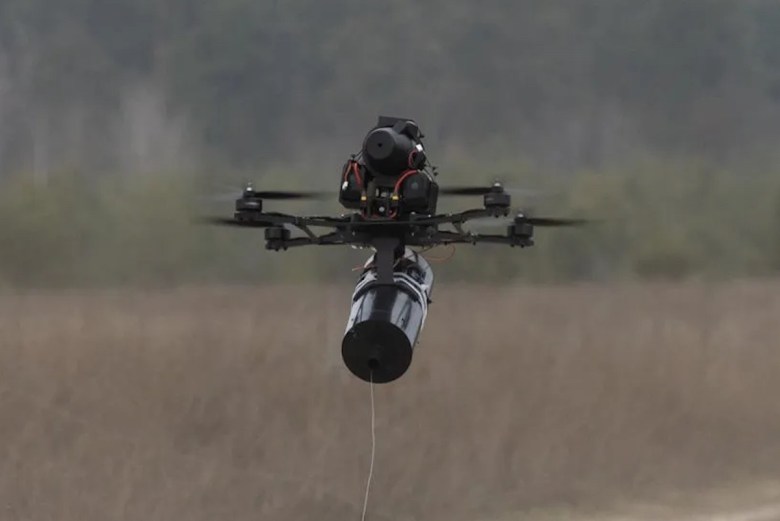
The landscape of modern warfare is undergoing a significant transformation, driven primarily by advancements in drone technology and artificial intelligence. According to military analysts, the anticipated shift could reshape not only military strategies but also societal structures globally. As of 2025, reports from the battlefield in Ukraine illustrate that drone warfare has become a dominant force, compelling military experts to reconsider the roles of traditional combat strategies.
The original insights about this evolution were shared by Noah Smith in a 2013 article for Quartz, where he outlined the potential impact of drones on warfare. Initially met with skepticism, Smith’s predictions have been validated as the reliance on drones—capable of engaging targets with precision—has grown substantially. The United States Army is now ordering a million drones to equip its forces, signifying a shift towards automated warfare.
Reports indicate that drones are increasingly replacing traditional artillery, with capabilities to effectively target infantry, tanks, and other military assets over considerable distances. Michael Kofman, a noted expert on the Ukraine conflict, emphasizes that the drone has become an essential tool for soldiers on the battlefield. Ukrainian drone strikes, for instance, have significantly impacted Russia’s oil industry from hundreds of miles away, showcasing the strategic advantage drones provide.
Implications of Autonomous Warfare
Currently, drones are operated by human pilots, who are vulnerable to electronic warfare tactics designed to disrupt communications. This limitation is expected to change with advancements in artificial intelligence, allowing for more autonomous drone operations. Early experiments in Ukraine with autonomous drone swarms hint at a future where drones could entirely replace manned combat vehicles.
The financial implications of such a transition are profound. Drones, being significantly less expensive to produce and operate than traditional military vehicles, offer a more cost-effective solution for modern armies. As technology continues to evolve, the operational landscape may see human infantry and manned vehicles becoming obsolete, replaced by cheaper, more efficient drones.
With the rise of drone warfare, nations will likely seek countermeasures to neutralize drone swarms. Initial responses may involve rapid-firing weapons, but future developments could include laser technologies capable of targeting drones with accuracy and efficiency. The potential for enhancing military capabilities through innovative technologies raises questions about the future of warfare and the societal adaptations that will be necessary.
Historical Context and Future Changes
Throughout history, significant waves of warfare have often coincided with advancements in military technology. The Mongols, for instance, utilized innovations such as stirrup-equipped horses and advanced archery techniques to dominate their adversaries. Similarly, the gunpowder era marked a transition in military tactics, leading to larger armies and unprecedented levels of destruction.
The relationship between military technology and societal change is evident. The rise of larger armies during the gunpowder age necessitated improvements in taxation and bureaucratic structures, fundamentally altering the organization of states. As warfare continues to evolve, the adoption of new technologies will compel nations to adapt in order to remain competitive and secure.
Currently, China appears to be at the forefront of these adaptations, mastering the complete drone supply chain and focusing on manufacturing capabilities. This strategic emphasis positions China to potentially outpace other countries in terms of drone production, raising concerns for nations like the United States and those in Europe regarding their ability to compete in future conflicts.
As societies grapple with the implications of these military advancements, the need for innovative governance structures and social reforms becomes increasingly important. The historical precedent suggests that the nations which adapt to these technological changes will not only survive but thrive in the face of new warfare paradigms.
In conclusion, the evolution of military technology, particularly in the realm of drones and AI, is set to redefine the structure of warfare and the organization of society. As history has shown, those who resist change face dire consequences. The challenge moving forward will be to embrace innovation while maintaining the core principles of governance and civil society. The future of warfare will demand significant adaptation, and the consequences of inaction could be catastrophic.

India Unveils Long-Range Hypersonic Missile Amid Regional Tensions

SK bioscience Launches Global Trial for Universal Sarbecovirus Vaccine

Senegal Coach Pape Thiaw Suspended and Fined After Final Disruption

PAS Denies Abolishing Chairman Post, Contradicts Muhyiddin’s Claim

Mbappé Critiques Real Madrid’s Effort After Benfica Defeat

Thailand’s December Factory Output Surges 2.52% Year-on-Year

Ishita Dutta Reveals Her Parenting Secret: Strong Coffee

Older GPs Express Concerns Over New Digital Health Record Mandate

Urban Jurgensen: A 252-Year Legacy Enters a New Era

Regina Martinez Breaks New Ground for Mexico in Cross-Country Skiing

South Korea’s Foreign Minister Cho Hyun to Visit China This Week

Starling Bank Plans Secondary Share Sale, Targeting $5.4 Billion Valuation

Munsang College Celebrates 100 Years with Grand Ceremony

PAS Aims to Expand Parliamentary Influence in Upcoming Election

De Minaur Triumphs at Washington Open After Thrilling Comeback

Kenvue Dismisses CEO Thibaut Mongon as Strategic Review Advances

Humanism Camp Engages 250 Youths in Summer Fest 2025

Colombian Senator Miguel Uribe Shows Signs of Recovery After Attack
-
 Sports2 months ago
Regina Martinez Breaks New Ground for Mexico in Cross-Country Skiing
-
 World6 months ago
South Korea’s Foreign Minister Cho Hyun to Visit China This Week
-
 Business6 months ago
Starling Bank Plans Secondary Share Sale, Targeting $5.4 Billion Valuation
-
 Top Stories6 months ago
Munsang College Celebrates 100 Years with Grand Ceremony
-
 World6 months ago
PAS Aims to Expand Parliamentary Influence in Upcoming Election
-
 Sports8 months ago
De Minaur Triumphs at Washington Open After Thrilling Comeback
-
 Business8 months ago
Kenvue Dismisses CEO Thibaut Mongon as Strategic Review Advances
-
 Lifestyle8 months ago
Humanism Camp Engages 250 Youths in Summer Fest 2025
-
 Top Stories8 months ago
Colombian Senator Miguel Uribe Shows Signs of Recovery After Attack
-

 Sports8 months ago
Tupou and Daugunu Join First Nations Squad for Lions Clash
-

 World8 months ago
ASEAN Gears Up for Historic Joint Meeting of Foreign and Economic Ministers
-

 Health8 months ago
New Study Challenges Assumptions About Aging and Inflammation