
Politics
US Encourages Pakistan-Israel Engagement Amid Regional Shifts

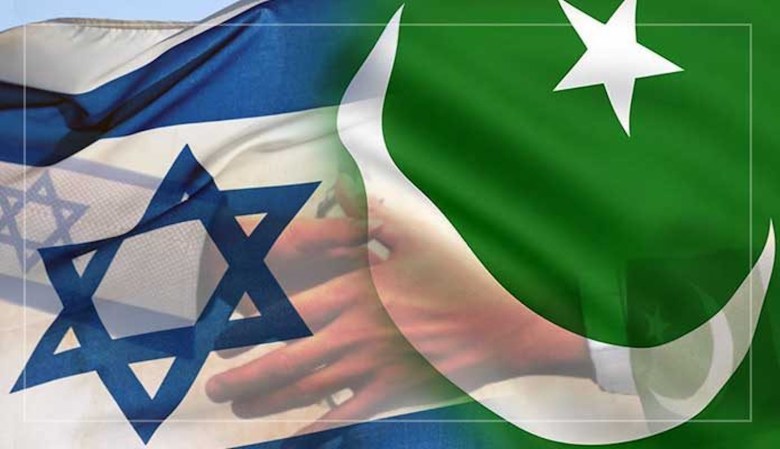
Recent diplomatic interactions indicate a significant shift in Pakistan’s relationship with Israel, driven by strategic interests from the United States. Over the past months, Pakistan has engaged with Israel in ways that were previously unthinkable, suggesting a recalibration of geopolitical alignments in the region. This evolving dynamic appears to align with Washington’s broader strategy in the Middle East, particularly in relation to the potential expansion of the “Abraham Accords 2.0.”
The signs of this emerging policy shift became particularly noticeable in November 2025. On November 4, during the World Travel Market Fair in London, a public meeting took place between Michael Izhakov, the director general of Israeli Tourism, and Sardar Yasir Ilyas Khan, an advisor to Pakistan’s prime minister. This exchange, which was widely photographed, marked a significant step for two nations that lack formal diplomatic relations.
During this period, another noteworthy interaction occurred when Prime Minister Shahbaz Sharif attended the UN General Assembly in New York in late September 2025. Reports suggest that Sharif had a discreet meeting with Daniel Rosen, president of the American Jewish Congress. Although neither party confirmed the meeting, the lack of denial underscored the growing engagement between Pakistani and Israeli representatives.
These developments fit into a larger framework of expanding back-channel communications and exploratory diplomacy. The Sharm el-Sheikh meeting on October 13, 2025, amidst the Gaza crisis, exemplified Pakistan’s potential new role in the region. Although the meeting was framed as a display of Muslim unity, it primarily served to bolster U.S. influence and showcase regional coordination, particularly in humanitarian efforts.
As international scrutiny of Israel heightened due to actions in Gaza, several European countries began pushing for formal recognition of the State of Palestine. In response, the Sharm el-Sheikh summit aimed to mitigate Israel’s global isolation and reinforce a U.S.-friendly narrative. The swift shift in diplomatic momentum following the summit highlighted Washington’s ability to redirect international attention and stabilize the post-conflict environment.
One of the most striking moments during this period came when Donald Trump publicly praised Sharif during a speech, urging him to reiterate his previous remarks about Trump being a “man of peace.” This moment was not merely ceremonial; it represented a strategic effort to align Pakistan with Trump’s proposals regarding the Gaza conflict, further elevating Islamabad’s status in regional discussions.
In addition to formal diplomatic channels, elements of Pakistani civil society have also sought engagement with Israel. In 2025, a delegation of journalists and influencers visited Israel under the auspices of NGO Sharaka, which promotes dialogue between Israel and countries in South Asia. While the Pakistani Foreign Office distanced itself from this initiative, participants described the visit as enlightening, highlighting a growing interest in cross-cultural understanding.
For Israel, Pakistan’s engagement is multifaceted. As the only Muslim-majority nation with nuclear capabilities, Pakistan holds significant strategic importance. Israeli policymakers have historically viewed Pakistan as a potential security challenge. Engaging with Pakistan could help reduce fears related to its nuclear status while simultaneously countering anti-Israel sentiment in the Muslim world.
Pakistan’s motivations are equally strategic. Increased military cooperation between India and Israel has raised concerns in Islamabad. Reports confirm that Israel supplied India with advanced military technology, intensifying Pakistan’s security calculus. Engaging with Israel might serve as a counterbalance to this growing Indo-Israeli alliance.
Domestic sentiment in Pakistan remains complex regarding potential recognition of Israel. Protests by groups such as Tehreek-e-Labbaik Pakistan have emerged in response to rumors of diplomatic engagement. Notably, Sharif’s recent expressions of support for a two-state solution reflect a subtle shift in Pakistan’s traditional policy stance, which has historically been resistant to formal ties with Israel.
The recent constitutional amendments centralizing power under the military leadership in Pakistan suggest a strategic approach to managing potential domestic backlash against controversial foreign policy decisions. This consolidation of authority may facilitate a more assertive foreign policy, particularly regarding relations with Israel.
In the backdrop of these developments, the United States appears to be strategically encouraging Pakistan’s gradual normalization of ties with Israel. Washington recognizes that aligning a significant Muslim state with Israel could have profound implications for regional dynamics. The U.S. is actively laying the groundwork for a potential breakthrough, which could reshape diplomatic relations in the Middle East.
As diplomatic channels expand, the architecture for a new geopolitical reality is being constructed. While the push for Pakistan to recognize Israel may not be the sole factor behind the renewed U.S.-Pakistan relationship, it remains a crucial element. The growing engagement suggests that Pakistan’s eventual recognition of Israel is increasingly plausible, with significant ramifications for global diplomatic calculations and regional alignments.
The trajectory of these developments indicates a potential geopolitical shift in the Muslim world. If Pakistan moves toward recognizing Israel, it would represent a monumental change, impacting regional alignments and delivering a symbolic victory for both Washington and Tel Aviv. The ongoing diplomatic efforts indicate that this transformation may soon come to fruition on the global stage.

India Unveils Long-Range Hypersonic Missile Amid Regional Tensions

SK bioscience Launches Global Trial for Universal Sarbecovirus Vaccine

Senegal Coach Pape Thiaw Suspended and Fined After Final Disruption

PAS Denies Abolishing Chairman Post, Contradicts Muhyiddin’s Claim

Mbappé Critiques Real Madrid’s Effort After Benfica Defeat

Thailand’s December Factory Output Surges 2.52% Year-on-Year

Ishita Dutta Reveals Her Parenting Secret: Strong Coffee

Older GPs Express Concerns Over New Digital Health Record Mandate

Urban Jurgensen: A 252-Year Legacy Enters a New Era

Regina Martinez Breaks New Ground for Mexico in Cross-Country Skiing

South Korea’s Foreign Minister Cho Hyun to Visit China This Week

Starling Bank Plans Secondary Share Sale, Targeting $5.4 Billion Valuation

Munsang College Celebrates 100 Years with Grand Ceremony

PAS Aims to Expand Parliamentary Influence in Upcoming Election

De Minaur Triumphs at Washington Open After Thrilling Comeback

Kenvue Dismisses CEO Thibaut Mongon as Strategic Review Advances

Humanism Camp Engages 250 Youths in Summer Fest 2025

Colombian Senator Miguel Uribe Shows Signs of Recovery After Attack
-
 Sports3 months ago
Regina Martinez Breaks New Ground for Mexico in Cross-Country Skiing
-
 World8 months ago
South Korea’s Foreign Minister Cho Hyun to Visit China This Week
-
 Business8 months ago
Starling Bank Plans Secondary Share Sale, Targeting $5.4 Billion Valuation
-
 Top Stories8 months ago
Munsang College Celebrates 100 Years with Grand Ceremony
-
 World8 months ago
PAS Aims to Expand Parliamentary Influence in Upcoming Election
-
 Sports9 months ago
De Minaur Triumphs at Washington Open After Thrilling Comeback
-
 Business10 months ago
Kenvue Dismisses CEO Thibaut Mongon as Strategic Review Advances
-
 Lifestyle9 months ago
Humanism Camp Engages 250 Youths in Summer Fest 2025
-
 Top Stories10 months ago
Colombian Senator Miguel Uribe Shows Signs of Recovery After Attack
-

 Sports10 months ago
Tupou and Daugunu Join First Nations Squad for Lions Clash
-
 World10 months ago
ASEAN Gears Up for Historic Joint Meeting of Foreign and Economic Ministers
-

 Health9 months ago
New Study Challenges Assumptions About Aging and Inflammation