
Health
EmeTerm Wristband Cuts Postoperative Nausea in Major Surgeries

A recent clinical trial has revealed that the EmeTerm wristband significantly reduces postoperative nausea and vomiting (PONV) in patients undergoing major orthopedic surgeries, such as total hip or knee arthroplasty. Conducted by WAT Medical Enterprise Ltd., the study has been published in the Journal of Bone & Joint Surgery on November 3, 2025.
The goal of the trial was to assess whether combining the EmeTerm wristband with standard antiemetic therapy could improve PONV prevention compared to conventional methods alone. The randomized controlled study included 348 patients who received either standard antiemetics—namely dexamethasone and ondansetron—or the antiemetics in conjunction with the EmeTerm device during spinal anesthesia.
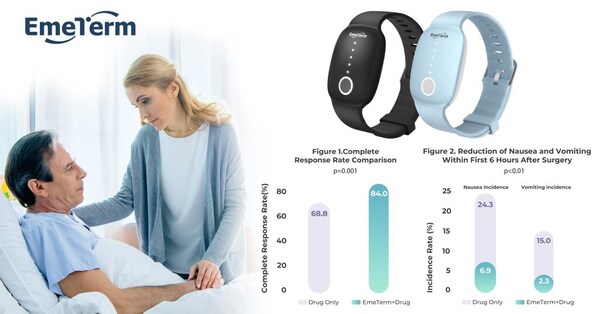
Results demonstrated a marked improvement in recovery quality for patients utilizing the EmeTerm wristband. The combination of the wristband and antiemetic medication led to a complete response rate of 84.0%, compared to 68.8% for medication alone, with a statistically significant p-value of 0.001.
Key Findings of the Study
The study highlighted critical changes in the incidence of nausea and vomiting within the first six postoperative hours. The EmeTerm wristband reduced nausea from 24.3% to 6.9% and vomiting from 15.0% to 2.3%. Such results underscore the device’s potential to enhance the effectiveness of existing antiemetic protocols in orthopedic settings.
The EmeTerm wristband employs a method known as transcutaneous electrical acupoint stimulation (TEAS), targeting the median nerve at the PC6 position on the wrist. This innovative approach modulates nausea pathways through neural stimulation, offering a non-pharmacological option for managing PONV.
Implications for Perioperative Care
With medical device certifications from the FDA, Health Canada, and TGA, WAT Medical Enterprise is also renewing its CE certification, expected to be finalized by the end of the first quarter in 2026. The study’s findings provide robust evidence that integrating the EmeTerm wristband into perioperative care can lead to faster and more comfortable patient recoveries while minimizing reliance on medication.
As healthcare trends shift towards multimodal, patient-centered recovery strategies, the EmeTerm wristband stands out as a promising tool. This device not only enhances recovery outcomes but also aligns with broader efforts to improve patient care across various medical disciplines.
In summary, the EmeTerm wristband’s efficacy in reducing postoperative nausea and vomiting represents a significant advancement in orthopedic surgical care, paving the way for more effective management of PONV and improved overall patient experiences.

India Unveils Long-Range Hypersonic Missile Amid Regional Tensions

SK bioscience Launches Global Trial for Universal Sarbecovirus Vaccine

Senegal Coach Pape Thiaw Suspended and Fined After Final Disruption

PAS Denies Abolishing Chairman Post, Contradicts Muhyiddin’s Claim

Mbappé Critiques Real Madrid’s Effort After Benfica Defeat

Thailand’s December Factory Output Surges 2.52% Year-on-Year

Ishita Dutta Reveals Her Parenting Secret: Strong Coffee

Older GPs Express Concerns Over New Digital Health Record Mandate

Urban Jurgensen: A 252-Year Legacy Enters a New Era

Regina Martinez Breaks New Ground for Mexico in Cross-Country Skiing

South Korea’s Foreign Minister Cho Hyun to Visit China This Week

Starling Bank Plans Secondary Share Sale, Targeting $5.4 Billion Valuation

Munsang College Celebrates 100 Years with Grand Ceremony

PAS Aims to Expand Parliamentary Influence in Upcoming Election

De Minaur Triumphs at Washington Open After Thrilling Comeback

Kenvue Dismisses CEO Thibaut Mongon as Strategic Review Advances

Humanism Camp Engages 250 Youths in Summer Fest 2025

Colombian Senator Miguel Uribe Shows Signs of Recovery After Attack
-
 Sports2 months ago
Regina Martinez Breaks New Ground for Mexico in Cross-Country Skiing
-
 World7 months ago
South Korea’s Foreign Minister Cho Hyun to Visit China This Week
-
 Business7 months ago
Starling Bank Plans Secondary Share Sale, Targeting $5.4 Billion Valuation
-
 Top Stories7 months ago
Munsang College Celebrates 100 Years with Grand Ceremony
-
 World7 months ago
PAS Aims to Expand Parliamentary Influence in Upcoming Election
-
 Sports8 months ago
De Minaur Triumphs at Washington Open After Thrilling Comeback
-
 Business9 months ago
Kenvue Dismisses CEO Thibaut Mongon as Strategic Review Advances
-
 Lifestyle8 months ago
Humanism Camp Engages 250 Youths in Summer Fest 2025
-
 Top Stories9 months ago
Colombian Senator Miguel Uribe Shows Signs of Recovery After Attack
-

 Sports9 months ago
Tupou and Daugunu Join First Nations Squad for Lions Clash
-

 World9 months ago
ASEAN Gears Up for Historic Joint Meeting of Foreign and Economic Ministers
-

 Health8 months ago
New Study Challenges Assumptions About Aging and Inflammation