
Health
Modern Bosses Balance Leadership and Emotional Support

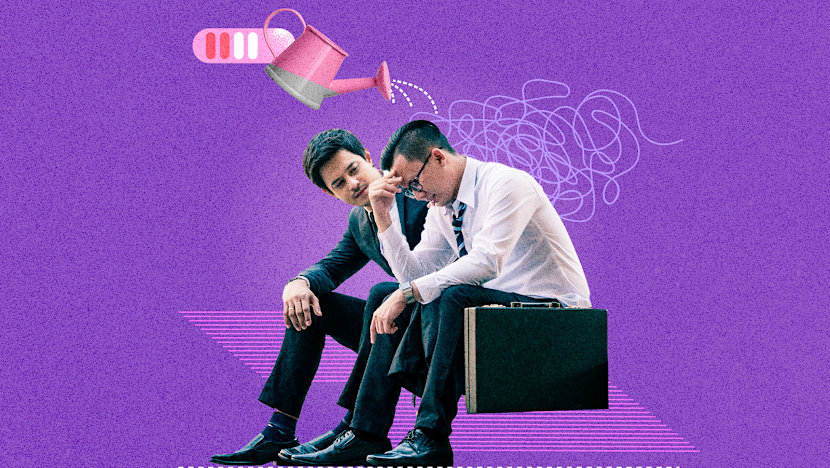
In today’s workplace, many leaders are finding that their roles extend far beyond traditional management responsibilities. They are increasingly acting as emotional support figures, navigating the complexities of their employees’ personal lives while striving to maintain productivity. This shift in workplace dynamics has been highlighted by Kelvin Kao, co-owner of a creative agency, who reflects on his experiences over the past decade.
Kao started his agency with a vision of inspiring creativity and collaboration. He anticipated a dynamic work environment, reminiscent of the classic television series Mad Men, where innovative ideas flowed freely amongst colleagues over drinks. Instead, he discovered that much of his time is dedicated to listening to the personal struggles of his staff. This new reality reflects a broader trend within workplaces, where mental well-being has become a priority.
Managing Mental Health
As organizations increasingly recognize the importance of mental health, employees are viewed as individuals with unique struggles rather than mere assets. This transformation has led to a heavier burden on leaders, who now must balance the demands of key performance indicators with the emotional needs of their teams. The expectation to offer support can lead to “quiet exhaustion,” as leaders often absorb their employees’ grievances without a structured outlet for their own stress.
Kao draws an analogy from the film Saving Private Ryan, noting that “gripes go up, not down.” This principle illustrates how complaints and stress often flow in one direction, placing significant pressure on those at the top. Leaders absorb the emotional weight to maintain stability within their teams, ultimately becoming the “emotional ballast” of their organizations.
The Challenge of Empathy
The challenge for modern leaders lies in finding the right balance between empathy and productivity. While it is crucial to understand when to support an employee during personal crises, the necessity to maintain workplace efficiency cannot be overlooked. For instance, Kao recounted a time when a staff member experienced the death of a parent. He provided emotional support and time off, while the team collectively stepped in to manage her workload.
Conversely, he has also faced scenarios where professional responsibilities needed to take precedence. Employees dealing with personal issues, such as relationship breakups, can experience dips in productivity, prompting leaders to push for performance while also providing necessary support. This dual responsibility can be taxing, especially as many managers are not formally trained in counseling.
Kao advocates for setting clear boundaries in the workplace. While it is essential for leaders to foster an environment of empathy, they should not be expected to fulfill the role of a therapist. Instead, organizations should encourage a culture where mutual support is the norm, allowing employees to feel comfortable seeking help and guidance from one another without placing the burden solely on their superiors.
Cultivating a Supportive Workplace
Reflecting on his experiences, Kao emphasizes the importance of creating a safe space for open communication. He values the moments spent listening to staff concerns, recognizing that such interactions can foster trust and camaraderie. However, he acknowledges the quiet toll that this emotional labor can take on leaders.
A healthy work environment should not depend solely on the emotional resilience of its leaders; it must be a collective effort where all members actively participate in supporting one another. Simple gestures, such as checking in with colleagues, can significantly enhance workplace culture and promote well-being among employees.
Kao remains committed to nurturing an empathetic workplace while also recognizing the need to prioritize his own emotional health. As the dynamics of leadership evolve, the challenge for bosses will be to maintain this delicate balance between caring for their teams and ensuring that work continues to progress effectively. The journey of modern leadership is complex, but at its core lies the fundamental principle of shared humanity.

India Unveils Long-Range Hypersonic Missile Amid Regional Tensions

SK bioscience Launches Global Trial for Universal Sarbecovirus Vaccine

Senegal Coach Pape Thiaw Suspended and Fined After Final Disruption

PAS Denies Abolishing Chairman Post, Contradicts Muhyiddin’s Claim

Mbappé Critiques Real Madrid’s Effort After Benfica Defeat

Thailand’s December Factory Output Surges 2.52% Year-on-Year

Ishita Dutta Reveals Her Parenting Secret: Strong Coffee

Older GPs Express Concerns Over New Digital Health Record Mandate

Urban Jurgensen: A 252-Year Legacy Enters a New Era

South Korea’s Foreign Minister Cho Hyun to Visit China This Week

Starling Bank Plans Secondary Share Sale, Targeting $5.4 Billion Valuation

Munsang College Celebrates 100 Years with Grand Ceremony

PAS Aims to Expand Parliamentary Influence in Upcoming Election

Kenvue Dismisses CEO Thibaut Mongon as Strategic Review Advances

Humanism Camp Engages 250 Youths in Summer Fest 2025

De Minaur Triumphs at Washington Open After Thrilling Comeback

Tupou and Daugunu Join First Nations Squad for Lions Clash

Colombian Senator Miguel Uribe Shows Signs of Recovery After Attack
-
 World5 months ago
South Korea’s Foreign Minister Cho Hyun to Visit China This Week
-
 Business5 months ago
Starling Bank Plans Secondary Share Sale, Targeting $5.4 Billion Valuation
-
 Top Stories5 months ago
Munsang College Celebrates 100 Years with Grand Ceremony
-
 World5 months ago
PAS Aims to Expand Parliamentary Influence in Upcoming Election
-
 Business7 months ago
Kenvue Dismisses CEO Thibaut Mongon as Strategic Review Advances
-
 Lifestyle6 months ago
Humanism Camp Engages 250 Youths in Summer Fest 2025
-
 Sports6 months ago
De Minaur Triumphs at Washington Open After Thrilling Comeback
-
 Sports7 months ago
Tupou and Daugunu Join First Nations Squad for Lions Clash
-
 Top Stories7 months ago
Colombian Senator Miguel Uribe Shows Signs of Recovery After Attack
-

 World7 months ago
ASEAN Gears Up for Historic Joint Meeting of Foreign and Economic Ministers
-

 Health6 months ago
New Study Challenges Assumptions About Aging and Inflammation
-
 Business7 months ago
Oil Prices Surge Following New EU Sanctions on Russia