
Business
Texas Instruments Reports Demand Slowdown Following Tariff Spike

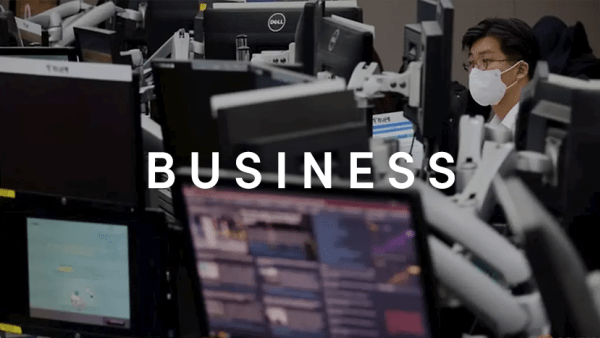
Texas Instruments (TI) has reported a notable slowdown in demand following a surge in April, which was largely driven by customers accelerating orders ahead of the “Liberation Day” tariff announcement. The company’s shares dropped nearly 4 percent on Thursday, reflecting investor concerns over future performance.
Speaking at the Citi Global TMT Conference, TI’s Chief Financial Officer, Rafael Lizardi, explained that the strength observed from January to April was partially attributed to market dynamics influenced by tariffs ahead of President Donald Trump‘s tariff announcement on April 2, 2023. “But then things did slow down after April, or at least didn’t grow as they normally would have,” Lizardi noted.
Government Equity Stake Discussions Unconfirmed
Lizardi further clarified that Texas Instruments has neither been approached regarding nor discussed any potential U.S. government equity stake as a condition for receiving incentives under the CHIPS Act. This statement comes in light of the Trump administration’s controversial decision to acquire a 9.9 percent equity stake in Intel, which has raised concerns about government involvement in the private sector. “Nothing along those lines has been discussed or proposed. We have not been approached on any of that,” Lizardi affirmed.
The agreement with the U.S. government, initially established under the Biden administration and subsequently revised over the past six months, has resulted in only minor adjustments according to Lizardi. “There were little things they wanted to change, but nothing along the lines of what you’re hearing from companies like Intel,” he added.
Funding and Financial Outlook
The U.S. Commerce Department has allocated up to $1.6 billion in funding for TI under the CHIPS and Science Act. Despite this financial backing, Lizardi indicated that the company’s free cash flow has been affected by increased capital expenditures in recent years. Although share repurchases have continued, the pace has slowed due to prioritizing capital expenditure.
In July, TI’s quarterly profit forecast failed to meet investor expectations, as it indicated weaker-than-anticipated demand for its analog chips from various customers. Nonetheless, the company remains optimistic, stating that four of its five end markets are on the path to recovery. The automotive sector, however, continues to face challenges due to a sluggish rebound in demand and ongoing economic uncertainty.

India Unveils Long-Range Hypersonic Missile Amid Regional Tensions

SK bioscience Launches Global Trial for Universal Sarbecovirus Vaccine

Senegal Coach Pape Thiaw Suspended and Fined After Final Disruption

PAS Denies Abolishing Chairman Post, Contradicts Muhyiddin’s Claim

Mbappé Critiques Real Madrid’s Effort After Benfica Defeat

Thailand’s December Factory Output Surges 2.52% Year-on-Year

Ishita Dutta Reveals Her Parenting Secret: Strong Coffee

Older GPs Express Concerns Over New Digital Health Record Mandate

Urban Jurgensen: A 252-Year Legacy Enters a New Era

Regina Martinez Breaks New Ground for Mexico in Cross-Country Skiing

South Korea’s Foreign Minister Cho Hyun to Visit China This Week

Starling Bank Plans Secondary Share Sale, Targeting $5.4 Billion Valuation

Munsang College Celebrates 100 Years with Grand Ceremony

PAS Aims to Expand Parliamentary Influence in Upcoming Election

De Minaur Triumphs at Washington Open After Thrilling Comeback

Kenvue Dismisses CEO Thibaut Mongon as Strategic Review Advances

Humanism Camp Engages 250 Youths in Summer Fest 2025

Colombian Senator Miguel Uribe Shows Signs of Recovery After Attack
-
 Sports2 months ago
Regina Martinez Breaks New Ground for Mexico in Cross-Country Skiing
-
 World6 months ago
South Korea’s Foreign Minister Cho Hyun to Visit China This Week
-
 Business7 months ago
Starling Bank Plans Secondary Share Sale, Targeting $5.4 Billion Valuation
-
 Top Stories7 months ago
Munsang College Celebrates 100 Years with Grand Ceremony
-
 World6 months ago
PAS Aims to Expand Parliamentary Influence in Upcoming Election
-
 Sports8 months ago
De Minaur Triumphs at Washington Open After Thrilling Comeback
-
 Business8 months ago
Kenvue Dismisses CEO Thibaut Mongon as Strategic Review Advances
-
 Lifestyle8 months ago
Humanism Camp Engages 250 Youths in Summer Fest 2025
-
 Top Stories9 months ago
Colombian Senator Miguel Uribe Shows Signs of Recovery After Attack
-

 Sports8 months ago
Tupou and Daugunu Join First Nations Squad for Lions Clash
-
 World8 months ago
ASEAN Gears Up for Historic Joint Meeting of Foreign and Economic Ministers
-

 Health8 months ago
New Study Challenges Assumptions About Aging and Inflammation