
World
Xi and Modi Seek Friendship Amidst Geopolitical Shifts

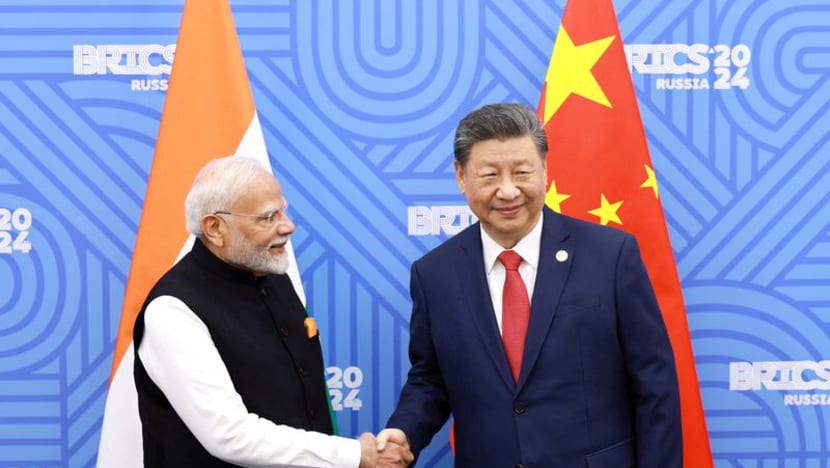
Chinese President Xi Jinping and Indian Prime Minister Narendra Modi engaged in a significant meeting on March 15, 2024, during the Shanghai Cooperation Organization (SCO) summit in Tianjin, China. Their discussions centered on strengthening ties between the two nations, emphasizing the importance of friendship and cooperation as both countries navigate complex global challenges.
In his opening remarks, Xi highlighted the shared status of China and India as two of the world’s most populous and culturally rich nations. He stated, “It is vital to be friends, a good neighbour, and for the ‘dragon’ and the ‘elephant’ to come together.” This metaphor underscores the potential for collaboration between the two countries, which have historically faced tensions but are now seeking a more amicable relationship.
Modi, on his first trip to China in seven years, acknowledged the progress made in bilateral relations since last year. He remarked, “We are committed to taking our relations forward on the basis of mutual trust, respect and sensitivity.” Modi also noted that a “peaceful and stable” atmosphere had been established following the disengagement along their disputed border.
The meeting lasted nearly an hour and occurred in the context of a broader strategic realignment influenced by external pressures, particularly from the United States. Relations between Beijing and New Delhi deteriorated significantly after a deadly border clash in 2020. However, both nations have since taken steps towards rebuilding their partnership, especially in light of rising US tariffs that have impacted their economies.
While the Xi-Modi discussions are not expected to resolve major disputes, Modi’s presence in Tianjin signals a shift in strategy to address geopolitical vulnerabilities. Notably, Modi will not attend the military parade in Beijing on March 16, which will feature Xi alongside Russian President Vladimir Putin and North Korean leader Kim Jong Un.
The United States has been actively courting India as a counterbalance to China, yet recent developments, including a 50 percent tariff on Indian goods imposed by Washington, complicate this relationship. The tariffs target India’s purchases of Russian oil, a move Delhi has resisted, insisting on its right to protect national interests and diversify its trade partnerships.
Modi’s visit to China follows his talks in Japan, where he and Japanese Prime Minister Shigeru Ishiba signed an economic security initiative. This agreement focuses on collaboration in critical sectors such as semiconductors, artificial intelligence, and clean energy, with Japan pledging USD 67 billion in investments over the next decade.
In summary, the meeting between Xi and Modi marks a pivotal moment for China-India relations, reflecting a desire for cooperation amidst a challenging geopolitical landscape. The outcomes of their discussions will likely play a role in shaping the future dynamics of the Global South, as both countries seek to enhance their influence on the world stage.

India Unveils Long-Range Hypersonic Missile Amid Regional Tensions

SK bioscience Launches Global Trial for Universal Sarbecovirus Vaccine

Senegal Coach Pape Thiaw Suspended and Fined After Final Disruption

PAS Denies Abolishing Chairman Post, Contradicts Muhyiddin’s Claim

Mbappé Critiques Real Madrid’s Effort After Benfica Defeat

Thailand’s December Factory Output Surges 2.52% Year-on-Year

Ishita Dutta Reveals Her Parenting Secret: Strong Coffee

Older GPs Express Concerns Over New Digital Health Record Mandate

Urban Jurgensen: A 252-Year Legacy Enters a New Era

Regina Martinez Breaks New Ground for Mexico in Cross-Country Skiing

South Korea’s Foreign Minister Cho Hyun to Visit China This Week

Starling Bank Plans Secondary Share Sale, Targeting $5.4 Billion Valuation

Munsang College Celebrates 100 Years with Grand Ceremony

PAS Aims to Expand Parliamentary Influence in Upcoming Election

De Minaur Triumphs at Washington Open After Thrilling Comeback

Kenvue Dismisses CEO Thibaut Mongon as Strategic Review Advances

Humanism Camp Engages 250 Youths in Summer Fest 2025

Colombian Senator Miguel Uribe Shows Signs of Recovery After Attack
-
 Sports2 months ago
Regina Martinez Breaks New Ground for Mexico in Cross-Country Skiing
-
 World6 months ago
South Korea’s Foreign Minister Cho Hyun to Visit China This Week
-
 Business7 months ago
Starling Bank Plans Secondary Share Sale, Targeting $5.4 Billion Valuation
-
 Top Stories7 months ago
Munsang College Celebrates 100 Years with Grand Ceremony
-
 World6 months ago
PAS Aims to Expand Parliamentary Influence in Upcoming Election
-
 Sports8 months ago
De Minaur Triumphs at Washington Open After Thrilling Comeback
-
 Business8 months ago
Kenvue Dismisses CEO Thibaut Mongon as Strategic Review Advances
-
 Lifestyle8 months ago
Humanism Camp Engages 250 Youths in Summer Fest 2025
-
 Top Stories8 months ago
Colombian Senator Miguel Uribe Shows Signs of Recovery After Attack
-

 Sports8 months ago
Tupou and Daugunu Join First Nations Squad for Lions Clash
-

 World8 months ago
ASEAN Gears Up for Historic Joint Meeting of Foreign and Economic Ministers
-

 Health8 months ago
New Study Challenges Assumptions About Aging and Inflammation