
World
U.S. Aggressive Foreign Policy Highlights Declining Global Influence

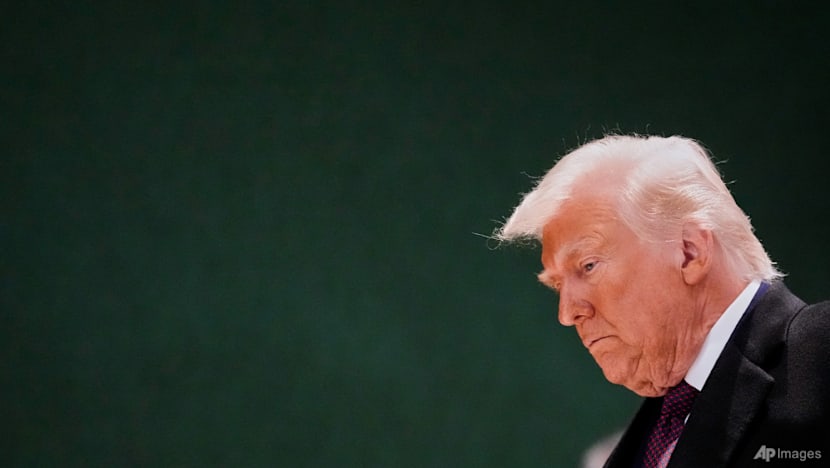
Recent events in Venezuela and Greenland have brought the United States’ foreign policy under scrutiny, raising questions about its effectiveness and implications. Under the leadership of President Donald Trump, the U.S. has taken aggressive stances that some see as indicative of a nation grappling with its declining influence on the global stage. Actions such as the attempt to capture Venezuelan President Nicolas Maduro and the contentious proposal to purchase Greenland signal a shift in how the U.S. engages with the world.
Signs of a Struggling Superpower
While the U.S. remains dominant in technology and military capabilities, it is losing ground in areas such as trade and human development. This decline is not always immediately visible; often, it manifests through over-aggression. A powerful nation does not need to rely on force to assert its dominance, yet the U.S.’s recent behavior suggests a belief in its own invincibility.
In an essay titled “The Great Reckoning,” writer Kaiser Kuo highlighted the stark contrast between America’s current dysfunction and China’s rapid ascent. Kuo emphasized that America’s aggressive tactics reveal deeper vulnerabilities, stating, “Every infrastructure breakdown, every squabble over basic funding… feels more noticeable in contrast to China’s rapid and extensive transformation.” This perspective suggests that the U.S. is not merely testing its limits but is responding to an existential challenge posed by a rising China.
Trump’s approach has led to actions that appear more reactive than strategic. For instance, the failed operation to capture Maduro showcased the limits of American power. Rather than employing diplomatic methods or collaboration with regional leaders, the U.S. opted for direct confrontation, which has raised concerns about its adherence to international law and respect among nations.
Alienation of Allies and the Illusion of Strength
Similarly, the U.S.’s dealings regarding Greenland have further illustrated its waning influence. Although NATO has largely aligned with U.S. interests under Trump’s administration—pressuring member states to increase defense spending—the attempt to assert control over Greenland backfired. Even with shared geopolitical interests, the resort to threats of military action alienated key European allies.
Trump’s recent decision to abandon plans for military action in Greenland has left uncertainty about the U.S.’s future intentions. The implications of such decisions are significant, particularly in regions where American influence was once unquestioned. The contrast with past U.S. achievements, such as establishing the dollar as the world’s reserve currency and forming strategic alliances without coercion, highlights the current administration’s departure from diplomatic norms.
As Han Fook Kwang, a senior fellow at the S Rajaratnam School of International Studies, points out, a declining power often engages in irrelevant exercises that may yield short-term gains but do not contribute to long-term stability or strength. The focus on aggressive foreign policy distracts from essential investments in domestic capabilities, such as education and technological innovation.
Ultimately, the future of U.S. foreign policy will depend on its ability to adapt to a changing global landscape. If the current trajectory continues, the repercussions could be far-reaching, not only for America but for the international community as well.

India Unveils Long-Range Hypersonic Missile Amid Regional Tensions

SK bioscience Launches Global Trial for Universal Sarbecovirus Vaccine

Senegal Coach Pape Thiaw Suspended and Fined After Final Disruption

PAS Denies Abolishing Chairman Post, Contradicts Muhyiddin’s Claim

Mbappé Critiques Real Madrid’s Effort After Benfica Defeat

Thailand’s December Factory Output Surges 2.52% Year-on-Year

Ishita Dutta Reveals Her Parenting Secret: Strong Coffee

Older GPs Express Concerns Over New Digital Health Record Mandate

Urban Jurgensen: A 252-Year Legacy Enters a New Era

South Korea’s Foreign Minister Cho Hyun to Visit China This Week

Starling Bank Plans Secondary Share Sale, Targeting $5.4 Billion Valuation

Munsang College Celebrates 100 Years with Grand Ceremony

PAS Aims to Expand Parliamentary Influence in Upcoming Election

Kenvue Dismisses CEO Thibaut Mongon as Strategic Review Advances

Humanism Camp Engages 250 Youths in Summer Fest 2025

De Minaur Triumphs at Washington Open After Thrilling Comeback

Tupou and Daugunu Join First Nations Squad for Lions Clash

Colombian Senator Miguel Uribe Shows Signs of Recovery After Attack
-
 World5 months ago
South Korea’s Foreign Minister Cho Hyun to Visit China This Week
-
 Business5 months ago
Starling Bank Plans Secondary Share Sale, Targeting $5.4 Billion Valuation
-
 Top Stories5 months ago
Munsang College Celebrates 100 Years with Grand Ceremony
-
 World5 months ago
PAS Aims to Expand Parliamentary Influence in Upcoming Election
-
 Business7 months ago
Kenvue Dismisses CEO Thibaut Mongon as Strategic Review Advances
-
 Lifestyle6 months ago
Humanism Camp Engages 250 Youths in Summer Fest 2025
-
 Sports6 months ago
De Minaur Triumphs at Washington Open After Thrilling Comeback
-
 Sports7 months ago
Tupou and Daugunu Join First Nations Squad for Lions Clash
-
 Top Stories7 months ago
Colombian Senator Miguel Uribe Shows Signs of Recovery After Attack
-

 World7 months ago
ASEAN Gears Up for Historic Joint Meeting of Foreign and Economic Ministers
-

 Health6 months ago
New Study Challenges Assumptions About Aging and Inflammation
-

 Business6 months ago
Oil Prices Surge Following New EU Sanctions on Russia