
Sports
Alpine Skiing Reassesses Safety Standards After Tragic Deaths

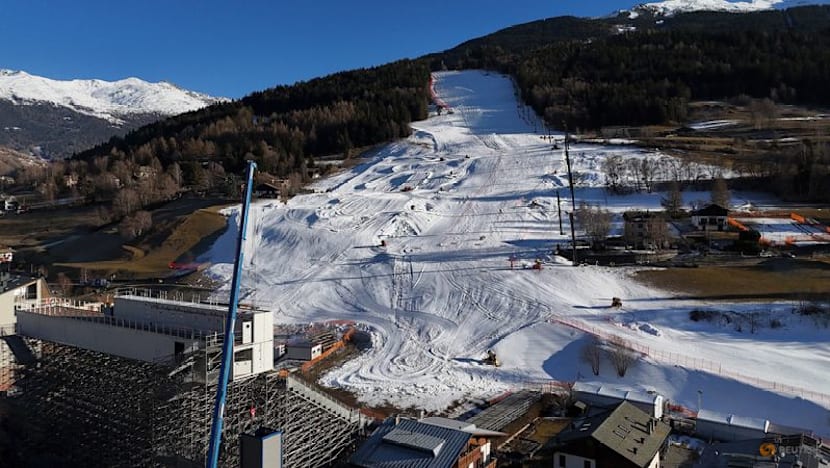
The deaths of two young Italian Alpine skiers, Matteo Franzoso and Matilde Lorenzi, have prompted a significant reassessment of safety procedures within the sport. Both athletes suffered fatal injuries during training accidents in less than a year, raising pressing questions as the 2026 Winter Olympics approach. The International Ski and Snowboard Federation (FIS) has announced that no safety measure is off the table as they strive to enhance protective protocols for skiers.
In an interview with Reuters in December, Urs Lehmann, the newly appointed CEO of FIS, acknowledged the gravity of recent tragedies. “We had a couple of tragic accidents. The one of Franzoso brought up new questions,” he stated, emphasizing that the organization is critically evaluating its entire safety framework. This scrutiny comes ahead of the Milano Cortina Games, particularly as men’s races are set to take place on the notorious Stelvio course in Bormio, where speeds can reach up to 150 kph.
Comprehensive Safety Overhaul Initiatives
Under Lehmann’s leadership, the FIS has initiated a comprehensive safety overhaul. This process began with a survey of its approximately 140 member federations to identify gaps in their safety structures. Lehmann outlined the objectives, stating, “We want to see: do you have a dedicated person in charge for safety? Do you have a module in your coach education programme dedicated to safety? Then share best practice and set standards.”
One of the immediate changes being proposed is the extension of mandatory airbag use to all training sessions, not just during official World Cup events. Starting from the 2024-25 season, the FIS has made airbags compulsory for speed events and official training sessions. Initially, some athletes, including Italian downhiller Dominik Paris, were exempted due to concerns over mobility. However, Lehmann insists that airbag use will be enforced without exceptions. “Airbag has to be worn also in training… No exceptions,” he affirmed.
The majority of airbags used in World Cup races are provided by Dainese, an Italian manufacturer that has been involved in ski-specific airbag development since 2011. This technology employs sensors and GPS to monitor skier movements and deploys the airbag only during actual crashes. Despite initial challenges, the airbag has emerged as a crucial safety innovation, with significant improvements in safety outcomes.
Addressing Training Site Risks
Retired ski champions have emphasized that the most significant risks often occur outside of televised race days. Kristian Ghedina, a former Italian downhiller, highlighted that training sites, particularly in summer or in South America, frequently employ makeshift safety measures. “In World Cup you have nets right and left; in training protections are precarious,” he noted, advocating for the use of sanctioned training venues.
Three-time Olympic champion Deborah Compagnoni echoed these sentiments, pointing out that the lack of adequate protections on training hills can lead to dangerous situations. Compagnoni called for adjustments to gate settings and a reevaluation of snow preparation techniques to promote safer training environments.
The tragedy that struck Lorenzi, who died at just 19 years old, has galvanized a safety movement. Her father, Adolfo Lorenzi, now heads a foundation in her memory, urging for enhanced safety protocols and practical training for coaches. “There’s a cost – but there’s no cost tied to a human life,” he stressed, advocating for more rigorous safety standards.
Lehmann is also optimistic about future innovations, including the potential introduction of smart bindings. These bindings would utilize algorithms to trigger ski releases earlier, aiming to reduce the frequency of knee and tibia injuries. Additionally, the FIS is exploring modifications to race suits and boot designs, although the balance between safety and performance remains a contentious issue.
Academics are contributing to these developments as well. A team from Turin’s Polytechnic University is utilizing drones to create risk maps for ski pistes, which could help determine the suitability of specific hills for training. Professor Tania Cerquitelli believes this technological advancement could enhance safety in the sport.
Despite these efforts, experts like Ghedina caution that while improvements can be made, achieving complete safety in speed sports is a challenge. “You can’t make a sport of speed totally safe, but you can do much more on training pistes,” he remarked, advocating for increased protective measures.
As the Alpine skiing community grapples with these recent tragedies, the push for enhanced safety protocols is not just a response to loss; it is an essential step towards ensuring the sport can continue to thrive while prioritizing the well-being of its athletes.

India Unveils Long-Range Hypersonic Missile Amid Regional Tensions

SK bioscience Launches Global Trial for Universal Sarbecovirus Vaccine

Senegal Coach Pape Thiaw Suspended and Fined After Final Disruption

PAS Denies Abolishing Chairman Post, Contradicts Muhyiddin’s Claim

Mbappé Critiques Real Madrid’s Effort After Benfica Defeat

Thailand’s December Factory Output Surges 2.52% Year-on-Year

Ishita Dutta Reveals Her Parenting Secret: Strong Coffee

Older GPs Express Concerns Over New Digital Health Record Mandate

Urban Jurgensen: A 252-Year Legacy Enters a New Era

South Korea’s Foreign Minister Cho Hyun to Visit China This Week

Starling Bank Plans Secondary Share Sale, Targeting $5.4 Billion Valuation

Munsang College Celebrates 100 Years with Grand Ceremony

PAS Aims to Expand Parliamentary Influence in Upcoming Election

Kenvue Dismisses CEO Thibaut Mongon as Strategic Review Advances

Humanism Camp Engages 250 Youths in Summer Fest 2025

De Minaur Triumphs at Washington Open After Thrilling Comeback

Tupou and Daugunu Join First Nations Squad for Lions Clash

Colombian Senator Miguel Uribe Shows Signs of Recovery After Attack
-
 World5 months ago
South Korea’s Foreign Minister Cho Hyun to Visit China This Week
-
 Business5 months ago
Starling Bank Plans Secondary Share Sale, Targeting $5.4 Billion Valuation
-
 Top Stories5 months ago
Munsang College Celebrates 100 Years with Grand Ceremony
-
 World5 months ago
PAS Aims to Expand Parliamentary Influence in Upcoming Election
-
 Business7 months ago
Kenvue Dismisses CEO Thibaut Mongon as Strategic Review Advances
-
 Lifestyle6 months ago
Humanism Camp Engages 250 Youths in Summer Fest 2025
-
 Sports6 months ago
De Minaur Triumphs at Washington Open After Thrilling Comeback
-
 Sports7 months ago
Tupou and Daugunu Join First Nations Squad for Lions Clash
-
 Top Stories7 months ago
Colombian Senator Miguel Uribe Shows Signs of Recovery After Attack
-
 World7 months ago
ASEAN Gears Up for Historic Joint Meeting of Foreign and Economic Ministers
-

 Health6 months ago
New Study Challenges Assumptions About Aging and Inflammation
-

 Business7 months ago
Oil Prices Surge Following New EU Sanctions on Russia