
World
India and EU Accelerate High-Stakes Trade Talks This Week

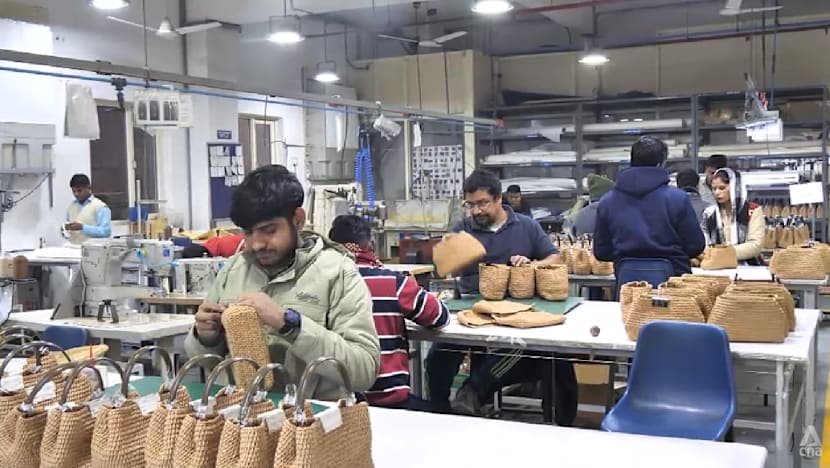
Negotiations for a significant free trade agreement (FTA) between India and the European Union have gained momentum as leaders from both sides prepare for discussions in New Delhi. This week, Indian Prime Minister Narendra Modi will meet with European Commission President Ursula von der Leyen and European Council President Antonio Costa ahead of the EU-India Summit scheduled for January 27, 2024. The engagement aims to further discussions that could redefine trade relations between India and the EU.
The urgency of these talks stems from the challenges faced by Indian exporters, particularly in light of rising tariffs in the United States. Export duties from the U.S. have surged, with some reaching as high as 50 percent. This situation has compelled Indian businesses to seek new markets, making a potential trade deal with the EU a vital alternative.
Manufacturers in India are already producing European fashion products, including luxury handbags and footwear for prominent brands. Yet, despite this production, high import duties continue to hinder competitiveness. An FTA could substantially reduce or eliminate these tariffs, enhancing the ability of Indian exporters to compete in the European market.
Sanjay Leekha, chairman and managing director of apparel manufacturer Alpine Group, emphasized the potential benefits of the agreement. He stated, “With the FTA in place, our landed cost of product in Europe will come down in my estimation anywhere between 5 to 15 percent – which is a substantial number.” This reduction could significantly increase European retailers’ inclination to source from India.
Currently, India’s goods exports to the EU are valued at over US$75 billion, a figure that has remained relatively stable year-on-year. However, exporters hope the FTA will also address non-tariff barriers, particularly the EU’s rigorous sustainability and compliance requirements. One major concern is the newly implemented carbon border adjustment mechanism, which could impose duties exceeding 15 percent on Indian steel and cement exports.
Ajay Sahai, director general and CEO of the Federation of Indian Export Organisations, highlighted the need for Indian businesses to navigate these challenges. “We have to be conscious of that,” he remarked. “We have to look into in what way we can address those challenges because these kinds of non-tariff measures will be invoked by countries from time to time.”
Negotiations for the EU-India trade pact were relaunched in 2022, nearly 15 years after initial discussions began in 2007. According to Indian Foreign Secretary Vikram Misri, recent global developments have heightened the urgency of concluding the FTA. He noted, “There is no doubt that on account of developments in recent years, the urgency in concluding this FTA has increased.”
In addition to trade matters, the upcoming summit is expected to address defence cooperation and a potential talent mobility agreement, aimed at facilitating the movement of Indian professionals to Europe. Observers are viewing these discussions as a strategic shift for both parties, reflecting a desire to diversify away from increasingly protectionist policies in the U.S. and reduce reliance on Chinese supply chains.
As the meeting approaches, both India and the EU recognize the significance of finalizing this trade agreement. The outcome could not only reshape their economic landscape but also influence global trade dynamics in an increasingly interconnected world.

India Unveils Long-Range Hypersonic Missile Amid Regional Tensions

SK bioscience Launches Global Trial for Universal Sarbecovirus Vaccine

Senegal Coach Pape Thiaw Suspended and Fined After Final Disruption

PAS Denies Abolishing Chairman Post, Contradicts Muhyiddin’s Claim

Mbappé Critiques Real Madrid’s Effort After Benfica Defeat

Thailand’s December Factory Output Surges 2.52% Year-on-Year

Ishita Dutta Reveals Her Parenting Secret: Strong Coffee

Older GPs Express Concerns Over New Digital Health Record Mandate

Urban Jurgensen: A 252-Year Legacy Enters a New Era

Regina Martinez Breaks New Ground for Mexico in Cross-Country Skiing

South Korea’s Foreign Minister Cho Hyun to Visit China This Week

Starling Bank Plans Secondary Share Sale, Targeting $5.4 Billion Valuation

Munsang College Celebrates 100 Years with Grand Ceremony

PAS Aims to Expand Parliamentary Influence in Upcoming Election

De Minaur Triumphs at Washington Open After Thrilling Comeback

Kenvue Dismisses CEO Thibaut Mongon as Strategic Review Advances

Humanism Camp Engages 250 Youths in Summer Fest 2025

Colombian Senator Miguel Uribe Shows Signs of Recovery After Attack
-
 Sports2 months ago
Regina Martinez Breaks New Ground for Mexico in Cross-Country Skiing
-
 World6 months ago
South Korea’s Foreign Minister Cho Hyun to Visit China This Week
-
 Business7 months ago
Starling Bank Plans Secondary Share Sale, Targeting $5.4 Billion Valuation
-
 Top Stories7 months ago
Munsang College Celebrates 100 Years with Grand Ceremony
-
 World6 months ago
PAS Aims to Expand Parliamentary Influence in Upcoming Election
-
 Sports8 months ago
De Minaur Triumphs at Washington Open After Thrilling Comeback
-
 Business8 months ago
Kenvue Dismisses CEO Thibaut Mongon as Strategic Review Advances
-
 Lifestyle8 months ago
Humanism Camp Engages 250 Youths in Summer Fest 2025
-
 Top Stories8 months ago
Colombian Senator Miguel Uribe Shows Signs of Recovery After Attack
-

 Sports8 months ago
Tupou and Daugunu Join First Nations Squad for Lions Clash
-
 World8 months ago
ASEAN Gears Up for Historic Joint Meeting of Foreign and Economic Ministers
-

 Health8 months ago
New Study Challenges Assumptions About Aging and Inflammation