
Business
Taiwan Central Bank Assesses Trade Deal’s Manageable Forex Impact

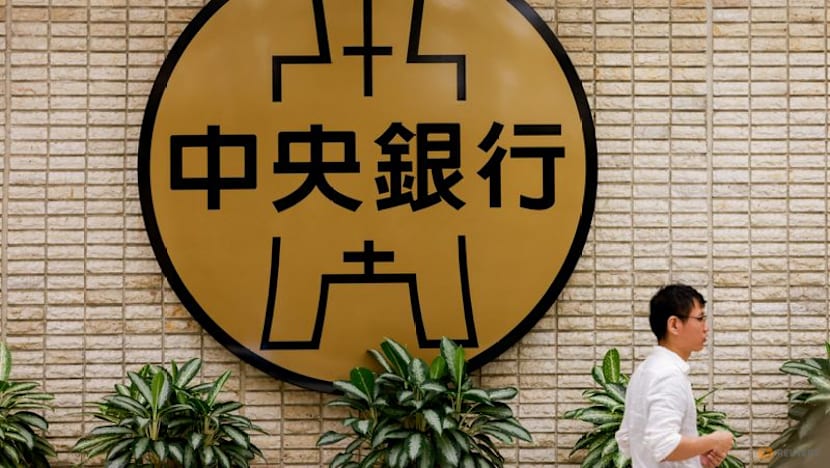
The Taiwan Central Bank has stated that the impact of the recent trade deal between the United States and Taiwan on the Taiwan dollar’s exchange rate is manageable. Announced on January 24, 2024, the agreement reduces tariffs on Taiwanese goods from 20 percent to 15 percent and facilitates significant investment, with Taiwanese companies committing $250 billion to the U.S. market.
Under the terms of this deal, Taiwan will also guarantee an additional $250 billion in credit to encourage further investments from Taiwanese firms. This move aims to bolster economic ties between the two regions while addressing concerns about the exchange rate fluctuations that could arise from increased demand for U.S. dollars.
In a report presented to lawmakers, the central bank acknowledged that the increased investment might drive Taiwanese companies to seek more U.S. dollars. Despite this, the bank reassured that the effects on the Taiwan dollar would remain “within a controllable range.” This statement follows a previous surge in the Taiwan dollar in May, which was fueled by speculation that the U.S. government had requested a stronger currency. Both the Taiwanese government and the central bank refuted these claims, emphasizing their commitment to maintaining exchange rate stability.
The central bank elaborated that Taiwan’s major exporters have built substantial foreign-currency assets, enabling them to leverage these holdings for investments in the U.S. This means they may not need to convert large amounts of Taiwan dollars into U.S. dollars, thereby minimizing potential disruptions in the domestic foreign-exchange market.
Furthermore, the bank noted that as Taiwanese companies generate future income in U.S. dollars, they could issue U.S. dollar-denominated bonds or secure financing through banks. This strategy would allow them to utilize anticipated U.S. dollar revenues for debt repayment, creating a “natural hedging effect” against currency risks.
The trade agreement is set to be implemented in phases over several years. This gradual approach is expected to help mitigate the immediate demand for U.S. dollars, subsequently easing its impact on Taiwan’s foreign-exchange market. The central bank reiterated that it did not participate in the trade and tariff negotiations with the United States, maintaining its role as an independent monetary authority.
As Taiwan navigates this new economic landscape, the central bank’s assessment underscores the importance of carefully managing foreign exchange dynamics while fostering robust international trade relationships.

India Unveils Long-Range Hypersonic Missile Amid Regional Tensions

SK bioscience Launches Global Trial for Universal Sarbecovirus Vaccine

Senegal Coach Pape Thiaw Suspended and Fined After Final Disruption

PAS Denies Abolishing Chairman Post, Contradicts Muhyiddin’s Claim

Mbappé Critiques Real Madrid’s Effort After Benfica Defeat

Thailand’s December Factory Output Surges 2.52% Year-on-Year

Ishita Dutta Reveals Her Parenting Secret: Strong Coffee

Older GPs Express Concerns Over New Digital Health Record Mandate

Urban Jurgensen: A 252-Year Legacy Enters a New Era

Regina Martinez Breaks New Ground for Mexico in Cross-Country Skiing

South Korea’s Foreign Minister Cho Hyun to Visit China This Week

Starling Bank Plans Secondary Share Sale, Targeting $5.4 Billion Valuation

Munsang College Celebrates 100 Years with Grand Ceremony

PAS Aims to Expand Parliamentary Influence in Upcoming Election

De Minaur Triumphs at Washington Open After Thrilling Comeback

Kenvue Dismisses CEO Thibaut Mongon as Strategic Review Advances

Humanism Camp Engages 250 Youths in Summer Fest 2025

Colombian Senator Miguel Uribe Shows Signs of Recovery After Attack
-
 Sports2 months ago
Regina Martinez Breaks New Ground for Mexico in Cross-Country Skiing
-
 World6 months ago
South Korea’s Foreign Minister Cho Hyun to Visit China This Week
-
 Business7 months ago
Starling Bank Plans Secondary Share Sale, Targeting $5.4 Billion Valuation
-
 Top Stories7 months ago
Munsang College Celebrates 100 Years with Grand Ceremony
-
 World6 months ago
PAS Aims to Expand Parliamentary Influence in Upcoming Election
-
 Sports8 months ago
De Minaur Triumphs at Washington Open After Thrilling Comeback
-
 Business8 months ago
Kenvue Dismisses CEO Thibaut Mongon as Strategic Review Advances
-
 Lifestyle8 months ago
Humanism Camp Engages 250 Youths in Summer Fest 2025
-
 Top Stories9 months ago
Colombian Senator Miguel Uribe Shows Signs of Recovery After Attack
-

 Sports8 months ago
Tupou and Daugunu Join First Nations Squad for Lions Clash
-
 World8 months ago
ASEAN Gears Up for Historic Joint Meeting of Foreign and Economic Ministers
-

 Health8 months ago
New Study Challenges Assumptions About Aging and Inflammation