
Politics
US Senate Approves F/A-XX Fighter Program Amid Rising Tensions

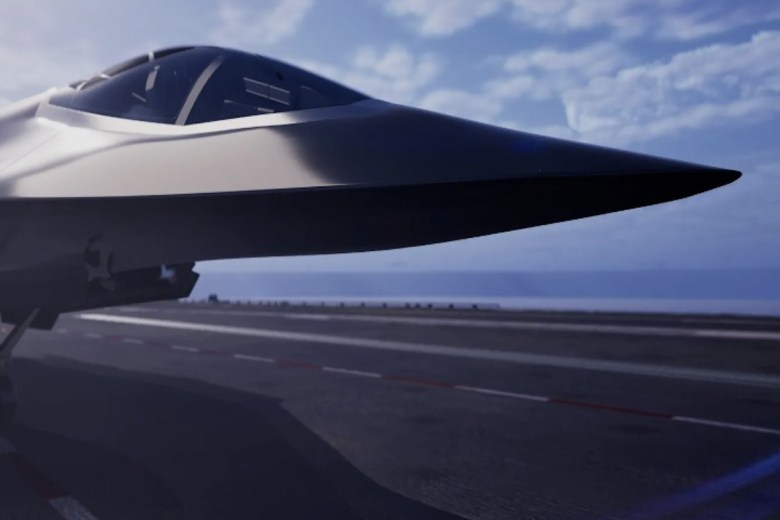
The United States Senate has reaffirmed its commitment to the long-delayed F/A-XX next-generation carrier fighter, a critical step aimed at bolstering US naval air power in the face of increasing challenges from China. On March 15, 2024, the Senate Committee on Appropriations approved funding measures as part of the fiscal year 2026 appropriations process, ensuring the program’s continuity and pushing for accelerated development.
The legislation mandates that the Department of Defense (DoD) allocate funds for research, development, testing, and evaluation of the F/A-XX, with a clear objective of achieving an expedited initial operational capability. This move reflects a sense of urgency among lawmakers, who have expressed frustration over the prolonged uncertainty surrounding the future of the US Navy’s air wing.
By incorporating language that prevents the use of fiscal year 2026 funds to pause or terminate the F/A-XX program, Congress is taking a more active role in overseeing the transition from the F/A-18E/F Super Hornet to the next-generation fighter. This is particularly significant given the rising capabilities of both Chinese and Russian air defenses, which threaten the historical dominance of US carrier air power.
The renewed focus on the F/A-XX comes at a time when US lawmakers are increasingly concerned that delays in its development could undermine the long-term effectiveness of US aircraft carriers in high-stakes conflicts.
F/A-XX’s Tactical Advantages and Strategic Necessity
According to a report by Jon Harper in April 2025, the F/A-XX is set to significantly enhance the operational capabilities of the US Navy’s carrier-based fighters. It is designed to exceed the range, survivability, and artificial intelligence-enabled operations of current aircraft. The F/A-XX is expected to possess over 125% of the range of existing carrier aircraft, crucial for operations across the vast Pacific theater. The current F/A-18E/F Super Hornet has a maximum range of approximately 2,360 kilometers, suggesting that the F/A-XX will achieve a range of at least 2,945 kilometers without refueling.
US Navy officials have noted that with support from organic tankers, the operational reach of the F/A-XX could be nearly limitless. Enhanced stealth features and the ability to penetrate advanced threat environments will also allow for better integration with unmanned systems, increasing overall effectiveness in contested scenarios.
In addition to its technical enhancements, the F/A-XX is positioned as the US Navy’s primary counter to China’s growing fleet of advanced fighters, including the J-20 and the emerging J-35. The size and proximity of these Chinese forces present a formidable challenge, as highlighted by Kris Osborne in an October 2025 article for Warrior Maven.
The Broader Context of US Military Strategy
The implications of the F/A-XX extend beyond immediate air combat capabilities. According to a report by Bryan Clark and Timothy Walton from the Hudson Institute, the F/A-XX will enable US carriers to function as mobile command-and-strike hubs rather than simply targets for enemy missiles. The aircraft’s extended range allows carriers to maintain a safer distance from mainland China while still projecting air power effectively.
The integration of unmanned systems, such as MQ-25 tankers and ISR drones, further enhances this operational flexibility. These technologies enable real-time intelligence and reconnaissance, making it easier to coordinate strikes without exposing carriers to the dense defenses of the People’s Liberation Army (PLA).
Nevertheless, the balance of air power in the Pacific has become increasingly contested. A report by Douglas Barrie and Ben Thornley for the International Institute for Strategic Studies (IISS) indicates that the PLA Air Force has made significant strides, narrowing the gap in capabilities with modern fighters and long-range missiles. This shift raises concerns about the US’s ability to maintain air superiority, particularly in a potential conflict over Taiwan.
As the F/A-XX program progresses, the United States faces a multifaceted challenge. The future of naval air power will depend not only on technological advancements but also on operational strategies, training, and joint exercises that integrate various military assets.
In summary, the F/A-XX represents more than just a new fighter aircraft; it is a cornerstone of the US Navy’s strategy to adapt to an evolving geopolitical landscape. While it may not restore dominance outright, it aims to delay the erosion of US carrier air power, providing a critical buffer in a theater defined by distance, mass, and endurance.

India Unveils Long-Range Hypersonic Missile Amid Regional Tensions

SK bioscience Launches Global Trial for Universal Sarbecovirus Vaccine

Senegal Coach Pape Thiaw Suspended and Fined After Final Disruption

PAS Denies Abolishing Chairman Post, Contradicts Muhyiddin’s Claim

Mbappé Critiques Real Madrid’s Effort After Benfica Defeat

Thailand’s December Factory Output Surges 2.52% Year-on-Year

Ishita Dutta Reveals Her Parenting Secret: Strong Coffee

Older GPs Express Concerns Over New Digital Health Record Mandate

Urban Jurgensen: A 252-Year Legacy Enters a New Era

Regina Martinez Breaks New Ground for Mexico in Cross-Country Skiing

South Korea’s Foreign Minister Cho Hyun to Visit China This Week

Starling Bank Plans Secondary Share Sale, Targeting $5.4 Billion Valuation

Munsang College Celebrates 100 Years with Grand Ceremony

PAS Aims to Expand Parliamentary Influence in Upcoming Election

De Minaur Triumphs at Washington Open After Thrilling Comeback

Kenvue Dismisses CEO Thibaut Mongon as Strategic Review Advances

Humanism Camp Engages 250 Youths in Summer Fest 2025

Colombian Senator Miguel Uribe Shows Signs of Recovery After Attack
-
 Sports3 months ago
Regina Martinez Breaks New Ground for Mexico in Cross-Country Skiing
-
 World7 months ago
South Korea’s Foreign Minister Cho Hyun to Visit China This Week
-
 Business7 months ago
Starling Bank Plans Secondary Share Sale, Targeting $5.4 Billion Valuation
-
 Top Stories7 months ago
Munsang College Celebrates 100 Years with Grand Ceremony
-
 World7 months ago
PAS Aims to Expand Parliamentary Influence in Upcoming Election
-
 Sports9 months ago
De Minaur Triumphs at Washington Open After Thrilling Comeback
-
 Business9 months ago
Kenvue Dismisses CEO Thibaut Mongon as Strategic Review Advances
-
 Lifestyle9 months ago
Humanism Camp Engages 250 Youths in Summer Fest 2025
-
 Top Stories9 months ago
Colombian Senator Miguel Uribe Shows Signs of Recovery After Attack
-

 Sports9 months ago
Tupou and Daugunu Join First Nations Squad for Lions Clash
-

 World9 months ago
ASEAN Gears Up for Historic Joint Meeting of Foreign and Economic Ministers
-

 Health9 months ago
New Study Challenges Assumptions About Aging and Inflammation