
Lifestyle
Prof Li Liangliang Elected Fellow of Royal Society of Chemistry

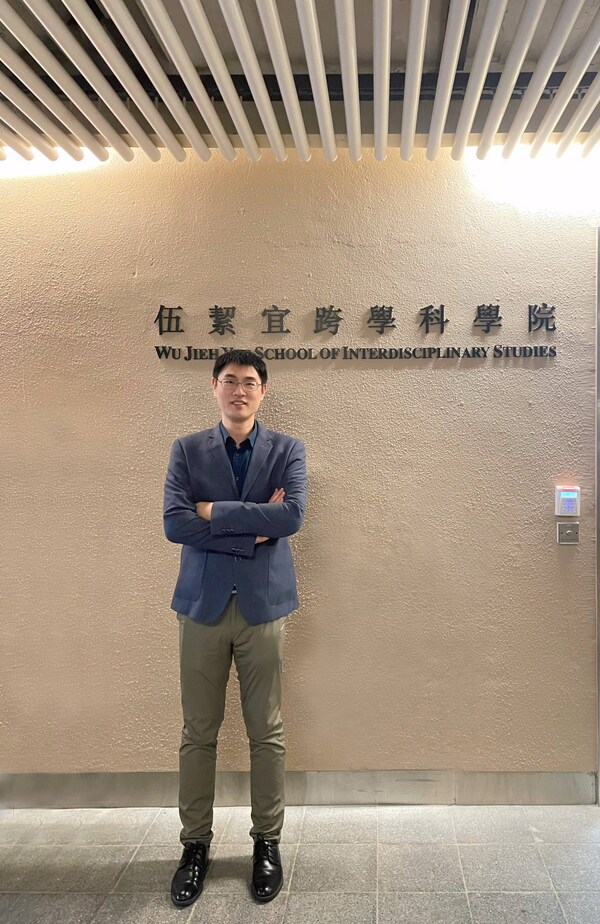
Prof Li Liangliang, an Associate Professor at the Wu Jieh Yee School of Interdisciplinary Studies at Lingnan University, has been elected a Fellow of the Royal Society of Chemistry (FRSC) as of January 21, 2026. This prestigious honour recognizes his significant contributions to the field of new materials chemistry, underscoring the academic influence of WJYSIS in promoting sustainable development through innovative interdisciplinary research.
Prof Li expressed his gratitude for the recognition, stating, “I am deeply honoured to be elected as a Fellow of the Royal Society of Chemistry. This recognition not only affirms my research work but is also made possible by the excellent research environment provided by Lingnan University. It allows me to collaborate with scholars worldwide, exchange cutting-edge findings, and further advance Lingnan University’s international research presence.”
Contributions to Energy Materials Research
Currently, Prof Li leads the establishment of the Laboratory for Advanced Energy Materials at Lingnan University, focusing on innovative solutions to global energy storage challenges. His work aims to develop advanced energy materials that can significantly impact society.
With a robust background in energy materials and battery research, Prof Li specializes in the discovery and development of all-solid-state batteries, as well as inorganic and polymer solid electrolytes. He has authored over a hundred publications in prestigious journals such as Advanced Materials, Advanced Energy Materials, and Energy Storage Materials. His research efforts have led to eight granted invention patents and several accolades, including the IEEE Electronics Packaging Society Outstanding Young Engineer Award and the Second Prize of the Beijing Higher Education Teaching Achievement Award.
In a groundbreaking study published in the journal Advanced Energy Materials, Prof Li and his team introduced a pioneering anode-free sodium battery. This innovative design utilizes a technique that adjusts the salt concentration in the electrolyte, effectively reducing the risks of short circuits and prolonging the battery’s lifespan during rapid charging. Laboratory tests have confirmed that this new battery can be charged in mere minutes while ensuring safety and stability.
About the Royal Society of Chemistry
Founded in 1841, the Royal Society of Chemistry is recognized as one of the world’s leading scientific societies. Each year, it awards fellowships to scientists who have made exceptional contributions to the advancement of chemical science. The election of Prof Li highlights the importance of his work within the global scientific community and further establishes Lingnan University as a significant player in the realm of interdisciplinary research.
Prof Li’s achievements not only reflect his dedication to advancing materials chemistry but also contribute to the broader goal of addressing critical energy storage issues. As he continues his research, the potential for innovative developments in this field remains promising, paving the way for future advancements that could benefit society at large.

India Unveils Long-Range Hypersonic Missile Amid Regional Tensions

SK bioscience Launches Global Trial for Universal Sarbecovirus Vaccine

Senegal Coach Pape Thiaw Suspended and Fined After Final Disruption

PAS Denies Abolishing Chairman Post, Contradicts Muhyiddin’s Claim

Mbappé Critiques Real Madrid’s Effort After Benfica Defeat

Thailand’s December Factory Output Surges 2.52% Year-on-Year

Ishita Dutta Reveals Her Parenting Secret: Strong Coffee

Older GPs Express Concerns Over New Digital Health Record Mandate

Urban Jurgensen: A 252-Year Legacy Enters a New Era

South Korea’s Foreign Minister Cho Hyun to Visit China This Week

Starling Bank Plans Secondary Share Sale, Targeting $5.4 Billion Valuation

Munsang College Celebrates 100 Years with Grand Ceremony

PAS Aims to Expand Parliamentary Influence in Upcoming Election

Kenvue Dismisses CEO Thibaut Mongon as Strategic Review Advances

Humanism Camp Engages 250 Youths in Summer Fest 2025

De Minaur Triumphs at Washington Open After Thrilling Comeback

Tupou and Daugunu Join First Nations Squad for Lions Clash

Colombian Senator Miguel Uribe Shows Signs of Recovery After Attack
-
 World5 months ago
South Korea’s Foreign Minister Cho Hyun to Visit China This Week
-
 Business5 months ago
Starling Bank Plans Secondary Share Sale, Targeting $5.4 Billion Valuation
-
 Top Stories5 months ago
Munsang College Celebrates 100 Years with Grand Ceremony
-
 World5 months ago
PAS Aims to Expand Parliamentary Influence in Upcoming Election
-
 Business7 months ago
Kenvue Dismisses CEO Thibaut Mongon as Strategic Review Advances
-
 Lifestyle6 months ago
Humanism Camp Engages 250 Youths in Summer Fest 2025
-
 Sports6 months ago
De Minaur Triumphs at Washington Open After Thrilling Comeback
-
 Sports7 months ago
Tupou and Daugunu Join First Nations Squad for Lions Clash
-
 Top Stories7 months ago
Colombian Senator Miguel Uribe Shows Signs of Recovery After Attack
-

 World7 months ago
ASEAN Gears Up for Historic Joint Meeting of Foreign and Economic Ministers
-

 Health6 months ago
New Study Challenges Assumptions About Aging and Inflammation
-

 Business7 months ago
Oil Prices Surge Following New EU Sanctions on Russia