
World
Jeepney Art Faces Decline as Manila Modernizes Public Transport

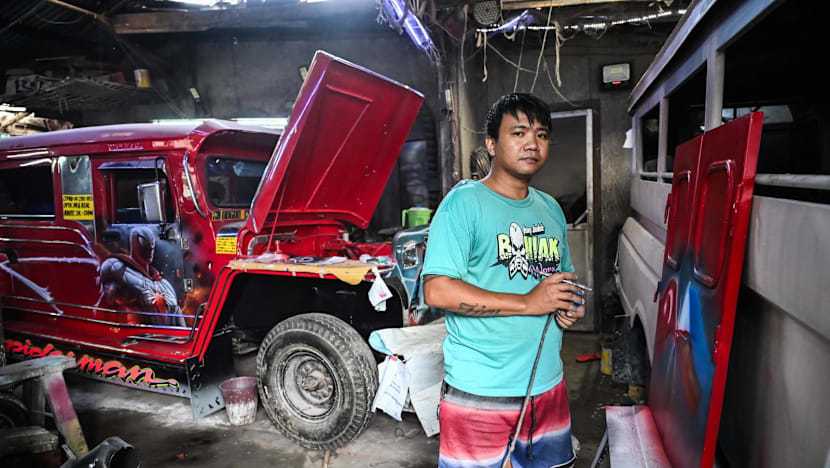
In Manila, the vibrant art of jeepney painting is fading as modernization efforts reshape the city’s public transport system. Local artists like Kenneth Bon Salonga, who has dedicated over 20 years to this craft, now face an uncertain future. The traditional jeepneys, once a canvas for colorful, personalized designs, are being replaced by modern vehicles, including electric minibuses, as part of the government’s Public Utility Vehicle Modernization (PUV) Program initiated in March 2017.
Salonga’s workspace, a cluttered garage filled with vehicle parts and paint, exemplifies the dedication of jeepney artists. He meticulously paints a side window panel featuring Spiderman, a testament to the creative spirit that has characterized jeepney art. However, as the Philippine government pushes to phase out these iconic vehicles, the art form is at risk of disappearing.
Jeepneys have served as a crucial mode of transportation in the Philippines since their inception, transforming from military surplus into a flexible, affordable public transit option. Jose Victor Torres, a historian at De La Salle University-Manila, describes jeepneys as symbols of resilience, remarking that they embody the resourcefulness of the Filipino people. “They were born out of necessity, made from discarded materials,” he explains.
The rise of personalized jeepney art began in the 1980s when overseas Filipino workers invested in their own vehicles, using vibrant designs to showcase their success. These artistic expressions reflect a blend of personal stories, cultural elements, and societal trends. Bru Sim, a graphic artist and author of “Jeepney Biyaheng Langit,” notes the eclectic mix of imagery often found on jeepneys, from family photos to religious icons and popular culture references.
As modernization progresses, the government aims to replace the older, more polluting jeepneys with electric and low-emission vehicles. This initiative has faced resistance from jeepney operators, who argue that the changes primarily benefit large corporations, threatening the livelihood of small businesses. Despite acknowledging the need for reform, many express concern about the implications for their communities.
Data from recent reports indicate that around 150,000 jeepney units have complied with consolidation requirements nationwide, representing 78 percent of the total fleet. Jeepneys are vital for daily commuting, currently facilitating approximately 40 million person trips each day. They provide essential connections between residential areas and transport hubs, addressing last-mile connectivity issues.
The transition towards modern alternatives is reshaping Manila’s streets. Electric minibuses are gradually taking over many routes, often lacking the unique character and color of traditional jeepneys. While jeepneys are typically privately owned, the newer models are usually part of larger company fleets, reducing the personal touch that characterized earlier designs.
With this shift, many jeepneys have relocated to rural areas, transferring pollution and safety concerns from urban centers. Salonga expresses his sadness over these changes, fearing the loss of his craft. “I grew up with jeepneys. Every day, I would wait at the corner hoping a new unit would come out,” he recalls.
Opinions within the community vary. Some, like Felomino Cruz Jr, a 75-year-old jeepney designer, support modernization, citing issues such as noise pollution and safety concerns. “I am in favour of modernisation,” he states, noting the dangers posed by reckless drivers and poorly maintained vehicles. Similarly, many acknowledge that while jeepneys are culturally significant, their practical challenges cannot be ignored.
Despite the decline of jeepney art, Sim reassures that Filipino creativity will find new outlets. “It’s just one aspect of Filipino art,” she asserts. “There are other ways to express it. Everything is in flux, and we’re always evolving.”
As the Philippines navigates this complex transition, the fate of jeepney art remains uncertain, reflecting broader changes in society and culture. The vibrant expressions that once adorned the streets of Manila may fade, but the spirit of creativity and resilience continues to thrive in other forms.

India Unveils Long-Range Hypersonic Missile Amid Regional Tensions

SK bioscience Launches Global Trial for Universal Sarbecovirus Vaccine

Senegal Coach Pape Thiaw Suspended and Fined After Final Disruption

PAS Denies Abolishing Chairman Post, Contradicts Muhyiddin’s Claim

Mbappé Critiques Real Madrid’s Effort After Benfica Defeat

Thailand’s December Factory Output Surges 2.52% Year-on-Year

Ishita Dutta Reveals Her Parenting Secret: Strong Coffee

Older GPs Express Concerns Over New Digital Health Record Mandate

Urban Jurgensen: A 252-Year Legacy Enters a New Era

South Korea’s Foreign Minister Cho Hyun to Visit China This Week

Starling Bank Plans Secondary Share Sale, Targeting $5.4 Billion Valuation

Munsang College Celebrates 100 Years with Grand Ceremony

PAS Aims to Expand Parliamentary Influence in Upcoming Election

Kenvue Dismisses CEO Thibaut Mongon as Strategic Review Advances

Humanism Camp Engages 250 Youths in Summer Fest 2025

De Minaur Triumphs at Washington Open After Thrilling Comeback

Tupou and Daugunu Join First Nations Squad for Lions Clash

Colombian Senator Miguel Uribe Shows Signs of Recovery After Attack
-
 World5 months ago
South Korea’s Foreign Minister Cho Hyun to Visit China This Week
-
 Business5 months ago
Starling Bank Plans Secondary Share Sale, Targeting $5.4 Billion Valuation
-
 Top Stories5 months ago
Munsang College Celebrates 100 Years with Grand Ceremony
-
 World5 months ago
PAS Aims to Expand Parliamentary Influence in Upcoming Election
-
 Business7 months ago
Kenvue Dismisses CEO Thibaut Mongon as Strategic Review Advances
-
 Lifestyle6 months ago
Humanism Camp Engages 250 Youths in Summer Fest 2025
-
 Sports6 months ago
De Minaur Triumphs at Washington Open After Thrilling Comeback
-
 Sports7 months ago
Tupou and Daugunu Join First Nations Squad for Lions Clash
-
 Top Stories7 months ago
Colombian Senator Miguel Uribe Shows Signs of Recovery After Attack
-

 World7 months ago
ASEAN Gears Up for Historic Joint Meeting of Foreign and Economic Ministers
-

 Health6 months ago
New Study Challenges Assumptions About Aging and Inflammation
-

 Business7 months ago
Oil Prices Surge Following New EU Sanctions on Russia