
Lifestyle
Singapore Opens First MOM-Owned Dormitory for Migrant Workers

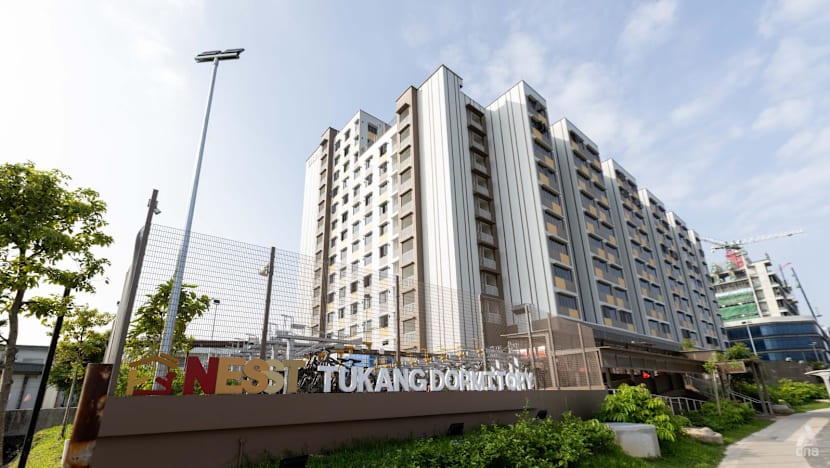
The first migrant worker dormitory owned and constructed by the Ministry of Manpower (MOM) officially opened in Jurong on January 17, 2024. Named NESST Tukang, this facility accommodates up to 2,400 workers across 210 rooms, adhering to the elevated standards established by MOM during the COVID-19 pandemic in 2021. As of January, nearly all beds in the dormitory have been filled, with full occupancy anticipated by May 2024.
At the launch event, Manpower Minister Tan See Leng emphasized the importance of providing quality housing for migrant workers. He stated, “For many, many years, our approach towards housing migrant workers was focused on meeting basic accommodation needs. However, the pandemic reminded us of the importance of strengthening our dormitory ecosystem.” He noted that improving worker living conditions ultimately benefits society as a whole.
New Grant for Upgrading Dormitory Facilities
Alongside the opening of NESST Tukang, MOM announced a new grant under the Dormitory Transition Scheme aimed at assisting existing dormitories in upgrading their facilities to meet the required standards. This initiative follows the heightened scrutiny of dormitory conditions during the pandemic, when cramped living situations contributed to the rapid spread of COVID-19 among migrant workers. The new standards mandate that each room accommodates a maximum of 12 residents, with a minimum of 1 meter of space between beds and at least one ensuite toilet, shower, and wash basin for every six residents.
Under the Dormitory Transition Scheme, funding for upgrades will vary based on the retrofitting needs. From 2026 to 2028, grants will provide S$4,200 (approximately US$3,300) for constructing new rooms and S$9,800 for building ensuite toilets. These amounts will decrease from 2029 to 2030 to manage the potential disruption in bed supply caused by simultaneous retrofitting projects.
Approximately 900 dormitories housing around 200,000 beds are expected to qualify for this grant. Operators must submit their intended retrofitting schedules to MOM for approval and commit to completing the work within agreed timelines.
Innovative Design and Pandemic Preparedness
Minister Tan highlighted that the NESST Tukang dormitory was designed to exceed the required standards, serving as a model for future developments. The design process involved consultations with a specialist advisory panel, migrant workers, and industry representatives. Each room features six single beds, with loft beds designed to minimize disturbances. The facility also includes communal dining areas, social spaces, green areas, and recreational facilities such as cricket practice lanes and a gym.
Migrant worker Kalai Bilavebdran, who has lived in Singapore for a decade, praised the improved facilities at NESST Tukang compared to previous accommodations. He noted that the dormitory’s location offers a more convenient commute to Little India, taking only 30 to 40 minutes via public transport.
In addition to its living arrangements, NESST Tukang incorporates public health measures for pandemic readiness. This includes automated thermal scanners and wastewater surveillance to monitor health conditions. Recreational spaces can be repurposed as isolation areas during health crises, enhancing the facility’s capacity to respond to emergencies.
Furthermore, the dormitory features a digital management system called i-SMART, which integrates temperature scanning and facial recognition at entry points to identify unwell residents. This technology aims to enhance health and safety measures while allowing residents to provide feedback and book amenities through the app.
Recognizing that well-being extends beyond physical infrastructure, MOM has partnered with the non-governmental organization HealthServe to promote mental health awareness among residents. This includes initiatives to encourage health-seeking behaviors and peer leadership programs.
Despite the advanced features and stringent standards, Minister Tan reported that NESST Tukang offers competitive pricing, with bed rates below those of comparable facilities meeting the upgraded standards. In 2023, the median monthly rate for beds was approximately S$450. “This has been achieved through careful planning and a clear focus on ensuring that the designs and innovative features are scalable at a sustainable cost,” he explained.
The opening of NESST Tukang marks a significant step in addressing the housing needs of Singapore’s migrant workforce, reflecting a commitment to enhance living conditions while maintaining affordability. With ongoing developments, including the construction of a second dormitory in Sengkang West that will provide 7,200 additional beds by the end of 2028, MOM aims to continue improving the standards and quality of migrant worker accommodations in Singapore.

India Unveils Long-Range Hypersonic Missile Amid Regional Tensions

SK bioscience Launches Global Trial for Universal Sarbecovirus Vaccine

Senegal Coach Pape Thiaw Suspended and Fined After Final Disruption

PAS Denies Abolishing Chairman Post, Contradicts Muhyiddin’s Claim

Mbappé Critiques Real Madrid’s Effort After Benfica Defeat

Thailand’s December Factory Output Surges 2.52% Year-on-Year

Ishita Dutta Reveals Her Parenting Secret: Strong Coffee

Older GPs Express Concerns Over New Digital Health Record Mandate

Urban Jurgensen: A 252-Year Legacy Enters a New Era

South Korea’s Foreign Minister Cho Hyun to Visit China This Week

Starling Bank Plans Secondary Share Sale, Targeting $5.4 Billion Valuation

Munsang College Celebrates 100 Years with Grand Ceremony

PAS Aims to Expand Parliamentary Influence in Upcoming Election

Kenvue Dismisses CEO Thibaut Mongon as Strategic Review Advances

Humanism Camp Engages 250 Youths in Summer Fest 2025

De Minaur Triumphs at Washington Open After Thrilling Comeback

Tupou and Daugunu Join First Nations Squad for Lions Clash

Colombian Senator Miguel Uribe Shows Signs of Recovery After Attack
-
 World5 months ago
South Korea’s Foreign Minister Cho Hyun to Visit China This Week
-
 Business5 months ago
Starling Bank Plans Secondary Share Sale, Targeting $5.4 Billion Valuation
-
 Top Stories5 months ago
Munsang College Celebrates 100 Years with Grand Ceremony
-
 World5 months ago
PAS Aims to Expand Parliamentary Influence in Upcoming Election
-
 Business7 months ago
Kenvue Dismisses CEO Thibaut Mongon as Strategic Review Advances
-
 Lifestyle6 months ago
Humanism Camp Engages 250 Youths in Summer Fest 2025
-
 Sports6 months ago
De Minaur Triumphs at Washington Open After Thrilling Comeback
-
 Sports7 months ago
Tupou and Daugunu Join First Nations Squad for Lions Clash
-
 Top Stories7 months ago
Colombian Senator Miguel Uribe Shows Signs of Recovery After Attack
-
 World7 months ago
ASEAN Gears Up for Historic Joint Meeting of Foreign and Economic Ministers
-

 Health6 months ago
New Study Challenges Assumptions About Aging and Inflammation
-

 Business7 months ago
Oil Prices Surge Following New EU Sanctions on Russia