
Top Stories
Trump Rebrands Monroe Doctrine, Misreads Latin America’s Shift

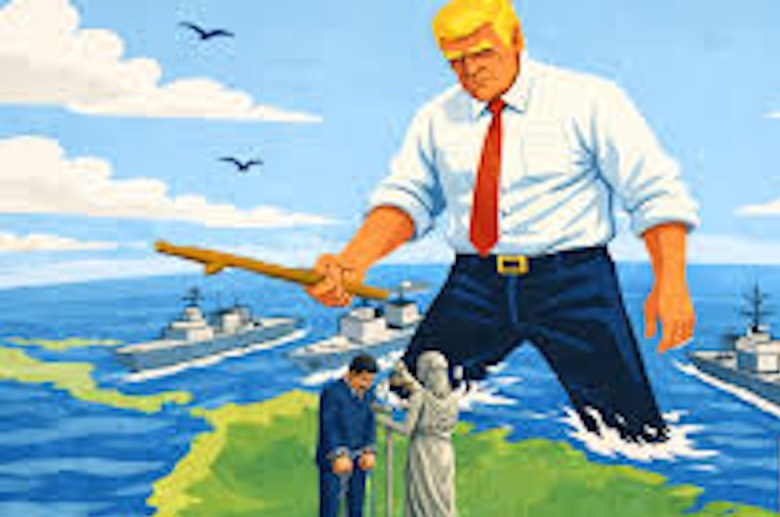
President Donald Trump has revived the historic Monroe Doctrine, now termed the “Donroe Doctrine,” as part of his geopolitical strategy. This recent declaration reflects a significant misunderstanding of the contemporary political and economic landscape in Latin America. Trump proclaimed a “Trump Corollary,” asserting that “the American people – not foreign nations nor globalist institutions – will always control their own destiny in our hemisphere.” While this rhetoric resonates with nationalist sentiments in the United States, it fundamentally misrepresents the realities of the region.
The revived doctrine embodies a neo-imperialist view, suggesting that the United States should maintain political, economic, and military control over the Western Hemisphere. This approach, however, overlooks the shifting dynamics that have empowered Latin American nations to pursue their own interests.
The China Factor in Hemispheric Relations
A glaring contradiction exists within Trump’s strategy concerning China, which the administration identifies as a principal threat in the region. Currently, China is the leading trade partner for every South American nation except Colombia. This is not a consequence of some nefarious plot but rather a response to China’s economic rise and Latin American nations’ desires for diversification. Trump’s own trade policies have inadvertently fortified China’s standing. For instance, when tariffs were imposed on Chinese goods, China shifted its soybean purchases from the United States to Argentina.
In attempting to reassert American dominance through economic coercion, Washington is inadvertently bolstering the very trends it aims to counteract.
Infrastructure and Investment Dilemmas
The inconsistencies of the Donroe Doctrine are further highlighted by calls to exclude foreign companies involved in infrastructure development within the region. Latin America is in critical need of infrastructure investment, a gap that China has filled effectively. The United States, however, has not matched this level of commitment, raising questions about the alternatives Trump offers. Are military threats or tariffs against nations accepting Chinese investments viable strategies? Such tactics appear more as nostalgia for past policies than realistic solutions to modern challenges.
This approach risks repeating historical mistakes. The original Monroe Doctrine and its Roosevelt Corollary justified interventions that led to instability in nations like Cuba and Nicaragua. The repercussions of those actions fostered anti-American sentiment that continues to affect relations in the region today.
Military strategies, as outlined in the administration’s National Security Strategy, suggest a willingness to engage in targeted military operations against cartels and potentially pursue regime change in Venezuela. Such interventions, framed as border security measures, could lead to outcomes as detrimental as those seen in Iraq and Afghanistan.
The fundamental issue at stake is the question of legitimacy and consent. Effective hegemony relies on cooperation from states that see mutual benefits in the arrangement. When domination is pursued through military threats and economic pressure, it breeds resistance rather than alliances. Latin American countries have diversified their international connections and now enjoy trade and investment from various global partners.
Trump’s strategy reflects a refusal to acknowledge the historical grievances that have shaped Latin American perspectives on U.S. influence. Instead of fostering genuine partnerships, the Donroe Doctrine assumes that American power can dictate regional outcomes unilaterally.
Potential Consequences of the Donroe Doctrine
The paradox of the Donroe Doctrine is that, while it is presented as a revival of American strength, it could instead hasten the decline of U.S. influence in the region. By treating Latin American countries as dependent entities rather than equal partners, the United States risks alienating them. The expectation that these nations should choose between Washington and Beijing may lead them to adopt hedging and diversification strategies that decrease American sway.
What Latin America truly needs, and what would serve U.S. interests best, is not a return to 19th-century imperialism but a pragmatic partnership focused on economic cooperation, development assistance, and respect for sovereignty. Achieving this requires substantial resources, patience, and diplomatic finesse—qualities that seem scarce in an administration that prefers ultimatums to engagement.
Ultimately, the Donroe Doctrine appears destined to illustrate that intertwining presidential ego with historical nostalgia yields neither effective strategy nor favorable outcomes. The result may be an overextension of U.S. ambitions, backlash from regional partners, and a gradual erosion of the influence that the doctrine seeks to restore.

India Unveils Long-Range Hypersonic Missile Amid Regional Tensions

SK bioscience Launches Global Trial for Universal Sarbecovirus Vaccine

Senegal Coach Pape Thiaw Suspended and Fined After Final Disruption

PAS Denies Abolishing Chairman Post, Contradicts Muhyiddin’s Claim

Mbappé Critiques Real Madrid’s Effort After Benfica Defeat

Thailand’s December Factory Output Surges 2.52% Year-on-Year

Ishita Dutta Reveals Her Parenting Secret: Strong Coffee

Older GPs Express Concerns Over New Digital Health Record Mandate

Urban Jurgensen: A 252-Year Legacy Enters a New Era

Regina Martinez Breaks New Ground for Mexico in Cross-Country Skiing

South Korea’s Foreign Minister Cho Hyun to Visit China This Week

Starling Bank Plans Secondary Share Sale, Targeting $5.4 Billion Valuation

Munsang College Celebrates 100 Years with Grand Ceremony

PAS Aims to Expand Parliamentary Influence in Upcoming Election

De Minaur Triumphs at Washington Open After Thrilling Comeback

Kenvue Dismisses CEO Thibaut Mongon as Strategic Review Advances

Humanism Camp Engages 250 Youths in Summer Fest 2025

Colombian Senator Miguel Uribe Shows Signs of Recovery After Attack
-
 Sports2 months ago
Regina Martinez Breaks New Ground for Mexico in Cross-Country Skiing
-
 World6 months ago
South Korea’s Foreign Minister Cho Hyun to Visit China This Week
-
 Business7 months ago
Starling Bank Plans Secondary Share Sale, Targeting $5.4 Billion Valuation
-
 Top Stories6 months ago
Munsang College Celebrates 100 Years with Grand Ceremony
-
 World6 months ago
PAS Aims to Expand Parliamentary Influence in Upcoming Election
-
 Sports8 months ago
De Minaur Triumphs at Washington Open After Thrilling Comeback
-
 Business8 months ago
Kenvue Dismisses CEO Thibaut Mongon as Strategic Review Advances
-
 Lifestyle8 months ago
Humanism Camp Engages 250 Youths in Summer Fest 2025
-
 Top Stories8 months ago
Colombian Senator Miguel Uribe Shows Signs of Recovery After Attack
-

 Sports8 months ago
Tupou and Daugunu Join First Nations Squad for Lions Clash
-

 World8 months ago
ASEAN Gears Up for Historic Joint Meeting of Foreign and Economic Ministers
-

 Health8 months ago
New Study Challenges Assumptions About Aging and Inflammation