
World
US Arrest of Maduro Sparks Diplomatic Tensions with China

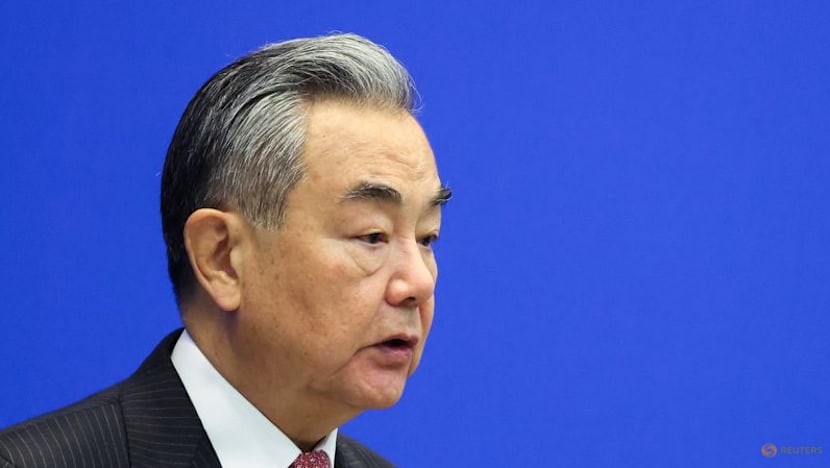
The recent capture of Venezuelan leader Nicolas Maduro by US authorities has ignited significant diplomatic tensions, particularly between the United States and China. Beijing’s top diplomat, Wang Yi, criticized the US for acting as a “world judge” following Maduro’s arrest, asserting that it undermines international law. This incident is likely to be a focal point at the United Nations as Beijing plans to confront Washington regarding the legality of the operation.
Wang expressed his concerns during a meeting with his Pakistani counterpart on January 4, 2024. He emphasized that the sovereignty and security of all nations must be respected under international law. His comments came in the wake of shocking images of Maduro, who was reportedly blindfolded and handcuffed, circulating globally. Maduro is set to appear in a New York court to face drug-related charges.
As Beijing prepares to address the UN Security Council, which will convene at Colombia’s request, the ramifications of this arrest are unfolding. The meeting, supported by both China and Russia, aims to discuss President Donald Trump’s controversial decision to capture Maduro. UN Secretary-General Antonio Guterres has warned that such actions could set a “dangerous precedent” in international relations.
China’s influence in Latin America has grown steadily over the past two decades, with several countries shifting diplomatic recognition from Taiwan to Beijing. This trend raises questions about the efficacy of China’s Global Security Initiative in protecting its strategic partners, particularly in light of Trump’s aggressive rhetoric towards nations like Colombia and Mexico. This situation prompts Latin American countries to reconsider the implications of their ties to China.
Despite the current crisis, analysts note that China may offer limited material support to Venezuela at this time. However, its rhetorical backing at the UN will be crucial. Eric Olander, co-founder of the China-Global South Project, pointed out that China has consistently demonstrated its commitment to its allies through trade and investment, even amid sanctions and international pressure.
The relationship between China and Venezuela has deep roots, dating back to 1974 when the latter switched its diplomatic recognition to Beijing. This partnership intensified under the leadership of Hugo Chavez, who maintained a close alliance with China and distanced Venezuela from the US. After Chavez’s death in 2013, Maduro continued to strengthen this bond, even enrolling his son at Peking University in 2016. In return, China has invested heavily in Venezuela’s oil infrastructure, providing a vital economic lifeline as US sanctions tightened.
In 2024, China imported approximately US$1.6 billion worth of goods from Venezuela, with oil constituting about half of that total. The recent developments regarding Maduro’s capture are seen as a significant setback for China, which had aimed to project itself as a reliable ally to Venezuela. As Qiu Xiaoqi, a Chinese official, noted, this incident is a “big blow” to their diplomatic efforts.
As tensions escalate, the international community will closely monitor the unfolding situation and its implications for regional stability and global diplomatic relations. The outcome of Maduro’s trial and the subsequent actions by China and other nations may shape the geopolitical landscape in the months to come.

India Unveils Long-Range Hypersonic Missile Amid Regional Tensions

SK bioscience Launches Global Trial for Universal Sarbecovirus Vaccine

Senegal Coach Pape Thiaw Suspended and Fined After Final Disruption

PAS Denies Abolishing Chairman Post, Contradicts Muhyiddin’s Claim

Mbappé Critiques Real Madrid’s Effort After Benfica Defeat

Thailand’s December Factory Output Surges 2.52% Year-on-Year

Ishita Dutta Reveals Her Parenting Secret: Strong Coffee

Older GPs Express Concerns Over New Digital Health Record Mandate

Urban Jurgensen: A 252-Year Legacy Enters a New Era

South Korea’s Foreign Minister Cho Hyun to Visit China This Week

Starling Bank Plans Secondary Share Sale, Targeting $5.4 Billion Valuation

Munsang College Celebrates 100 Years with Grand Ceremony

PAS Aims to Expand Parliamentary Influence in Upcoming Election

Kenvue Dismisses CEO Thibaut Mongon as Strategic Review Advances

Humanism Camp Engages 250 Youths in Summer Fest 2025

De Minaur Triumphs at Washington Open After Thrilling Comeback

Tupou and Daugunu Join First Nations Squad for Lions Clash

Colombian Senator Miguel Uribe Shows Signs of Recovery After Attack
-
 World5 months ago
South Korea’s Foreign Minister Cho Hyun to Visit China This Week
-
 Business5 months ago
Starling Bank Plans Secondary Share Sale, Targeting $5.4 Billion Valuation
-
 Top Stories5 months ago
Munsang College Celebrates 100 Years with Grand Ceremony
-
 World5 months ago
PAS Aims to Expand Parliamentary Influence in Upcoming Election
-
 Business7 months ago
Kenvue Dismisses CEO Thibaut Mongon as Strategic Review Advances
-
 Lifestyle6 months ago
Humanism Camp Engages 250 Youths in Summer Fest 2025
-
 Sports6 months ago
De Minaur Triumphs at Washington Open After Thrilling Comeback
-
 Sports7 months ago
Tupou and Daugunu Join First Nations Squad for Lions Clash
-
 Top Stories7 months ago
Colombian Senator Miguel Uribe Shows Signs of Recovery After Attack
-
 World7 months ago
ASEAN Gears Up for Historic Joint Meeting of Foreign and Economic Ministers
-

 Health6 months ago
New Study Challenges Assumptions About Aging and Inflammation
-
 Business7 months ago
Oil Prices Surge Following New EU Sanctions on Russia