
Politics
China Escalates Military Drills Near Taiwan Amid Rising Tensions

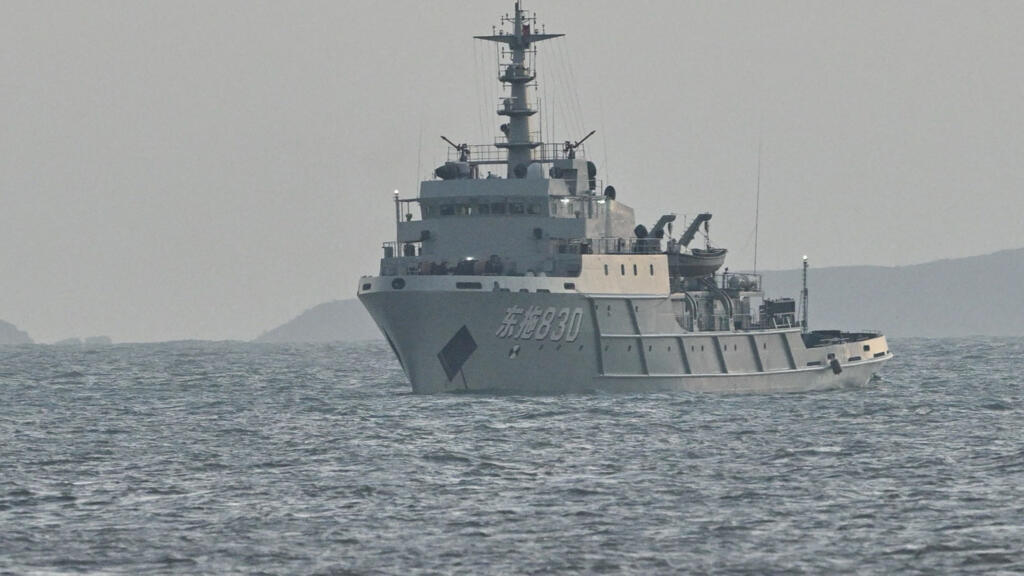
China has intensified its military presence around Taiwan, conducting live-fire exercises as part of a larger operation named “Justice Mission 2025.” This significant display of military capability took place on September 26, 2023, marking the second day of the drills. The operation has emerged at a pivotal moment, reflecting China’s strategy to leverage domestic political tensions in Taiwan while simultaneously sending a clear message to international supporters of Taipei.
The live-fire drills involve a range of military activities, including the deployment of aircraft and naval vessels in proximity to Taiwan. The exercises are designed to demonstrate China’s readiness to respond to perceived threats and assert its claims over the self-governing island. According to the Chinese Ministry of Defense, these operations are intended to enhance combat readiness and maintain national security within the region.
Context of Military Escalation
The timing of these drills is especially significant. Taiwan has recently experienced heightened political activity, with elections approaching in 2024. Beijing is closely monitoring these developments, seeking to capitalize on any signs of instability that could influence public opinion in Taiwan. The Chinese government views its military drills as a necessary measure to deter foreign intervention and bolster its stance against any moves toward formal independence by Taiwan.
Military analysts suggest that the drills may also serve a dual purpose: to intimidate Taiwan’s leadership and reassure a domestic audience of the government’s strength. In recent months, tensions have escalated between China and the United States, particularly with Washington’s increased support for Taiwan. This situation has prompted Beijing to reinforce its military capabilities in the Taiwan Strait, an area critical to both regional stability and international trade routes.
International Reactions
The international community has reacted to China’s military maneuvers with concern. Numerous foreign powers, particularly the United States, have voiced support for Taiwan amidst the growing assertiveness of China’s military. According to a statement from the U.S. Department of State, “the United States remains committed to supporting Taiwan as it faces increasing pressure from Beijing.” This commitment includes arms sales and military cooperation aimed at strengthening Taiwan’s defense capabilities.
China’s actions have also drawn criticism from several countries in the Asia-Pacific region, where leaders are wary of potential conflict. Nations such as Japan and Australia have expressed their concerns regarding stability in the Taiwan Strait, emphasizing the need for dialogue to resolve tensions peacefully.
As the situation evolves, the impact on regional security remains uncertain. Taiwan’s government has reiterated its commitment to defending its sovereignty, while also seeking to maintain open lines of communication with China. The future of cross-Strait relations will depend significantly on both domestic political developments in Taiwan and China’s ongoing military strategy in the region.
The escalation of military drills around Taiwan adds another layer of complexity to an already tense geopolitical landscape. With the potential for miscalculation increasing, the need for diplomatic solutions becomes more pressing than ever. As both sides navigate these challenging waters, the implications for peace and stability in the region could be profound.

India Unveils Long-Range Hypersonic Missile Amid Regional Tensions

SK bioscience Launches Global Trial for Universal Sarbecovirus Vaccine

Senegal Coach Pape Thiaw Suspended and Fined After Final Disruption

PAS Denies Abolishing Chairman Post, Contradicts Muhyiddin’s Claim

Mbappé Critiques Real Madrid’s Effort After Benfica Defeat

Thailand’s December Factory Output Surges 2.52% Year-on-Year

Ishita Dutta Reveals Her Parenting Secret: Strong Coffee

Older GPs Express Concerns Over New Digital Health Record Mandate

Urban Jurgensen: A 252-Year Legacy Enters a New Era

Regina Martinez Breaks New Ground for Mexico in Cross-Country Skiing

South Korea’s Foreign Minister Cho Hyun to Visit China This Week

Starling Bank Plans Secondary Share Sale, Targeting $5.4 Billion Valuation

Munsang College Celebrates 100 Years with Grand Ceremony

PAS Aims to Expand Parliamentary Influence in Upcoming Election

De Minaur Triumphs at Washington Open After Thrilling Comeback

Kenvue Dismisses CEO Thibaut Mongon as Strategic Review Advances

Humanism Camp Engages 250 Youths in Summer Fest 2025

Colombian Senator Miguel Uribe Shows Signs of Recovery After Attack
-
 Sports3 months ago
Regina Martinez Breaks New Ground for Mexico in Cross-Country Skiing
-
 World7 months ago
South Korea’s Foreign Minister Cho Hyun to Visit China This Week
-
 Business7 months ago
Starling Bank Plans Secondary Share Sale, Targeting $5.4 Billion Valuation
-
 Top Stories7 months ago
Munsang College Celebrates 100 Years with Grand Ceremony
-
 World7 months ago
PAS Aims to Expand Parliamentary Influence in Upcoming Election
-
 Sports9 months ago
De Minaur Triumphs at Washington Open After Thrilling Comeback
-
 Business9 months ago
Kenvue Dismisses CEO Thibaut Mongon as Strategic Review Advances
-
 Lifestyle9 months ago
Humanism Camp Engages 250 Youths in Summer Fest 2025
-
 Top Stories9 months ago
Colombian Senator Miguel Uribe Shows Signs of Recovery After Attack
-

 Sports9 months ago
Tupou and Daugunu Join First Nations Squad for Lions Clash
-
 World9 months ago
ASEAN Gears Up for Historic Joint Meeting of Foreign and Economic Ministers
-

 Health9 months ago
New Study Challenges Assumptions About Aging and Inflammation