
Science
China’s Biotech Surge Challenges Western Drug Development Paradigms

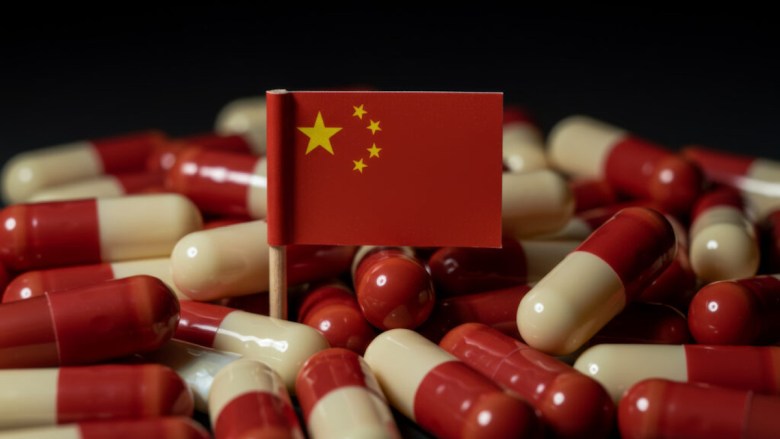
Recent analyses indicate that China’s drug discovery efforts have reached a significant milestone, matching those of the United States. Over the past decade, the number of new medicines developed in China has surged from approximately 30 in 2013 to more than 400 in 2023. This growth not only highlights China’s economic capabilities but also serves as a live case study on contrasting methodologies in pharmaceutical innovation.
The landscape of drug development has typically favored a linear, engineering-based approach, particularly in Western countries. This method involves identifying biological targets, designing specific molecules to interact with them, and refining these compounds through rigorous testing. While this approach is methodologically sound, it has yielded a concerning success rate, with only about 5% of drugs that prove effective in animal testing receiving regulatory approval. Critics, such as pharmacologist Jack Scannell, argue that high-throughput screening, intended to streamline drug discovery, often leads to accelerated failures rather than meaningful advancements.
In contrast, China’s biotech sector operates within a framework that encourages rapid experimentation and innovation. Government subsidies and a cultural emphasis on speed have fostered a system that prioritizes a different strategy: maximizing opportunities for serendipitous discoveries. This approach has seen state-owned enterprises in China contribute around 200 new experimental medicines annually, matching the combined output of all European public and private companies.
While the rapid pace of drug development in China presents unique advantages, it also raises concerns about safety and ethical considerations. The melamine scandal in the infant formula industry serves as a stark reminder of the potential consequences of prioritizing speed over caution. Furthermore, much of China’s pharmaceutical output focuses on established classes of drugs, such as biosimilars and GLP-1 analogues, rather than pioneering innovative therapies. This raises important questions about the quality of the burgeoning quantity of new drugs.
The challenges faced by Western pharmaceutical companies are equally significant. Regulatory processes often slow down innovation, and the decline in federal support for academic research in the United States has created an environment less conducive to experimentation. The venture capital landscape tends to favor large-scale investments, which can stifle smaller, innovative projects. The diminishing support for biomedical research has been a persistent trend this century, leading to increasing concerns regarding the sustainability of drug development.
Taking a broader perspective, the competition between China and the United States in the pharmaceutical sector need not be framed as a zero-sum game. The global health landscape has historically benefitted from diverse approaches to drug development. The response to the Covid-19 pandemic illustrated this point, as various strategies—including American mRNA technology, Chinese inactivated virus methods, and large-scale production in India—collaboratively advanced vaccine availability.
The focus should shift from determining which nation prevails to assessing whether the global system can produce medicines more efficiently and affordably, addressing a wider range of health issues, including neglected diseases.
There exists a genuine risk that both systems could become entrenched in their respective methodologies. China’s state-directed approach might prioritize political objectives over public health needs, potentially weaponizing drug distribution in times of geopolitical tension. Conversely, Western pharmaceutical companies may continue to gravitate towards larger, slower investments that favor shareholder interests rather than patient care.
Proposals by the Institute for Progress suggest that reforms could enhance drug discovery without requiring substantial financial outlays. These include increasing the number of clinical trials, creating public repositories for abandoned research, and rethinking insurance models to prioritize preventative care.
In parallel, China’s biotechnology ecosystem could evolve to embrace greater transparency and ethical standards while preserving its experimental edge. The ideal scenario is not the triumph of one model over the other but rather productive competition that spurs improvements in both systems.
As the field of drug discovery rapidly evolves, it becomes clear that both China and the United States must reassess their priorities. The ultimate goal should be to ensure that pharmaceutical enterprises genuinely serve patients’ needs rather than merely acting as instruments of national prestige. History teaches that when healthcare becomes a tool for political competition, the consequences can be detrimental to public health on a global scale.

India Unveils Long-Range Hypersonic Missile Amid Regional Tensions

SK bioscience Launches Global Trial for Universal Sarbecovirus Vaccine

Senegal Coach Pape Thiaw Suspended and Fined After Final Disruption

PAS Denies Abolishing Chairman Post, Contradicts Muhyiddin’s Claim

Mbappé Critiques Real Madrid’s Effort After Benfica Defeat

Thailand’s December Factory Output Surges 2.52% Year-on-Year

Ishita Dutta Reveals Her Parenting Secret: Strong Coffee

Older GPs Express Concerns Over New Digital Health Record Mandate

Urban Jurgensen: A 252-Year Legacy Enters a New Era

Regina Martinez Breaks New Ground for Mexico in Cross-Country Skiing

South Korea’s Foreign Minister Cho Hyun to Visit China This Week

Starling Bank Plans Secondary Share Sale, Targeting $5.4 Billion Valuation

Munsang College Celebrates 100 Years with Grand Ceremony

PAS Aims to Expand Parliamentary Influence in Upcoming Election

De Minaur Triumphs at Washington Open After Thrilling Comeback

Kenvue Dismisses CEO Thibaut Mongon as Strategic Review Advances

Humanism Camp Engages 250 Youths in Summer Fest 2025

Colombian Senator Miguel Uribe Shows Signs of Recovery After Attack
-
 Sports2 months ago
Regina Martinez Breaks New Ground for Mexico in Cross-Country Skiing
-
 World6 months ago
South Korea’s Foreign Minister Cho Hyun to Visit China This Week
-
 Business7 months ago
Starling Bank Plans Secondary Share Sale, Targeting $5.4 Billion Valuation
-
 Top Stories7 months ago
Munsang College Celebrates 100 Years with Grand Ceremony
-
 World6 months ago
PAS Aims to Expand Parliamentary Influence in Upcoming Election
-
 Sports8 months ago
De Minaur Triumphs at Washington Open After Thrilling Comeback
-
 Business8 months ago
Kenvue Dismisses CEO Thibaut Mongon as Strategic Review Advances
-
 Lifestyle8 months ago
Humanism Camp Engages 250 Youths in Summer Fest 2025
-
 Top Stories8 months ago
Colombian Senator Miguel Uribe Shows Signs of Recovery After Attack
-

 Sports8 months ago
Tupou and Daugunu Join First Nations Squad for Lions Clash
-

 World8 months ago
ASEAN Gears Up for Historic Joint Meeting of Foreign and Economic Ministers
-

 Health8 months ago
New Study Challenges Assumptions About Aging and Inflammation