
Science
India Boosts Science and Innovation with Major Funding Initiatives

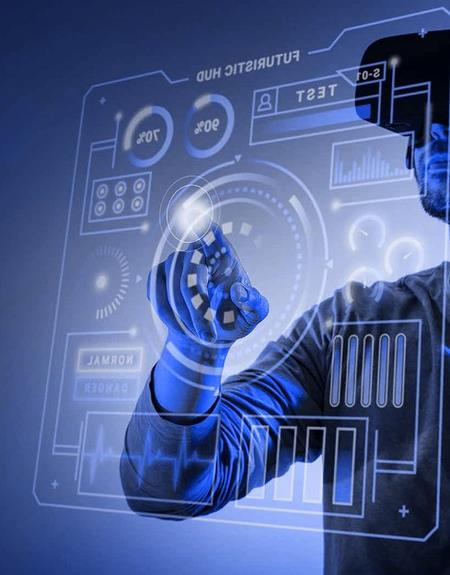
India’s science and technology (S&T) sector has made remarkable progress in 2025, largely driven by substantial government funding for research and innovation. With significant investments, the country improved its standing in global rankings and advanced in critical technologies, including semiconductors and artificial intelligence (AI).
According to the World Intellectual Property Organization’s Global Innovation Index (GII) 2025, India has climbed to the 38th position among 139 economies, a notable rise from 81st place in 2015. This improvement underscores the country’s growing emphasis on fostering innovation. Four Indian cities—Bengaluru, Delhi, Mumbai, and Chennai—ranked among the top 100 innovation clusters, with Bengaluru at 21, Delhi at 26, and Mumbai at 46, reflecting their enhanced capabilities in this area.
In July 2025, the Indian government launched the Research, Development and Innovation Fund, allocating a total of Rs 1.0 Lakh crore over six years, with Rs 20,000 crore earmarked for the fiscal year 2025-26. This initiative aims to incentivise private sector participation in research and development, further stimulating the S&T landscape.
Major Initiatives in Quantum and Cyber-Physical Systems
The National Quantum Mission (NQM) has also been a focal point for developing India’s quantum technology ecosystem. By mid-2025, operational hubs had been established across 43 institutions, with the government releasing Rs 450.99 crore for the fiscal year 2025-26. As of November 2025, approximately Rs 55.44 crore of this funding had been utilised.
Additionally, the National Mission on Interdisciplinary Cyber-Physical Systems (NM-ICPS) has undertaken groundbreaking projects, including “Bharat-Gen,” which focuses on generative AI for Indian languages. This initiative enhances digital infrastructure for cybersecurity while providing seamless AI solutions in 22 languages.
The National Supercomputing Mission (NSM) made strides in 2025 by installing 37 supercomputers with a total computing power of 40 Petaflops. These systems are located in prestigious institutions such as the Indian Institute of Science (IISc) and various Indian Institutes of Technology (IITs), as well as in Tier-II and Tier-III cities. Collectively, these supercomputers have supported over 10,000 researchers, including more than 1,700 PhD scholars across over 200 academic and research institutions.
Advancements in AI and Microprocessor Development
The IndiaAI Mission, with a budget exceeding Rs 10,300 crore, has successfully deployed 38,000 graphics processing units (GPUs) to provide affordable computing power to startups and researchers. This initiative has greatly accelerated the expansion of India’s AI ecosystem, establishing several Centres of Excellence (CoEs) across diverse sectors such as education, healthcare, agriculture, urban governance, and clean energy.
In December 2025, India unveiled its first fully indigenous DHRUV64 Microprocessor, a 1.0 GHz, 64-bit dual-core chip developed by the Centre for Development of Advanced Computing (C-DAC). This microprocessor is designed for applications in 5G, the Internet of Things (IoT), and automotive technology. Additionally, the VIKRAM3201 microprocessor has been qualified for harsh space environments, marking another significant achievement in domestic technology development.
The government’s flagship initiatives, including INSPIRE, INSPIRE-MANAK, and WISE-KIRAN, have benefited numerous school students, researchers, and women scientists, fostering a culture of innovation and scientific inquiry. Furthermore, India introduced its first research and development roadmap for Carbon Capture, Utilization, and Storage (CCUS) in December 2025, aligning with its commitment to accelerate progress toward achieving net-zero emissions.
These initiatives reflect India’s dedication to enhancing its research capabilities and positioning itself as a leader in global innovation. The combination of substantial funding, strategic initiatives, and a focus on cutting-edge technologies is expected to drive further advancements in the nation’s scientific and technological landscape.

India Unveils Long-Range Hypersonic Missile Amid Regional Tensions

SK bioscience Launches Global Trial for Universal Sarbecovirus Vaccine

Senegal Coach Pape Thiaw Suspended and Fined After Final Disruption

PAS Denies Abolishing Chairman Post, Contradicts Muhyiddin’s Claim

Mbappé Critiques Real Madrid’s Effort After Benfica Defeat

Thailand’s December Factory Output Surges 2.52% Year-on-Year

Ishita Dutta Reveals Her Parenting Secret: Strong Coffee

Older GPs Express Concerns Over New Digital Health Record Mandate

Urban Jurgensen: A 252-Year Legacy Enters a New Era

Regina Martinez Breaks New Ground for Mexico in Cross-Country Skiing

South Korea’s Foreign Minister Cho Hyun to Visit China This Week

Starling Bank Plans Secondary Share Sale, Targeting $5.4 Billion Valuation

Munsang College Celebrates 100 Years with Grand Ceremony

PAS Aims to Expand Parliamentary Influence in Upcoming Election

De Minaur Triumphs at Washington Open After Thrilling Comeback

Kenvue Dismisses CEO Thibaut Mongon as Strategic Review Advances

Humanism Camp Engages 250 Youths in Summer Fest 2025

Colombian Senator Miguel Uribe Shows Signs of Recovery After Attack
-
 Sports2 months ago
Regina Martinez Breaks New Ground for Mexico in Cross-Country Skiing
-
 World6 months ago
South Korea’s Foreign Minister Cho Hyun to Visit China This Week
-
 Business7 months ago
Starling Bank Plans Secondary Share Sale, Targeting $5.4 Billion Valuation
-
 Top Stories7 months ago
Munsang College Celebrates 100 Years with Grand Ceremony
-
 World6 months ago
PAS Aims to Expand Parliamentary Influence in Upcoming Election
-
 Sports8 months ago
De Minaur Triumphs at Washington Open After Thrilling Comeback
-
 Business8 months ago
Kenvue Dismisses CEO Thibaut Mongon as Strategic Review Advances
-
 Lifestyle8 months ago
Humanism Camp Engages 250 Youths in Summer Fest 2025
-
 Top Stories8 months ago
Colombian Senator Miguel Uribe Shows Signs of Recovery After Attack
-

 Sports8 months ago
Tupou and Daugunu Join First Nations Squad for Lions Clash
-

 World8 months ago
ASEAN Gears Up for Historic Joint Meeting of Foreign and Economic Ministers
-

 Health8 months ago
New Study Challenges Assumptions About Aging and Inflammation