
Politics
China and India Lead Sustainable Coal Revolution Amid Global Energy Shift

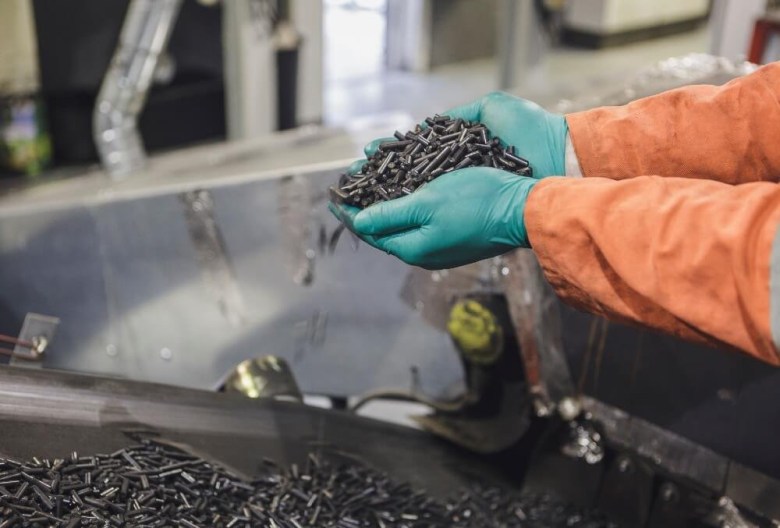
The global energy landscape is undergoing a significant transformation, driven by geopolitical realities and national security concerns. As nations grapple with the consequences of climate policy drift, particularly since the Paris Agreement, countries like China and India are taking proactive steps to modernize their coal industries rather than abandoning them. This shift is reshaping the narrative around coal, positioning it as a vital component in achieving economic resilience and sustainability.
The perception of coal has shifted from being merely a pollutant to a resource that can be harnessed sustainably. In India, coal is integral to the government’s vision of Atmanirbhar Bharat, or economic self-reliance. Currently, approximately 28,000 megawatts of modern coal capacity is under construction, with an additional 92,000 megawatts in the planning stages. This commitment illustrates coal’s central role in India’s economic future. The Indian government has also pledged US$1 billion (₹8,500 crores) towards coal gasification, aiming to produce 100 million tonnes by 2030 for methanol and ammonia production, which will bolster both agriculture and manufacturing.
China mirrors India’s approach, firmly integrating coal into its Five-Year Plans as a strategic industrial asset. The country operates more coal-fired power capacity than the combined total of the rest of the world’s wind and solar systems. Notably, China is home to the world’s largest coal-to-hydrogen facility located in Shaanxi, which produces 350,000 tonnes of hydrogen annually. Additionally, coal-to-chemicals projects in China consume around 380 million tonnes of coal each year, providing essential fuels and industrial chemicals.
Efforts to reduce emissions from coal usage are also prominent in both nations. China operates six large-scale carbon capture, utilization, and storage (CCUS) facilities, including the Huaneng Longdong Energy Base, capable of capturing 1.5 million tonnes of CO2 annually. These advancements highlight the ongoing commitment to sustainable practices within the coal sector, which is essential for the production of steel, cement, fertilizers, and modern energy solutions such as blue hydrogen.
Despite significant investments by Western nations, such as the US$700 billion allocated by the European Union and the United States for green initiatives in 2024, global emissions continue to rise. Economist Bjorn Lomborg pointed out that only around 13% of this century’s emissions originate from OECD nations, while the remaining 87% come from developing countries striving to lift millions out of poverty. This discrepancy underscores the importance of balanced policies that foster economic growth without compromising environmental goals.
The intertwining of sustainability and economic growth has been recognized by experts in development economics. Professor Mohan Munasinghe, a Nobel Peace Prize co-recipient and former vice-chair of the IPCC, emphasized the need for a holistic approach to sustainability. The UN Sustainable Development Goals prioritize poverty eradication as Goal 1 and climate action as Goal 13, highlighting the interdependency of these critical objectives.
As financial markets reassess their strategies, the importance of inclusionary frameworks is becoming clear. Rather than exclusion, effective investment that promotes technology deployment is essential for real progress. This is why FutureCoal has developed the Sustainable Coal Stewardship (SCS) framework, which focuses on innovative applications of coal. Under this framework, coal ash can be repurposed into low-carbon cement, and emissions can be reduced by up to 99% through advanced technologies, including carbon capture and storage.
The energy transition will not falter due to misplaced ambition but rather because of a failure to maintain balance. As nations reaffirm the importance of sovereignty, security, and industrial capability, coal is set to remain a central element in their energy strategies. China and India have demonstrated that coal can play a pivotal role in sustainable growth, prompting a critical question for the rest of the world: Are we ready to acknowledge the true sources of our prosperity and the commitments necessary to sustain it?

India Unveils Long-Range Hypersonic Missile Amid Regional Tensions

SK bioscience Launches Global Trial for Universal Sarbecovirus Vaccine

Senegal Coach Pape Thiaw Suspended and Fined After Final Disruption

PAS Denies Abolishing Chairman Post, Contradicts Muhyiddin’s Claim

Mbappé Critiques Real Madrid’s Effort After Benfica Defeat

Thailand’s December Factory Output Surges 2.52% Year-on-Year

Ishita Dutta Reveals Her Parenting Secret: Strong Coffee

Older GPs Express Concerns Over New Digital Health Record Mandate

Urban Jurgensen: A 252-Year Legacy Enters a New Era

Regina Martinez Breaks New Ground for Mexico in Cross-Country Skiing

South Korea’s Foreign Minister Cho Hyun to Visit China This Week

Starling Bank Plans Secondary Share Sale, Targeting $5.4 Billion Valuation

Munsang College Celebrates 100 Years with Grand Ceremony

PAS Aims to Expand Parliamentary Influence in Upcoming Election

De Minaur Triumphs at Washington Open After Thrilling Comeback

Kenvue Dismisses CEO Thibaut Mongon as Strategic Review Advances

Humanism Camp Engages 250 Youths in Summer Fest 2025

Colombian Senator Miguel Uribe Shows Signs of Recovery After Attack
-
 Sports3 months ago
Regina Martinez Breaks New Ground for Mexico in Cross-Country Skiing
-
 World8 months ago
South Korea’s Foreign Minister Cho Hyun to Visit China This Week
-
 Business8 months ago
Starling Bank Plans Secondary Share Sale, Targeting $5.4 Billion Valuation
-
 Top Stories8 months ago
Munsang College Celebrates 100 Years with Grand Ceremony
-
 World8 months ago
PAS Aims to Expand Parliamentary Influence in Upcoming Election
-
 Sports9 months ago
De Minaur Triumphs at Washington Open After Thrilling Comeback
-
 Business10 months ago
Kenvue Dismisses CEO Thibaut Mongon as Strategic Review Advances
-
 Lifestyle9 months ago
Humanism Camp Engages 250 Youths in Summer Fest 2025
-
 Top Stories10 months ago
Colombian Senator Miguel Uribe Shows Signs of Recovery After Attack
-

 Sports10 months ago
Tupou and Daugunu Join First Nations Squad for Lions Clash
-
 World10 months ago
ASEAN Gears Up for Historic Joint Meeting of Foreign and Economic Ministers
-

 Health9 months ago
New Study Challenges Assumptions About Aging and Inflammation