
Top Stories
Stocks Decline Sharply Amid Tech Concerns and Economic Signals

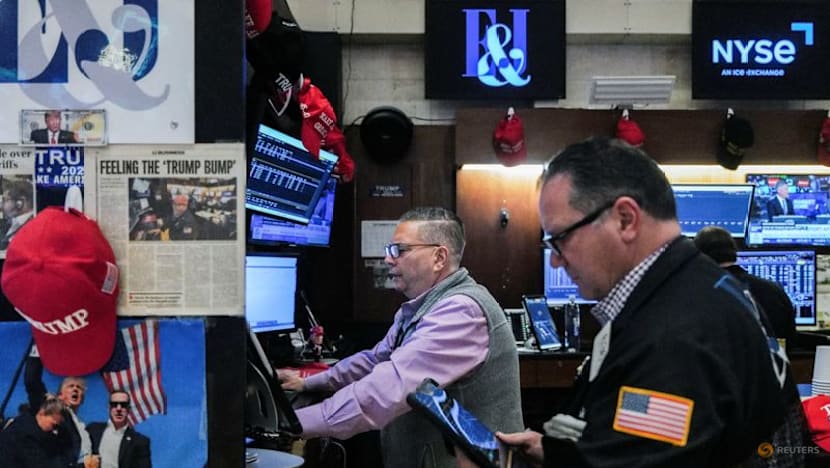
Major stock indexes experienced significant declines on December 12, as investors expressed growing concerns about the technology sector amid shifting economic signals. Technology stocks fell sharply, driven by apprehensions surrounding artificial intelligence investments. In contrast, the U.S. dollar and Treasury yields rose slightly following recent downturns.
The cloud computing giant Oracle reported substantial spending and provided weak forecasts earlier in the week, contributing to the downward trend. Additionally, a warning about profit margins from Broadcom added to investor unease. The technology sector within the S&P 500 dropped by 2.6 percent, making it the worst-performing sector for the day.
Shares of Broadcom plummeted by 12 percent, while Oracle decreased by 4.6 percent. Notably, Nvidia, a leader in artificial intelligence, fell by 2.4 percent.
Investors showed optimism regarding future interest rate cuts in the United States, especially after the U.S. Federal Reserve announced a 25 basis points rate cut in a 9-3 decision earlier in the week. Despite this, policymakers indicated that additional cuts would be paused for the time being. Concerns surrounding a cooling labor market and persistent inflation have prompted cautious approaches.
“The data is very mixed right now, and these are individuals at the Fed with different projections and different thoughts around everything,” stated Tony Welch, chief investment officer at SignatureFD in Atlanta.
Adding to the economic landscape, U.S. jobless claims data released on December 11 revealed that new applications for unemployment benefits increased by the largest margin in nearly 4.5 years, suggesting potential economic strain.
The Bank of England is anticipated to announce a rate cut on December 14, while the European Central Bank is expected to maintain current rates. Speculation is growing that it may consider rate hikes in 2026. Meanwhile, the Bank of Japan is likely to raise rates following clear signals from Governor Kazuo Ueda.
In terms of market performance, the Dow Jones Industrial Average fell by 211.75 points, or 0.43 percent, closing at 48,492.26. The S&P 500 dropped by 72.72 points, or 1.05 percent, to end at 6,828.25, while the Nasdaq Composite decreased by 378.01 points, or 1.60 percent, settling at 23,215.84. MSCI’s gauge for global stocks fell by 6.18 points, or 0.61 percent, to 1,009.09. The pan-European STOXX 600 index also fell, declining by 0.53 percent.
Following a two-day decline, U.S. 10-year Treasury yields rose as investors analyzed commentary from various Federal Reserve officials and maintained a positive outlook on the economy. Officials who voted against the rate cut expressed concerns that inflation remains too high to justify lower borrowing costs. The yield on the benchmark U.S. 10-year Treasury note increased by 4.5 basis points, reaching 4.186 percent, marking a nearly 5 basis points rise for the week.
In Europe, German government bond yields also rose, reflecting investor expectations for eurozone rate hikes, contrasting with the anticipated decline in U.S. rates. Germany’s 30-year yield hit a new 14-year high of 3.498 percent, up by 3.5 basis points.
The U.S. dollar gained against major currencies, rebounding from earlier losses, yet remained on track for its third consecutive weekly drop due to expectations of interest rate cuts by the Federal Reserve in the coming year. The British pound weakened by 0.28 percent, trading at $1.3348, after data indicated that the UK economy unexpectedly contracted in the three months to October. The dollar index, which measures the dollar against a basket of currencies including the euro and yen, rose by 0.15 percent to 98.48.
In commodities, copper prices experienced a sharp drop of over 3 percent after reaching a record high earlier in the session. The benchmark three-month copper price on the London Metal Exchange fell as much as 3.5 percent to $11,451.50 before trading down 2.8 percent at $11,537.50 as of 17:00 GMT. Meanwhile, U.S. crude oil prices decreased by 16 cents to settle at $57.44 per barrel, while Brent crude also fell by 16 cents, closing at $61.12 per barrel.
As market participants navigate these developments, the interplay between technology sector vulnerabilities, economic indicators, and central bank policies will remain in focus.

India Unveils Long-Range Hypersonic Missile Amid Regional Tensions

SK bioscience Launches Global Trial for Universal Sarbecovirus Vaccine

Senegal Coach Pape Thiaw Suspended and Fined After Final Disruption

PAS Denies Abolishing Chairman Post, Contradicts Muhyiddin’s Claim

Mbappé Critiques Real Madrid’s Effort After Benfica Defeat

Thailand’s December Factory Output Surges 2.52% Year-on-Year

Ishita Dutta Reveals Her Parenting Secret: Strong Coffee

Older GPs Express Concerns Over New Digital Health Record Mandate

Urban Jurgensen: A 252-Year Legacy Enters a New Era

Regina Martinez Breaks New Ground for Mexico in Cross-Country Skiing

South Korea’s Foreign Minister Cho Hyun to Visit China This Week

Starling Bank Plans Secondary Share Sale, Targeting $5.4 Billion Valuation

Munsang College Celebrates 100 Years with Grand Ceremony

PAS Aims to Expand Parliamentary Influence in Upcoming Election

De Minaur Triumphs at Washington Open After Thrilling Comeback

Kenvue Dismisses CEO Thibaut Mongon as Strategic Review Advances

Humanism Camp Engages 250 Youths in Summer Fest 2025

Colombian Senator Miguel Uribe Shows Signs of Recovery After Attack
-
 Sports2 months ago
Regina Martinez Breaks New Ground for Mexico in Cross-Country Skiing
-
 World6 months ago
South Korea’s Foreign Minister Cho Hyun to Visit China This Week
-
 Business6 months ago
Starling Bank Plans Secondary Share Sale, Targeting $5.4 Billion Valuation
-
 Top Stories6 months ago
Munsang College Celebrates 100 Years with Grand Ceremony
-
 World6 months ago
PAS Aims to Expand Parliamentary Influence in Upcoming Election
-
 Sports8 months ago
De Minaur Triumphs at Washington Open After Thrilling Comeback
-
 Business8 months ago
Kenvue Dismisses CEO Thibaut Mongon as Strategic Review Advances
-
 Lifestyle8 months ago
Humanism Camp Engages 250 Youths in Summer Fest 2025
-
 Top Stories8 months ago
Colombian Senator Miguel Uribe Shows Signs of Recovery After Attack
-

 Sports8 months ago
Tupou and Daugunu Join First Nations Squad for Lions Clash
-
 World8 months ago
ASEAN Gears Up for Historic Joint Meeting of Foreign and Economic Ministers
-

 Health8 months ago
New Study Challenges Assumptions About Aging and Inflammation