
Politics
Taiwan Enacts Tougher Penalties for Undersea Cable Damage

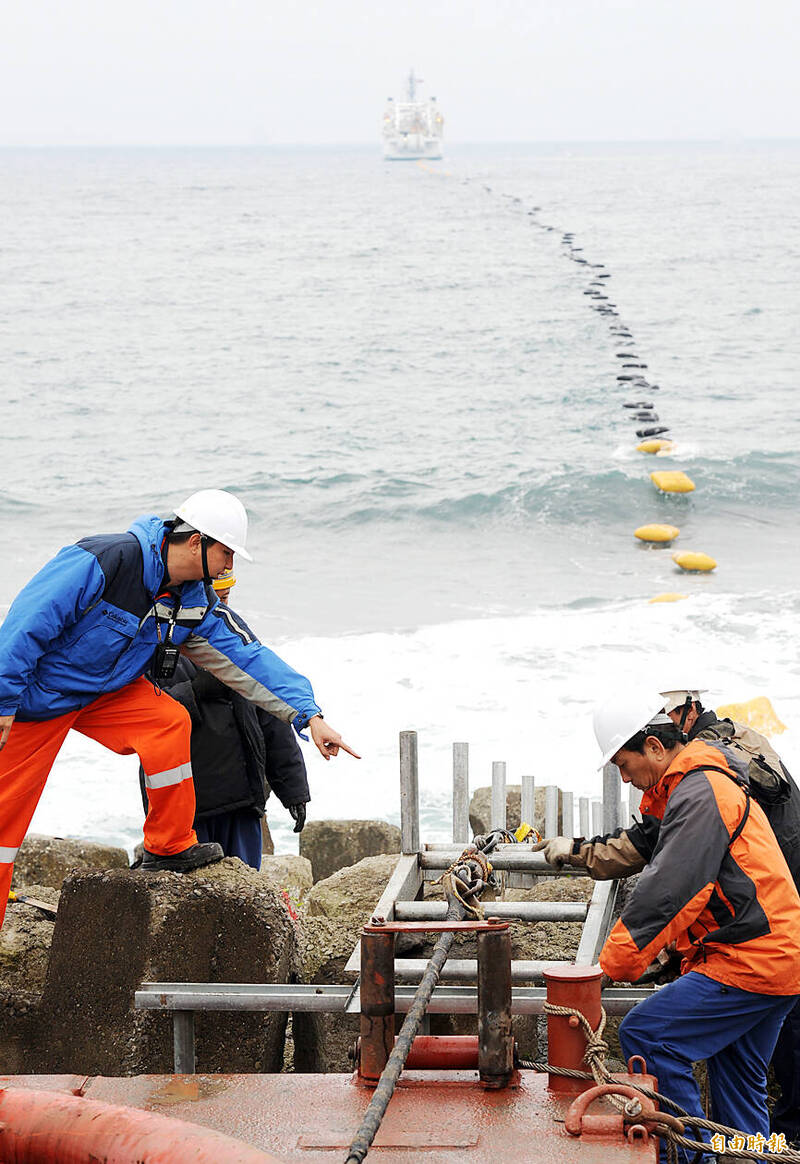
The Legislative Yuan in Taiwan has approved new laws imposing penalties of up to seven years in prison for individuals found guilty of intentionally damaging undersea cables and pipelines. This legislation aims to strengthen protections for vital underwater infrastructure and includes provisions for confiscating vessels involved in such offenses.
Earlier this year, the captain of the Chinese-crewed freighter Hong Tai 58 received a three-year prison sentence under the Telecommunications Management Act for damaging the Taiwan-Penghu No. 3 undersea cable. Following this incident, prosecutors advocated for harsher penalties, leading to the Executive Yuan proposing amendments to seven different laws on September 18.
These amendments target a range of critical infrastructures, including the Water Supply Act, Electricity Act, and Natural Gas Enterprise Act. Under the new regulations, unlawful damage to underwater water pipes or power cables can result in prison sentences of one to seven years and fines reaching up to NT$10 million (approximately US$320,359). Furthermore, negligent offenses under the Telecommunications Management Act could lead to up to six months in prison or a fine of up to NT$2 million.
The legislation also includes measures to confiscate any tools, vessels, or equipment used in committing these offenses, regardless of ownership. This aims to deter repeat violations by ensuring that offenders cannot easily return to similar activities.
To enhance transparency and assist law enforcement, the legislature has mandated that the Ministry of the Interior publish maps detailing the locations of undersea pipes and cables. This requirement is designed to prevent offenders from claiming ignorance about the locations of these critical infrastructures, thereby clarifying intent and reducing the likelihood of accidental violations.
In a related political context, opposition lawmakers have once again obstructed the Executive Yuan’s proposed special defense budget of NT$1.25 trillion. The Chinese Nationalist Party (KMT) and Taiwan People’s Party lawmakers blocked the proposal during a meeting of the Procedure Committee, preventing it from progressing to committee review.
Democratic Progressive Party (DPP) legislator Fan Yun criticized the opposition for what she described as an attempt to “grab funds” and undermine national governance. She emphasized that the proposed budget, which amounts to just over NT$150 billion per year over eight years, had been thoroughly discussed with local governments.
Opposition figures have countered these claims, asserting that the DPP is the party impeding progress on the defense budget. KMT caucus secretary-general Lo Chih-chiang pointed out that President William Lai has not shown the courage to report or address questions in the legislature. Lai, however, has expressed willingness to present a report, provided it aligns with legal requirements.
The ongoing conflict over the defense budget highlights the broader tensions within Taiwan’s political landscape, as parties continue to clash over governance and national priorities.

India Unveils Long-Range Hypersonic Missile Amid Regional Tensions

SK bioscience Launches Global Trial for Universal Sarbecovirus Vaccine

Senegal Coach Pape Thiaw Suspended and Fined After Final Disruption

PAS Denies Abolishing Chairman Post, Contradicts Muhyiddin’s Claim

Mbappé Critiques Real Madrid’s Effort After Benfica Defeat

Thailand’s December Factory Output Surges 2.52% Year-on-Year

Ishita Dutta Reveals Her Parenting Secret: Strong Coffee

Older GPs Express Concerns Over New Digital Health Record Mandate

Urban Jurgensen: A 252-Year Legacy Enters a New Era

Regina Martinez Breaks New Ground for Mexico in Cross-Country Skiing

South Korea’s Foreign Minister Cho Hyun to Visit China This Week

Starling Bank Plans Secondary Share Sale, Targeting $5.4 Billion Valuation

Munsang College Celebrates 100 Years with Grand Ceremony

PAS Aims to Expand Parliamentary Influence in Upcoming Election

De Minaur Triumphs at Washington Open After Thrilling Comeback

Kenvue Dismisses CEO Thibaut Mongon as Strategic Review Advances

Humanism Camp Engages 250 Youths in Summer Fest 2025

Colombian Senator Miguel Uribe Shows Signs of Recovery After Attack
-
 Sports3 months ago
Regina Martinez Breaks New Ground for Mexico in Cross-Country Skiing
-
 World8 months ago
South Korea’s Foreign Minister Cho Hyun to Visit China This Week
-
 Business8 months ago
Starling Bank Plans Secondary Share Sale, Targeting $5.4 Billion Valuation
-
 Top Stories8 months ago
Munsang College Celebrates 100 Years with Grand Ceremony
-
 World8 months ago
PAS Aims to Expand Parliamentary Influence in Upcoming Election
-
 Sports9 months ago
De Minaur Triumphs at Washington Open After Thrilling Comeback
-
 Business10 months ago
Kenvue Dismisses CEO Thibaut Mongon as Strategic Review Advances
-
 Lifestyle9 months ago
Humanism Camp Engages 250 Youths in Summer Fest 2025
-
 Top Stories10 months ago
Colombian Senator Miguel Uribe Shows Signs of Recovery After Attack
-

 Sports10 months ago
Tupou and Daugunu Join First Nations Squad for Lions Clash
-
 World10 months ago
ASEAN Gears Up for Historic Joint Meeting of Foreign and Economic Ministers
-

 Health9 months ago
New Study Challenges Assumptions About Aging and Inflammation