
Politics
Japan’s Missile Sale to Boost Philippines’ Defense Strategy

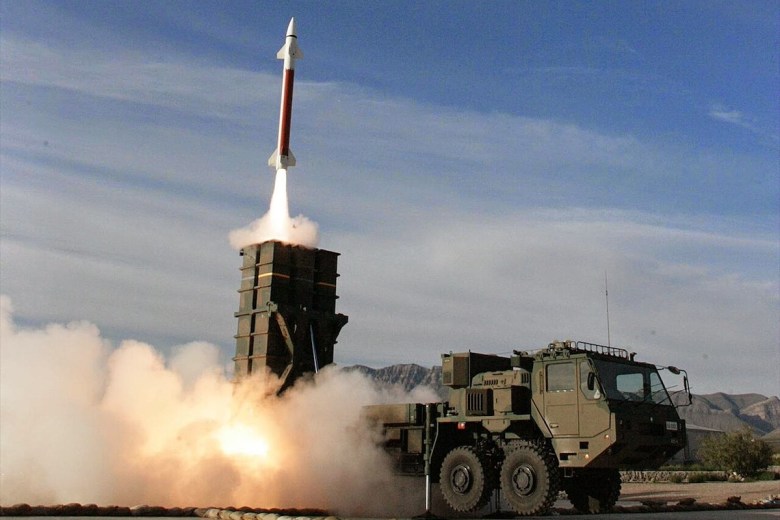
The Philippines may soon enhance its military capabilities through a potential missile deal with Japan, marking a significant shift in its defense posture. Reports indicate that informal discussions are underway for the sale of the Type 03 Medium-Range Surface-to-Air Missile (Chu-SAM). This missile system, designed to intercept both aircraft and cruise missiles, comes at a time of heightened tensions with China in the South China Sea.
This development could lead to the most profound military integration between the Philippines and the United States since the Cold War. The Philippines expressed interest in the Type 03 as it confronts escalating confrontations with China. A feasibility study regarding this sale is expected to commence once Prime Minister Sanae Takaichi‘s government revises existing regulations that presently limit defense exports to five non-combat categories. This change only requires a decision from the National Security Council, bypassing the need for parliamentary approval.
The Philippines recently granted the US access to nine military sites under the Enhanced Defense Cooperation Agreement (EDCA). This strategic positioning, alongside the potential deployment of the US’s Typhon missile system, could make the Philippines a target in the event of US-China conflicts, particularly over Taiwan. Consequently, developing effective missile defense capabilities has become imperative. Currently, the Philippines relies on a limited defense arsenal, including approximately three Israeli-made medium-range SPYDER batteries, and faces challenges in defending critical infrastructure and population centers.
Acquiring additional missile defense systems from Japan could significantly enhance the Philippines’ capability to synchronize with US military strategies. This would not only help protect US facilities and Typhon launch sites within the Philippines, but also position the country as a key player in the defense of Guam. The integration of US and Philippine missile defense systems could form a robust shield for US military assets stationed in the region.
China’s ongoing military expansion in the South China Sea, including the establishment of militarized islands and submarine bases, raises concerns about regional security. The People’s Liberation Army is reportedly developing its capabilities, including the JL-2 submarine-launched ballistic missile, which could easily reach Guam. Although the US has fortified Guam with advanced defense systems such as Aegis Ashore and Terminal High Altitude Area Defense (THAAD), the Philippines’ inclusion in this defensive framework is essential for early warning and interception capabilities.
Despite these advancements, doubts remain about the effectiveness of missile defense systems. The latest Department of Defense report highlights the challenges posed by the People’s Liberation Army Rocket Force, which possesses around 1,300 medium-range ballistic missiles capable of targeting the Philippines. The disparity between the number of Chinese missiles and the limited interceptor stocks available to the US and the Philippines raises significant concerns.
A report by the American Physical Society emphasizes the difficulties of intercepting intercontinental ballistic missiles (ICBMs), outlining that no US missile defense system has reliably proven effective against ICBMs under realistic conditions. Emerging countermeasures, such as hypersonic glide vehicles and maneuvering reentry vehicles, further complicate defense efforts. The JL-2 missile, deployed on China’s Type 094 submarines, could potentially evade existing US missile defenses, particularly given its ability to carry multiple independently targetable reentry vehicles.
The geopolitical landscape is further complicated by the current administration of Philippine President Ferdinand Marcos Jr.. Facing political challenges, including concerns over historical issues and economic performance, the Marcos administration may lean heavily on its partnership with the US for security credentials. This reliance could serve to galvanize public sentiment against China, particularly amidst ongoing territorial disputes in the South China Sea.
In practice, this may lead to increased visibility of US-led naval exercises and military deployments in the Philippines, which could include missile defense infrastructure in the future. Should the Philippines proceed with the acquisition of Japanese missile defenses, it would solidify its integration with US military forces on its territory and enhance Guam’s defense capabilities. However, this integration may also curtail the Philippines’ strategic autonomy, complicating its ability to navigate the geopolitical tensions between the US and China.
As the situation evolves, the implications of this potential missile deal extend beyond mere military capabilities, influencing the Philippines’ role in regional security dynamics and its diplomatic relationships with major powers.

India Unveils Long-Range Hypersonic Missile Amid Regional Tensions

SK bioscience Launches Global Trial for Universal Sarbecovirus Vaccine

Senegal Coach Pape Thiaw Suspended and Fined After Final Disruption

PAS Denies Abolishing Chairman Post, Contradicts Muhyiddin’s Claim

Mbappé Critiques Real Madrid’s Effort After Benfica Defeat

Thailand’s December Factory Output Surges 2.52% Year-on-Year

Ishita Dutta Reveals Her Parenting Secret: Strong Coffee

Older GPs Express Concerns Over New Digital Health Record Mandate

Urban Jurgensen: A 252-Year Legacy Enters a New Era

Regina Martinez Breaks New Ground for Mexico in Cross-Country Skiing

South Korea’s Foreign Minister Cho Hyun to Visit China This Week

Starling Bank Plans Secondary Share Sale, Targeting $5.4 Billion Valuation

Munsang College Celebrates 100 Years with Grand Ceremony

PAS Aims to Expand Parliamentary Influence in Upcoming Election

De Minaur Triumphs at Washington Open After Thrilling Comeback

Kenvue Dismisses CEO Thibaut Mongon as Strategic Review Advances

Humanism Camp Engages 250 Youths in Summer Fest 2025

Colombian Senator Miguel Uribe Shows Signs of Recovery After Attack
-
 Sports3 months ago
Regina Martinez Breaks New Ground for Mexico in Cross-Country Skiing
-
 World8 months ago
South Korea’s Foreign Minister Cho Hyun to Visit China This Week
-
 Business8 months ago
Starling Bank Plans Secondary Share Sale, Targeting $5.4 Billion Valuation
-
 Top Stories8 months ago
Munsang College Celebrates 100 Years with Grand Ceremony
-
 World8 months ago
PAS Aims to Expand Parliamentary Influence in Upcoming Election
-
 Sports9 months ago
De Minaur Triumphs at Washington Open After Thrilling Comeback
-
 Business10 months ago
Kenvue Dismisses CEO Thibaut Mongon as Strategic Review Advances
-
 Lifestyle9 months ago
Humanism Camp Engages 250 Youths in Summer Fest 2025
-
 Top Stories10 months ago
Colombian Senator Miguel Uribe Shows Signs of Recovery After Attack
-

 Sports10 months ago
Tupou and Daugunu Join First Nations Squad for Lions Clash
-

 World10 months ago
ASEAN Gears Up for Historic Joint Meeting of Foreign and Economic Ministers
-

 Health9 months ago
New Study Challenges Assumptions About Aging and Inflammation