
Lifestyle
India Transforms Governance Language to Reflect Service Ethos

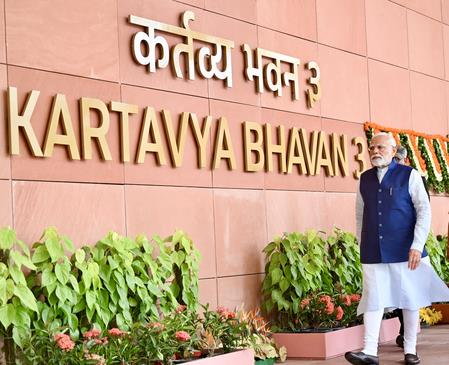
In a significant shift in India’s governance narrative, the country is redefining the language of authority and public service. Colonial-era institutions are being renamed to reflect a commitment to the people rather than the state. Notably, Raj Bhavans, the grand residences of state Governors, are now being called “Lok Bhavan,” which translates to “People’s House.” This change symbolizes a deeper transformation under the leadership of Prime Minister Narendra Modi, who has been advocating for a government that prioritizes public service since taking office in 2014.
The renaming of iconic locations marks a profound cultural shift. In 2022, the once prestigious Rajpath, or “Path of Rule,” was rebranded as “Kartavya Path,” meaning “Path of Duty.” This six-kilometre stretch now serves as a daily reminder that power is a responsibility rather than a privilege. In a similar vein, Modi vacated his official residence at 7, Race Course Road, to move to “Lok Kalyan Marg,” or “Road of People’s Welfare.” This move reflects a symbolic acknowledgment that the prime minister’s residence is, above all, a home for the citizens of India.
The transformation extends beyond mere names. The Central Secretariat has been replaced by “Kartavya Bhavan,” the “House of Duty,” where civil servants are reminded that their role is to serve, not to rule. Even the historic South Block and North Block, which have long stood as bastions of bureaucracy, are now part of a new complex called “Seva Teerth,” or “Pilgrimage of Service.” This initiative aims to create a work environment that redefines public service as a sacred duty rather than a bureaucratic obligation.
These changes are not superficial efforts by an image-conscious government; they represent a deliberate reimagining of the relationship between the state and its citizens. Since Modi took office, the old symbols of power—dominion and control—are being replaced with a vocabulary that emphasizes seva (service) and kartavya (duty). In a nation where cultural values often surpass legal frameworks, such renaming initiatives serve as initial indicators of a broader shift in governance philosophy.
When places that once exuded intimidation now embrace inclusivity, and roads that celebrated authority instead honour civic responsibility, a significant transformation occurs in the collective mindset. India is undergoing a quiet linguistic revolution, redefining governance as a trust to uphold rather than a throne to occupy. This evolution aims to place the citizens of India at the very heart of political power, fostering a deeper connection between government and the populace.
As these changes resonate throughout the country, they signal a new era where governance is increasingly viewed through the lens of community service and accountability. The implications of this shift could be profound, as India seeks to reinforce the principle that government exists to serve its people, paving the way for a more engaged and responsive political landscape.

India Unveils Long-Range Hypersonic Missile Amid Regional Tensions

SK bioscience Launches Global Trial for Universal Sarbecovirus Vaccine

Senegal Coach Pape Thiaw Suspended and Fined After Final Disruption

PAS Denies Abolishing Chairman Post, Contradicts Muhyiddin’s Claim

Mbappé Critiques Real Madrid’s Effort After Benfica Defeat

Thailand’s December Factory Output Surges 2.52% Year-on-Year

Ishita Dutta Reveals Her Parenting Secret: Strong Coffee

Older GPs Express Concerns Over New Digital Health Record Mandate

Urban Jurgensen: A 252-Year Legacy Enters a New Era

Regina Martinez Breaks New Ground for Mexico in Cross-Country Skiing

South Korea’s Foreign Minister Cho Hyun to Visit China This Week

Starling Bank Plans Secondary Share Sale, Targeting $5.4 Billion Valuation

Munsang College Celebrates 100 Years with Grand Ceremony

PAS Aims to Expand Parliamentary Influence in Upcoming Election

De Minaur Triumphs at Washington Open After Thrilling Comeback

Kenvue Dismisses CEO Thibaut Mongon as Strategic Review Advances

Humanism Camp Engages 250 Youths in Summer Fest 2025

Colombian Senator Miguel Uribe Shows Signs of Recovery After Attack
-
 Sports2 months ago
Regina Martinez Breaks New Ground for Mexico in Cross-Country Skiing
-
 World6 months ago
South Korea’s Foreign Minister Cho Hyun to Visit China This Week
-
 Business6 months ago
Starling Bank Plans Secondary Share Sale, Targeting $5.4 Billion Valuation
-
 Top Stories6 months ago
Munsang College Celebrates 100 Years with Grand Ceremony
-
 World6 months ago
PAS Aims to Expand Parliamentary Influence in Upcoming Election
-
 Sports8 months ago
De Minaur Triumphs at Washington Open After Thrilling Comeback
-
 Business8 months ago
Kenvue Dismisses CEO Thibaut Mongon as Strategic Review Advances
-
 Lifestyle8 months ago
Humanism Camp Engages 250 Youths in Summer Fest 2025
-
 Top Stories8 months ago
Colombian Senator Miguel Uribe Shows Signs of Recovery After Attack
-

 Sports8 months ago
Tupou and Daugunu Join First Nations Squad for Lions Clash
-

 World8 months ago
ASEAN Gears Up for Historic Joint Meeting of Foreign and Economic Ministers
-

 Health8 months ago
New Study Challenges Assumptions About Aging and Inflammation